

[For more diverse corporate information on startups mentioned in this article, visit the Unicorn Factory Big Data Platform 'Data Lab'.]
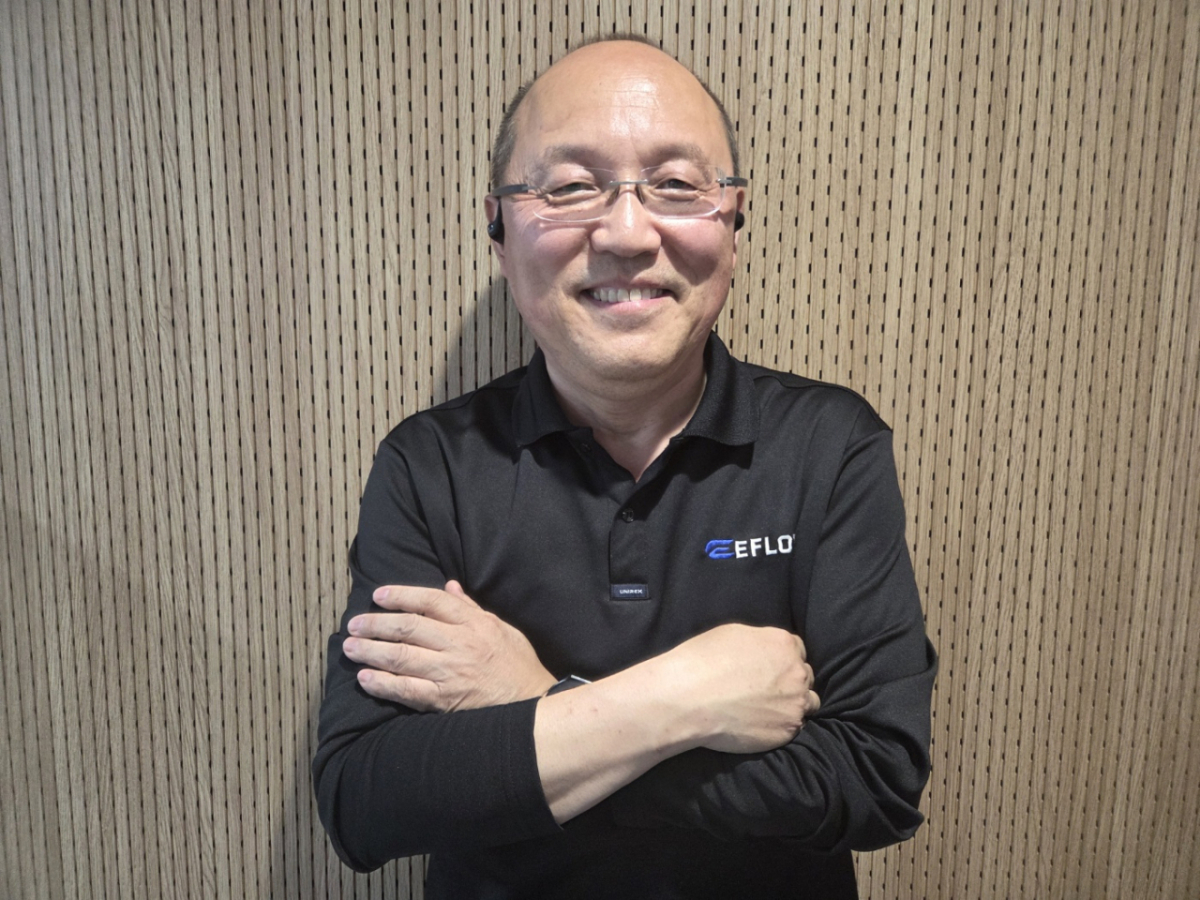
"When I first saw the AFPM (Axial Flux Motor), I was shocked. One-third the size but twice the power? It didn't seem possible. But it was real."
Yoon Soo-han Lee Peul-ro-u (CEO) stumbled upon a 'life-changing opportunity' at a technology exhibition in Germany over 20 years ago. As a technology consultant who had traveled the world for more than a decade, mastering various technologies, even his experienced eyes saw the AFPM motor as a true 'new world.' Eventually, at the early stage of his 50s when others were seeking stability, he boldly resigned and launched his own startup. This year marks his 10th anniversary as an entrepreneur, and Yoon (CEO) and iFlow are poised for new leaps forward.
Faraday's Unsolved Puzzle Solved After 200 Years
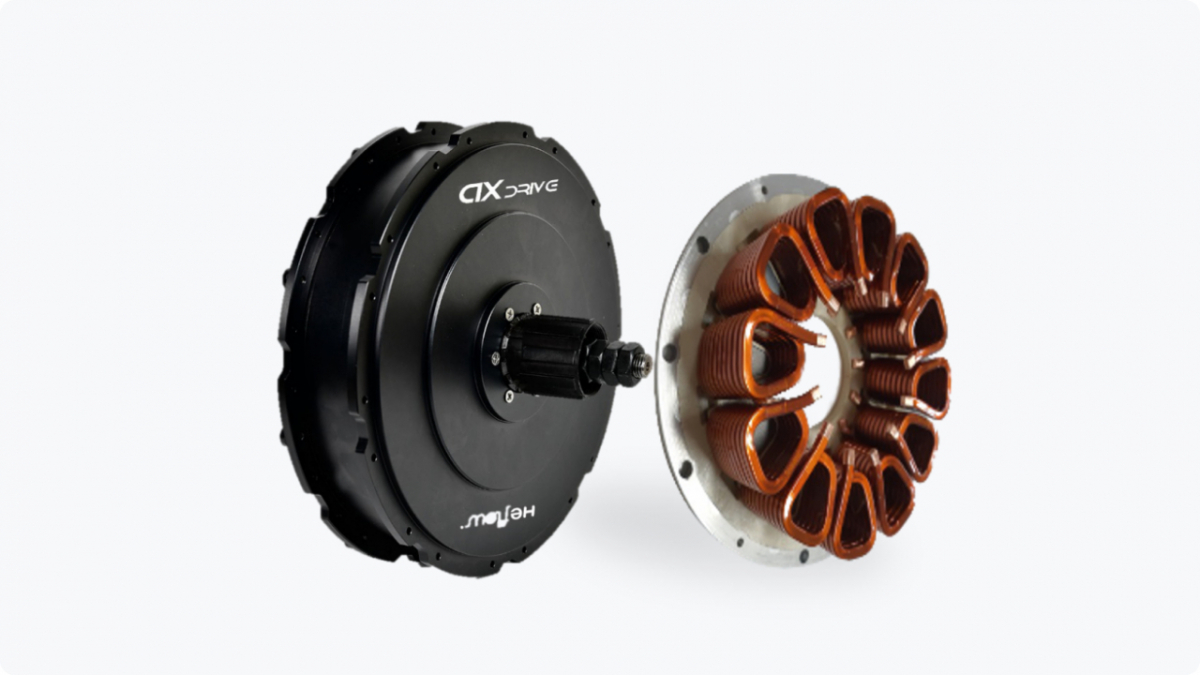
Motors are often seen as common industrial components, yet their importance cannot be overlooked. Fifty-five percent of global electricity consumption goes to motors. Improving motor efficiency is directly linked to solving the world's energy challenges. However, since Nikola Tesla developed the radial (radial-type) motor in 1888—the same type used today—only the quantity and type of magnets and copper wires have changed; there has been no fundamental transformation.
The AFPM motor features a different structure. In radial motors, magnets are attached to the sides of a cylinder, creating a magnetic field in only one direction. In contrast, AFPM motors place magnets on both the top and bottom of a disc, confining the magnetic field and maximizing density. Yoon Su-han (CEO) described it as "the equivalent of a car moving from ordinary roads onto a highway."
This technology was actually an idea proposed when Michael Faraday implemented a primitive disk motor in 1821. At that time, it was forgotten in the market because it could not be commercially produced like radial motors. However, starting in the late 20th century, new magnet developments and manufacturing technologies enabled by them made commercial production of AFPM motors possible. It is as if a 200-year-old puzzle has finally been solved.
"Only for Small Mobility" Persuaded Patent Holder to Start Business
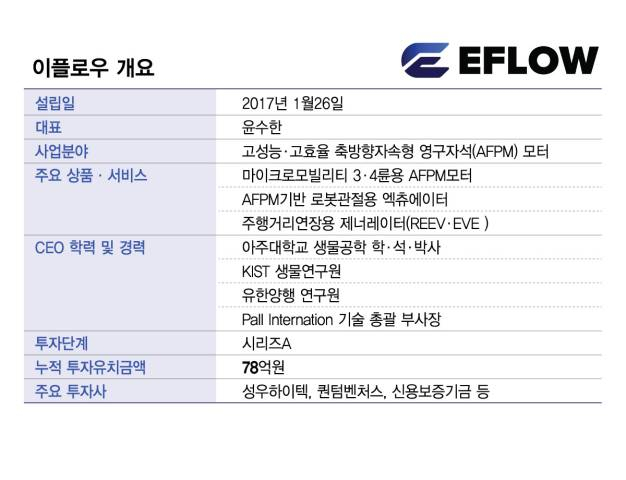
Yoon (CEO) spent over a decade in Hong Kong as a technology consultant for a German biotech company before being recruited by a local electronics firm. He then led 'open innovation,' traveling the world to identify viable technologies and commercialize them. It was during this period that he encountered the AFPM motor. However, the patent holder demanded 300 billion won in licensing fees, causing the deal to collapse. Nevertheless, Yoon (CEO) could not stop thinking about the AFPM motor.
"The technology itself was so excellent that I became convinced it would succeed if combined with Korea's superior manufacturing capabilities. When I told my then-chairman I was resigning to try business, he shook his head and said, 'It won't work.'"
Other companies and researchers also doubted the potential of AFPM motors. After returning to Korea, Gi Yeon-gu-won (Dr.) met with major conglomerates but received only responses indicating willingness to pay up to 100–200 billion won in licensing fees. The gap with the patent holder was too wide. Korean experts also expressed skepticism about commercialization, stating, "It will be difficult to produce and the cost will be high."
Yoon (CEO) reflected, "I saw the AFPM motor realized firsthand in Germany, but people without such experience simply dismissed it as impossible." Ultimately, Yoon (CEO) approached the patent holder and said, "We will only use it for micro-mobility. Please release the patent. If we succeed, we will provide a running guarantee." This led to permission. Thus, in 2017, iFlow was established, securing domestic AFPM motor technology.
During this process, Frank Heller, former CTO of German company SCHILLER—the original patent holder—joined iFlow, adding strength. It was the moment when Korea's mechanical expertise met Germany's electrical control specialization.
YASA's Success Proved "AFPM Was Right"
2020 was a turning point for iFlow. YASA, a startup founded by Oxford University alumni, leveraged AFPM technology to secure successive partial acquisitions from Rolls-Royce and Daimler, shaking up the global motor market. Daimler officially announced it would apply AFPM motors to all new vehicles after 2025. BMW also decided to equip its future electric supercars with YASA's AFPM motors. In response, Renault invested in a French AFPM development startup.
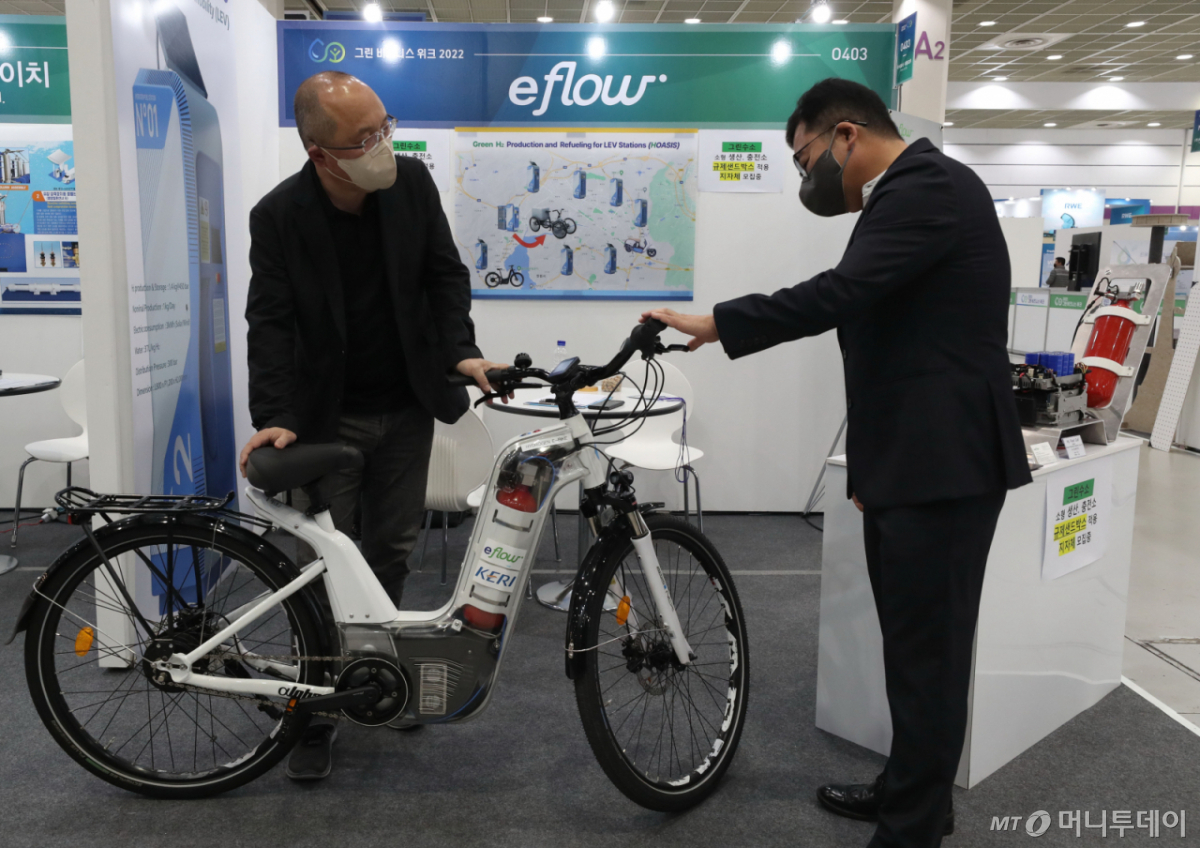
Unlike YASA, iFlow specializes in small AFPM motors. Current products are used in hydrogen bicycles and wheelchairs. Yoon Su-han (CEO) stated, "Just because a company makes wall clocks doesn't guarantee it can make wristwatches well," adding, "iFlow is best positioned to produce small AFPM motors with the highest torque (rotational force) at affordable prices."
New customers seeking small AFPM motors are emerging in the market: robots, satellites, and drones. iFlow is jointly developing motors for robots with Samsung Electronics and motors for artificial satellites with LG Electronics. The smaller the motor, the more natural robot movements become. In space, where a weight difference of just 1 gram leads to massive costs, there is a natural demand for even smaller and stronger motors.
Thanks to the US government's "China Out" policy, the drone market is seeing a surge in demand for non-Chinese alternative motors. Yoon (CEO) noted, "The US Republican Party has adopted the argument that military drones containing Chinese parts pose security risks," predicting, "In the future, any products containing even one Chinese raw material could be excluded from major US markets, so our motor demand will skyrocket."
Yoon (CEO) expressed confidence that iFlow would join the ranks of global companies by 2030. He said, "There are dozens of motor companies in Germany, all with annual sales exceeding 1 trillion won," and added, "From pencil-sized devices used in surgical tools to 3-ton motors made by Siemens, there is no place in the world where motors are not used." He further emphasized, "Starting this year, we will establish a local production facility in Cluj-Napoca, Romania, to accelerate our response to the global market."
[MoneyToday Startup Media Platform Unicorn Factory]

 in FUTURE


