

[For more diverse corporate information on the startups mentioned in this article, visit Unicorn Factory's big data platform 'Data Lab'.]
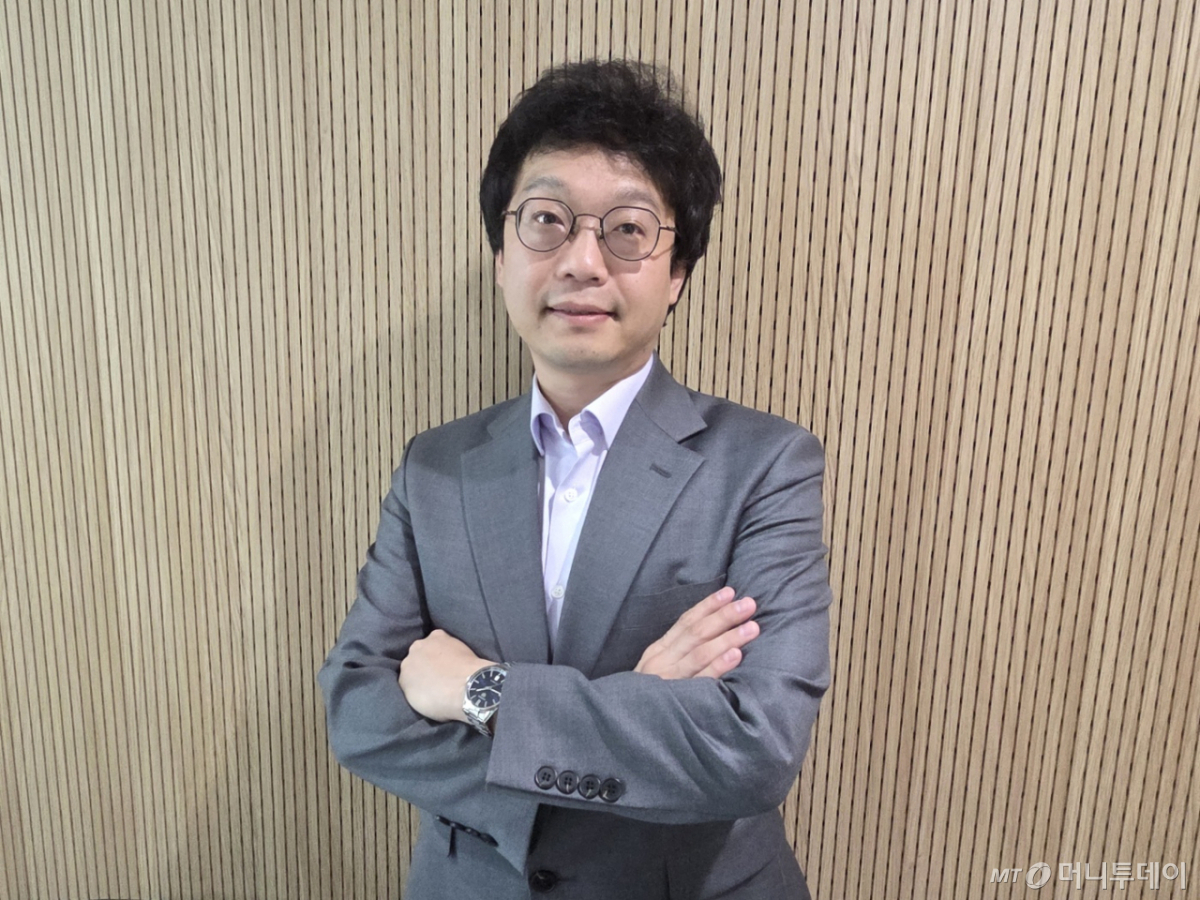
#When I asked Yoon Hui-yeong (CEO) to show me the 'smart window' they are developing, Yoon (CEO) brought out a single plastic film connected to a small battery. The moment the button was pressed, the transparent film turned opaque. Seeing my surprised expression, Yoon (CEO) empathized, saying, "That was exactly my reaction when I first encountered PDLC (Polymer Dispersed Liquid Crystal) as a junior in university."
As an undergraduate, Yoon Hui-yeong (CEO) became captivated by the PDLC shown by a professor and entered graduate school. Over nearly 15 years, they gained technical expertise while working at major corporations and startups, eventually founding 'Viewzen' in 2022. The background behind this fourth-year startup's consistent doubling of annual revenue and its ambition to conquer the global market lies in the proprietary PDLC technology that Yoon (CEO) has meticulously refined.
Smart windows shed their label as 'perennial promising stocks'
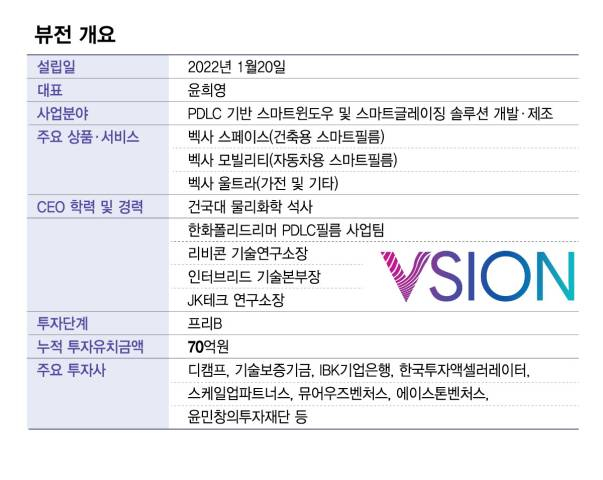
In fact, PDLC technology itself has existed for over 20 years. When Yoon (CEO) first entered a major corporation and began working with smart windows, the market viewed them skeptically: "It's good technology, but is it truly essential?"
Global climate crises, energy regulations, and trends like electric vehicles have shifted this market perception. To achieve lightweighting in electric vehicles, PDLC has emerged as an 'essential material' for glass roofs that block heat entering the cabin. Demand for insulating glass that reduces air conditioning usage to save energy has also surged. Smart windows capable of controlling heat transmission have become the mainstream choice.
Global research firm Grand View Research predicted that the global smart window market, valued at $7.3 billion (approximately 11 trillion won) in 2024, will grow to $13 billion (approximately 20 trillion won) by 2030, representing an annual growth rate of 9.6%. This is due to the rapidly increasing demand for 'controllable glass' driven by mandatory zero-energy building regulations and the expansion of electric vehicle adoption. Yoon (CEO) also stated, "Observing these market changes, I concluded that now is the time smart windows will gain prominence, which led me to decide on entrepreneurship."
Electric signals block 99.9% of UV rays in glass windows
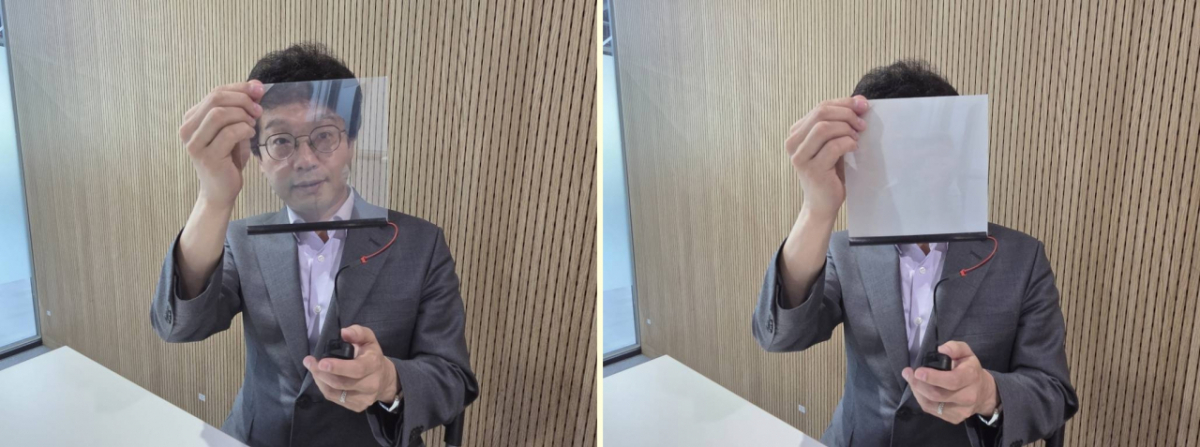
The core of smart windows, the PDLC film, is created by encapsulating liquid crystals and polymers within a film. When an electric signal is applied to the liquid crystal arrangement that normally transmits light, it changes to block light. Yoon (CEO) refers to this as a 'light shutter.' A reverse version also exists: maintaining an opaque arrangement under normal conditions and becoming transparent upon receiving an electric signal. Both versions consume extremely low amounts of electricity. Yoon (CEO) explained, "The amount of electricity consumed by one film attached to a regular window is less than keeping a fluorescent lamp on all day."
The difference between Viewzen and other companies with similar technology lies in 'design' and 'yield rate.' Yoon (CEO) stated, "While the overall technical framework is similar, differentiation occurs in the materials used and the layered structure design of liquid crystals and polymers. Based on a yield rate reaching 94–95%, we have also secured cost competitiveness."
Viewzen films achieve a UV (ultraviolet) blocking rate of 99% and an IR (infrared) blocking rate of over 80%. According to Viewzen's own simulations, applying the film to a 1,000㎡ window area can reduce cooling power consumption by up to 50%. The switching speed is also superior to competitors' average (50–300ms), achieving below 10ms (one-thousandth of a second).
Expanding into the home appliance market after automotive and construction sectors
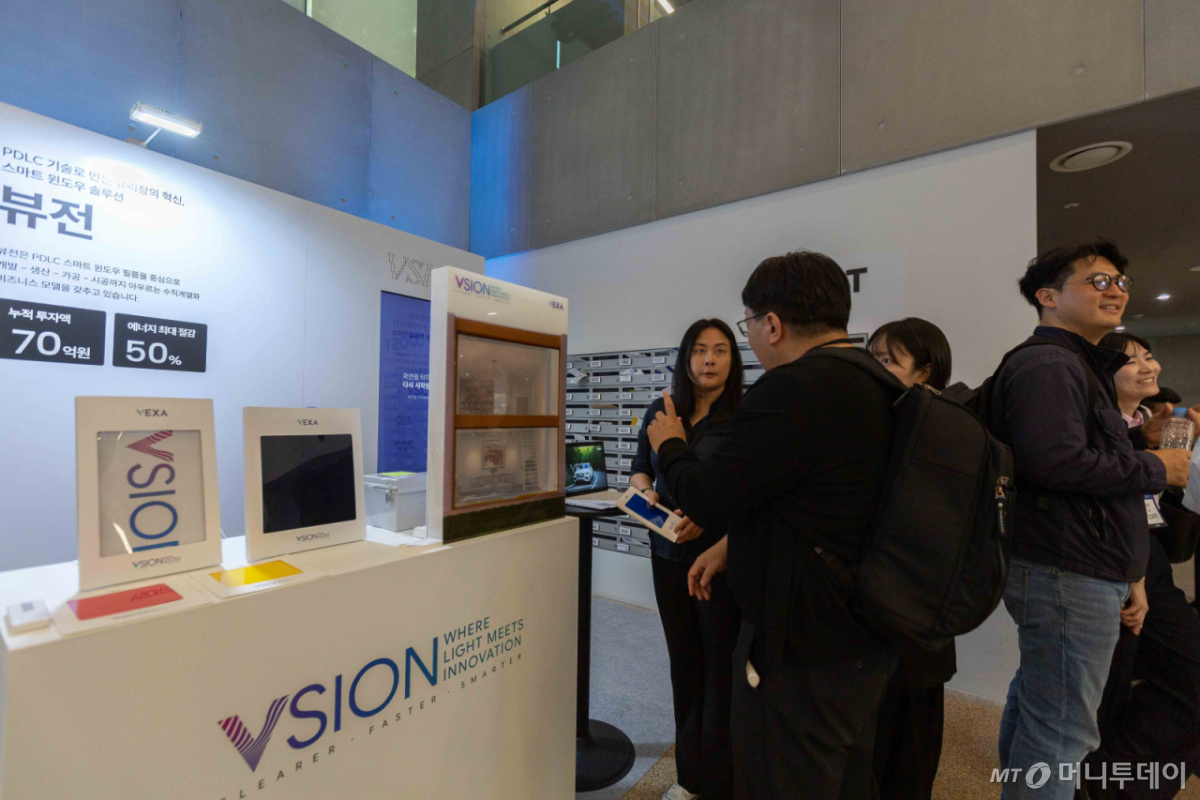
Leveraging this technological capability, Viewzen recently secured Letters of Intent (LOI) from global automotive companies. Starting with shipments early this month, the agreement covers supplying a minimum of 100,000㎡ annually for four years, totaling an annual value of 12 billion won. Additionally, a major Japanese glass manufacturer is currently conducting product reliability evaluations. Simultaneously, applications for high-speed rail windows in Taiwan and other countries are underway.
Beyond mobility, Viewzen is expanding its customer base in the construction sector. Collaboration projects are ongoing with a U.S. smart home company and Canadian interior design and shipbuilding firms. Discussions are also progressing to apply Viewzen products to all glass surfaces in new office buildings currently under construction by multiple major domestic companies.
Yoon (CEO) has identified 'home appliances' as a new target for expansion beyond vehicles and construction. They stated, "PDLC can be introduced into products requiring internal transparency for the emotional aspects of next-generation home appliances," adding, "We are currently evaluating application possibilities with various appliance manufacturers."
Thanks to positive market reception, revenue is growing steeply. After reaching 1.5 billion won in 2023 and 4.1 billion won in 2024, it increased to 6.7 billion won in 2025. In 2025, Viewzen also achieved an operating profit of 700 million won, turning profitable just three years after its establishment. Yoon Hui-yeong (CEO) announced, "This year, we aim for revenue of 35 billion won with overseas exceeding 80%," and added, "We will break through a 5% global market share by 2030."
[MoneyToday startup media platform 'Unicorn Factory']

 in FUTURE


