

[For more diverse corporate information on startups mentioned in this article, please visit Unicorn Factory's big data platform 'Data Lab'.]
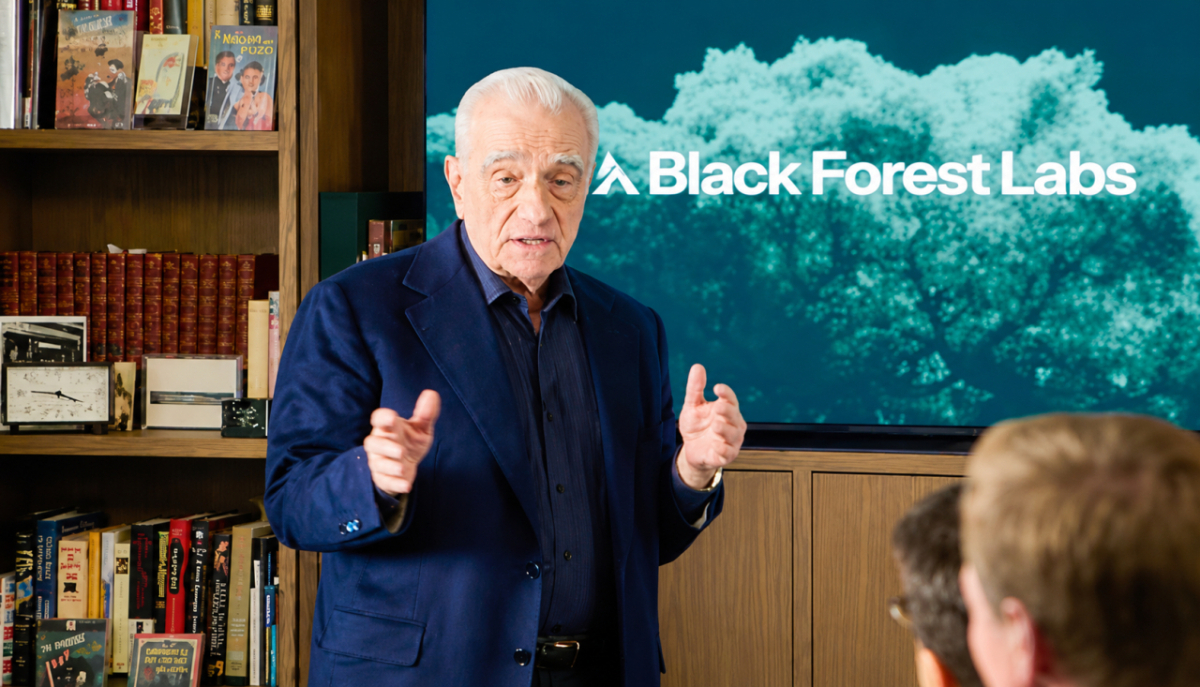
Hollywood, which had long treated AI use as taboo, has finally reached a turning point by embracing artificial intelligence. This shift comes after Martin Scorsese, a symbol of film art and a world-renowned director, publicly endorsed an image-generation AI startup.
According to a synthesis of reports from The New York Times (NYT) and BBC on the 6th, Director Scorsese recently revealed that he used technology from Black Forest Labs, a video-generation AI startup, to create storyboards during the pre-production phase of his upcoming film. Storyboarding is the process of visually organizing scene composition, camera angles, and character movement before filming begins.
Black Forest Labs also announced that Director Scorsese has been serving as both a partner and advisor since last year.
Scorsese stated, "I am interested in the intersection where technology and storytelling meet," adding, "I believe AI can expand the boundaries of creativity and provide audiences with deeper and richer experiences." He further remarked, "Film is a relatively young medium, only about 125 years old," emphasizing, "We must approach how films can evolve with an open mind," thereby expressing his views on AI.
Scorsese breaks Hollywood's AI taboo... creates storyboard for upcoming film using generative AI
Hollywood has long strongly guarded against AI due to concerns that creative personnel such as writers, actors, and visual effects (VFX) experts could be replaced by artificial intelligence.
Indeed, during the large-scale strike in 2023 involving the Writers Guild of America (WGA) and the Screen Actors Guild‐American Federation of Television and Radio Artists (SAG-AFTRA), regulation of generative AI emerged as a central issue. Following this, AI was treated almost like a taboo word in Hollywood.
However, the atmosphere is changing rapidly. Earlier, actress Demi Moore stated at last month's Cannes Film Festival that "fighting against AI is ultimately a battle we will lose" and that "finding ways to work together is a more valuable path." Additionally, Tribeca Film Festival, co-founded by actor Robert De Niro, recently selected a film produced entirely with AI—without actors, sets, or cameras—as part of its screening lineup.
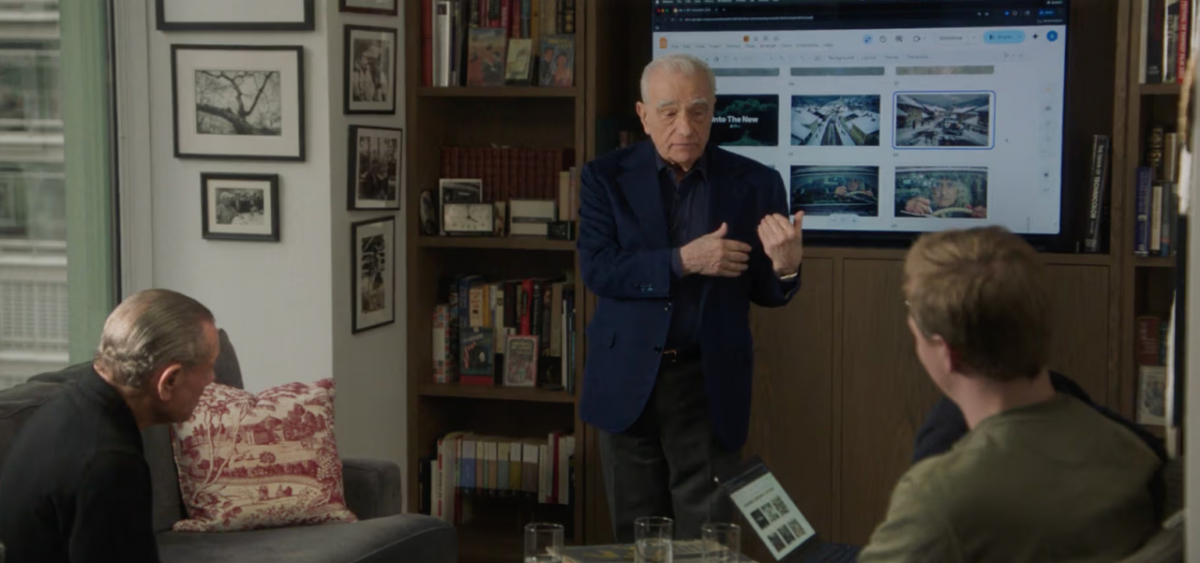
Director Scorsese explained that he utilized AI not for the entire filmmaking process but specifically for storyboard work. He said, "I have drawn storyboards directly for 70 years, but conveying mental images to actors and production teams has always been difficult." He added, "Using AI allows us to share ideas more clearly and efficiently with creative team members such as production designers and directors of photography."
However, immediately after the statement, strong backlash followed within the film industry. Karla Ortiz, a concept artist who worked on films including 'Avengers: Endgame,' 'Black Panther,' and 'Doctor Strange,' criticized via social media (SNS), stating, "AI models are likely trained on the work of storyboard artists," and expressed disappointment that Scorsese was using his influence to support technology that threatens the livelihoods of creators.
Animation director Samuel Ditz also pointed out, "Storyboarding is typically something that can be sketched in a few seconds," arguing, "There is no reason to use AI trained on the works of millions of artists."
Meanwhile, Black Forest Labs is a Germany-based AI startup founded in 2024. The company is developing 'Flux (FLUX),' an open-source AI model capable of generating images from text input alone and offering advanced video editing features.
VCs line up... Massive funding for space startup created by ex-SpaceX engineer
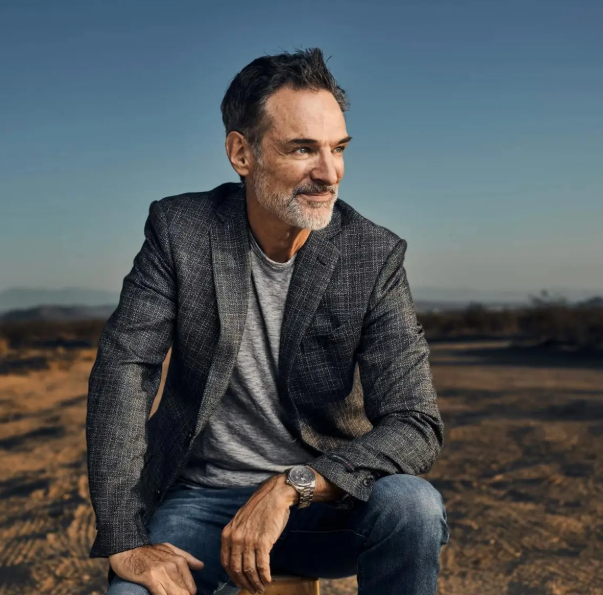
Impulse Space, a space startup founded by an ex-SpaceX engineer, has recently succeeded in raising a new round of investment totaling $500 million (approximately 773.6 billion won).
According to Bloomberg and other outlets, Impulse Space secured $500 million in its Series D funding round. Participating investors include Founder Fund, established by PayPal co-founder and Palantir Technologies co-founder Peter Thiel, as well as 137 Ventures and Banner VC.
With this investment, Impulse Space's corporate valuation has reached approximately $4.26 billion (about 6.6 trillion won). Since its establishment in 2021, the company has accumulated total funding of around $1 billion (approximately 1.55 trillion won).
Impulse Space was founded by Tom Mueller, an early engineer at SpaceX who led rocket engine development. As a founding member and Chief Technology Officer (CTO) of the propulsion division at SpaceX, Mueller led the development of engines and propulsion systems for the Falcon 1, Falcon 9, Falcon Heavy rockets, and the Dragon spacecraft. The industry regards him as one of the world's leading experts in space propulsion technology.
The company is focusing on developing 'space tugs' that move satellites to their desired orbits. Space tugs are responsible for transporting payloads from launch vehicles to their final target orbits after deployment. With the recent expansion of the low-Earth orbit satellite market, demand for such services has been growing rapidly.
Currently, the company operates and develops two types of spacecraft. The smaller 'Mira' spacecraft has completed three missions so far, with its most recent launch occurring in November last year. The larger 'Helios' spacecraft is designed to carry heavy payloads and aims for its first flight in 2027.
The company plans to invest the newly secured funds into expanding production capacity and acquiring talent. Over the past year, it has more than doubled its workforce and established new bases in Washington D.C. and Boulder, Colorado.
Additionally, the company is developing next-generation propulsion systems that can be utilized for long-distance space transport, landing, and orbital maneuvers.
Impulse Space is also strengthening its presence in the defense industry through recent collaboration with U.S. defense startup Anduril. Both companies are participating in the development of prototype space-based interceptors for the 'Golden Dome' project, a next-generation missile defense system being promoted by U.S. President Donald Trump. Golden Dome aims to protect the U.S. mainland from external attacks by establishing a multi-layered defense network that includes space.
Solution to AI power shortage?... Valuation of 'dream energy' fusion startup 'Helion Energy' soars
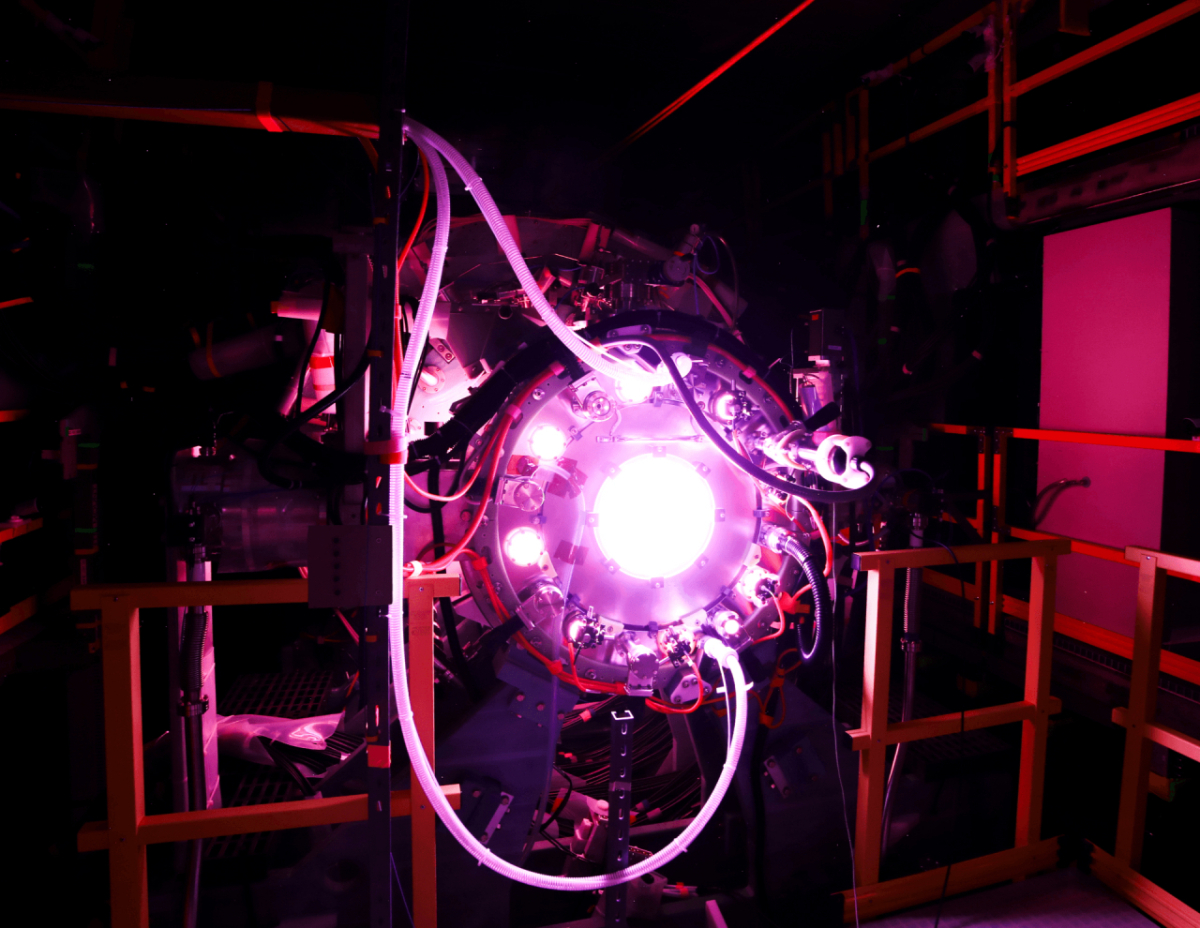
Nuclear fusion is gaining attention as a potential solution to the power shortage that has emerged as the biggest challenge of the AI era. Helion Energy, a nuclear fusion development startup invested in by OpenAI CEO Sam Altman, recently secured a new investment round of $465 million (approximately 719.5 billion won) in its Series G funding, raising its corporate valuation to $15.5 billion (approximately 23.977 trillion won).
According to international media such as TechCrunch and Reuters, the investment was led by U.S. VC Slice Capital. New investors include Alta Park Capital, Antler Fund, Box Group, Lux Capital, and Peak XV Partners. Existing investors SoftBank Vision Fund 2, Lightspeed Venture Partners, and Mistral Capital also participated in follow-on investments.
Helion is a representative nuclear fusion startup that received early investment from OpenAI CEO Sam Altman. Following its $425 million raise last January, the company's cumulative funding now totals approximately $1.5 billion (about 2.3 trillion won).
The raised funds will be allocated to the 'Orion' project, the first commercial nuclear fusion power plant under construction in Washington state. According to a contract signed with Microsoft (MS), the company aims to begin supplying nuclear fusion electricity to the grid as early as 2028. This timeline is considerably more aggressive compared to other fusion companies that generally anticipate commercialization in the mid-2030s.
Helion is attempting to develop technology differentiated from other fusion companies. Most fusion startups adopt a method where superheated plasma is confined by magnetic fields or lasers, and the resulting heat drives steam turbines to generate electricity. In contrast, Helion is developing a method that directly converts energy generated when plasma pushes against magnetic fields during the fusion reaction into electricity.
The company explains that this approach can offer higher efficiency than existing nuclear fusion power plants. However, some researchers point out that Helion has published relatively few academic papers, suggesting that its technology may not yet be sufficiently validated.
Meanwhile, this investment aligns with a recent trend of large-scale capital flowing into the fusion industry. Recently, Focused Energy announced a $240 million investment round, and Thea Energy secured 1 billion won. In February, Inertia Energy launched a Series A funding round worth $450 million, while Type One Energy is reportedly pursuing a Series B investment of $250 million.
[MoneyToday startup media platform Unicorn Factory]

 in FUTURE


