

[For more diverse corporate information on the startups mentioned in this article, please visit Unicorn Factory's big data platform 'Data Lab'.]
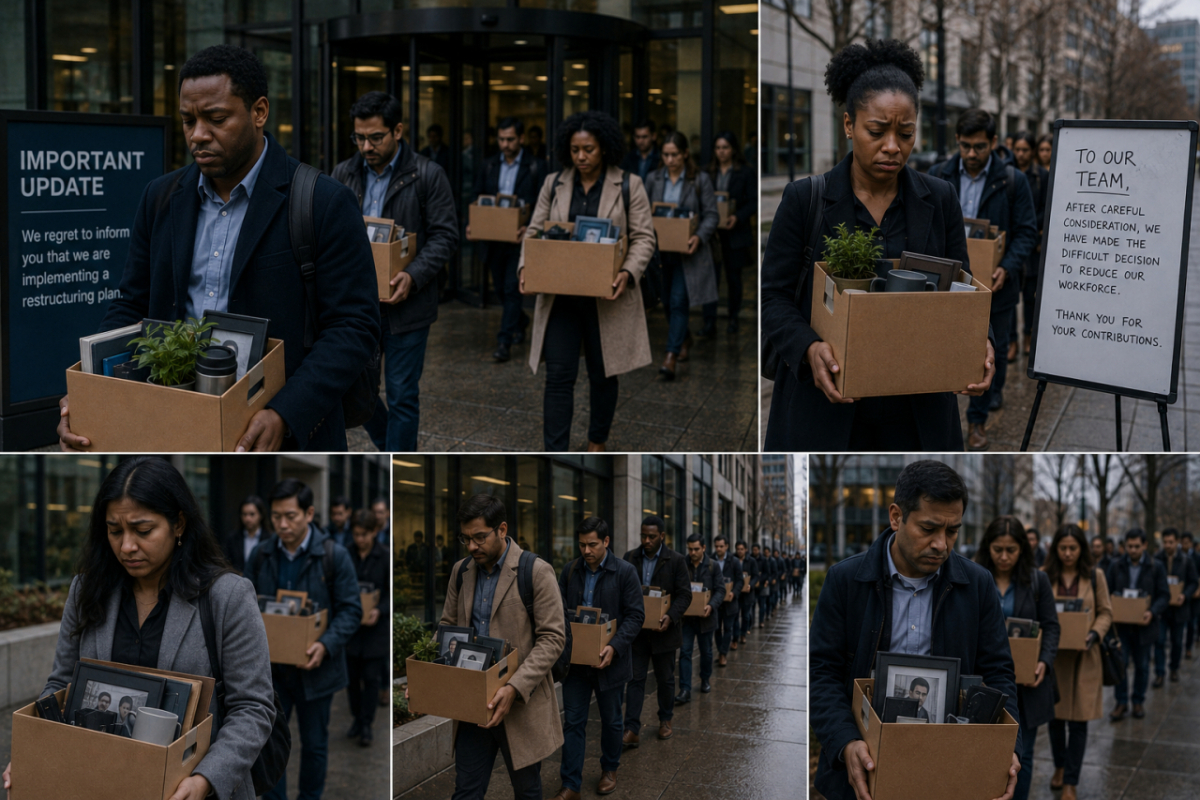
US proptech company OpenDoor is withdrawing completely from its India business. In Silicon Valley, this move is being interpreted not merely as a restructuring but as a symbolic case indicating that AI (artificial intelligence) has begun to shake the economic viability of the global outsourcing industry.
According to reports from Reuters and TechCrunch on the 12th, OpenDoor recently decided to completely withdraw its India operations. This comes less than two years after it launched business expansion in India in 2024.
Kaz Nejatian, CEO of OpenDoor, explained that this decision was made to bring operations back to the U.S., where customers are located, and to transition into an 'AI-native organization' that operates with fewer personnel.
This decision has drawn attention because India is the world's largest global capability center (GCC) market. GCCs refer to dedicated organizations established overseas by global companies to carry out IT (information technology), finance, research and development (R&D), and other functions. Currently, more than 2,100 GCCs are operating in India, employing approximately 2.36 million people. Their annual revenue scale reaches about $1 million won (approximately 151.85 trillion won).
Founded in 2014, OpenDoor is a digital real estate platform that allows consumers to buy and sell homes online. The company expanded its India business by opening new locations in Hyderabad and Bengaluru in 2024, in addition to its existing organization in Chennai. However, less than two years after expanding operations, it has decided to shut down all local businesses.
"Different from typical restructuring"... Silicon Valley in an uproar

This restructuring comes amid growing concerns that AI development can replace entry-level office jobs and back-office tasks. At the same time, political pressure is mounting within the U.S. to perform jobs domestically rather than overseas.
In particular, Silicon Valley venture capitalists (VCs) and entrepreneurs view this case as a representative example of AI beginning to replace labor-intensive tasks.
Sheel Mohnot, co-founder and partner at Better Tomorrow Ventures, an American VC, predicted that "as manual tasks are replaced by AI, many jobs in India could disappear."
Keshav Rohia of Emergent Ventures described this decision as a "watershed moment" for the AI operations era. He explained that while the Indian outsourcing industry has grown based on low labor costs, the start of AI replacing human work could weaken this cost advantage itself.
Phil Fersht, CEO of HFS Research, a market research firm analyzing the global outsourcing industry, offered similar analysis.
He stated, "This case is not merely a restructuring. It is part of a larger transformation as companies redesign their organizational operations around AI, automation, and more efficient business processes."
However, some views suggest it is difficult to interpret this case as the beginning of large-scale reshoring by global companies.
A Korean-American startup executive based in Silicon Valley said, "Interpreting OpenDoor's case as a signal for reshoring across all global companies is somewhat premature. Recently, U.S. companies have been moving toward maintaining or expanding their India locations while using AI to reduce hiring scales and improve productivity."
He continued, "In fact, the establishment of GCCs by U.S. companies in India continues to show an upward trend. The core change is not withdrawal from India but the spread of an AI-based operational model that 'does more with fewer people.'"
'Digital Company Hunter' Italian Startup Knocks on NASDAQ... Aiming for a 30 Trillion Won Valuation

An Italian startup is challenging to list on the U.S. NASDAQ with a corporate valuation target of 30 trillion won.
According to major foreign media outlets such as Reuters and TechCrunch, Italian tech company Bending Spoons recently submitted a securities registration statement for its planned listing on the U.S. NASDAQ. The company is reportedly aiming to pursue an IPO (initial public offering) by the end of this month with a minimum corporate valuation target of $20 billion (approximately 30 trillion won).
Founded in 2013, Bending Spoons started as a mobile app developer but has recently gained attention for its strategy of acquiring digital companies with deteriorated profitability, improving their business structures, and enhancing profitability. This year, it acquired internet brand AOL and event platform Eventbrite, and also holds file-sharing service WeTransfer and video platform Vimeo. To date, it has completed mergers and acquisitions (M&A) on more than 50 companies.
Financial performance is also improving rapidly. Bending Spoons reported revenue of $1.31 billion (approximately 1.9925 trillion won) last year. First-quarter revenue this year was $601 million (approximately 914.1 billion won), a 132% increase compared to the same period last year. Net profit for the same period reached $27.4 million (approximately 41.7 billion won).
Most of the company's revenue comes from subscription services, which account for 84% of total revenue. As of March, the company has secured more than 500 million monthly active users (MAU) and over 9 million monthly paying users.
Luca Ferrari, CEO of Bending Spoons, expressed his intention to continue large-scale M&A in the IPO prospectus.
He stated, "There are more than 1,000 private and publicly listed digital companies currently under review as acquisition targets," adding, "Huge opportunities lie ahead."
Meanwhile, the name Bending Spoons was derived from a scene in the movie 'The Matrix' where a character bends a spoon with their mind. The joint lead managers for this IPO are Goldman Sachs, JPMorgan, and Allen & Company.
Zuckerberg and Ambani Draw Closer Through AI... 168MW Data Center Alliance

Meta has signed a contract to build a super-large AI data center in India. Amid fierce competition to secure computing infrastructure needed for AI development, India has been selected as a new hub for AI infrastructure.
Meta recently announced that it will partner with Indian company Reliance Industries (hereinafter Reliance) to build an AI data center with a capacity of 168MW (megawatts). Reliance will construct the facility in Jamnagar, Gujarat, India, and provide it to Meta within two years. The agreement also includes options for future expansion.
Mark Zuckerberg, CEO of Meta, said, "The world-class facility being built in Jamnagar will help expand Meta's global AI infrastructure," adding, "It will also serve as an opportunity to further strengthen long-term investment in the Indian economy."
The cooperation between Meta and Reliance dates back to 2020. At that time, Meta invested $5.7 billion (approximately 8.6669 trillion won) in Jio Platforms, Reliance's telecommunications and digital subsidiary. Last year, the two companies expanded their collaboration by also promoting projects that enable Indian companies and developers to utilize Meta's open-source AI models.
Mukesh Ambani, Ra I-eon-seu (Chairman) of Reliance, evaluated this investment as "a turning point for India's digital infrastructure."
Recently, the Indian government announced a policy providing tax incentives for up to 20 years to data center operators this year, actively courting global big tech companies.
Market research firms and investment banks believe that India will be one of the biggest beneficiaries of future AI infrastructure investments. In a report released on the 2nd, Japanese investment bank Nomura stated, "India's data center industry is one of the fastest-growing markets in the world," predicting that "India's data center capacity will expand to around 7GW (gigawatts) by 2030."
In addition, Meta also announced that it is cooperating with Indian renewable energy companies CleanMax and Fourth Partner Energy to secure power needed for data center operations. It plans to supply power to its Jamnagar facility in India through a total of 1GW-scale renewable energy projects.
Meanwhile, as of last year, Chairman Ambani holds net assets of $120 billion (approximately 183 trillion won), ranking him 12th among the world's richest people selected by Forbes and the wealthiest in Asia. Reliance, led by Chairman Ambani, is India's largest corporate group operating in diverse sectors including petrochemicals, telecommunications, media, retail distribution, and renewable energy.
[MoneyToday startup media platform Unicorn Factory]

 in FUTURE


