

[For more diverse corporate information on the startup featured in this article, please visit the Unicorn Factory big data platform 'Data Lab'.]

Efforts to produce artificial blood in laboratories without relying on blood donations are ongoing. However, there are many hurdles to overcome before it can be commercialized at a level suitable for actual patient transfusions. In particular, given that a single transfusion requires trillions of red blood cells, securing mass production technology and reducing production costs are cited as key challenges.
Artblood, a biotech startup featured in MoneyToday's 2024 startup media platform "Unicorn Factory" flagship corner "StartUP Story," has focused over the past two years on advancing manufacturing processes for the mass production of artificial red blood cells. While it previously highlighted its ex vivo production technology utilizing red blood cell progenitor cell lines, it is now laying the foundation for actual pharmaceutical commercialization through high-concentration culture and cost reduction.
Bae Eun-jung, CEO of Artblood, stated in a recent follow-up interview with Unicorn Factory, "The most significant achievement since our founding has been the simultaneous development of progenitor cell lines capable of producing transfusable red blood cells and manufacturing processes for culturing them at high concentrations." She added, "We have grown into a company developing a manufacturing platform capable of producing ex vivo red blood cells on an industrial scale."
Advancing Mass Production Technology Based on Progenitor Cell Lines
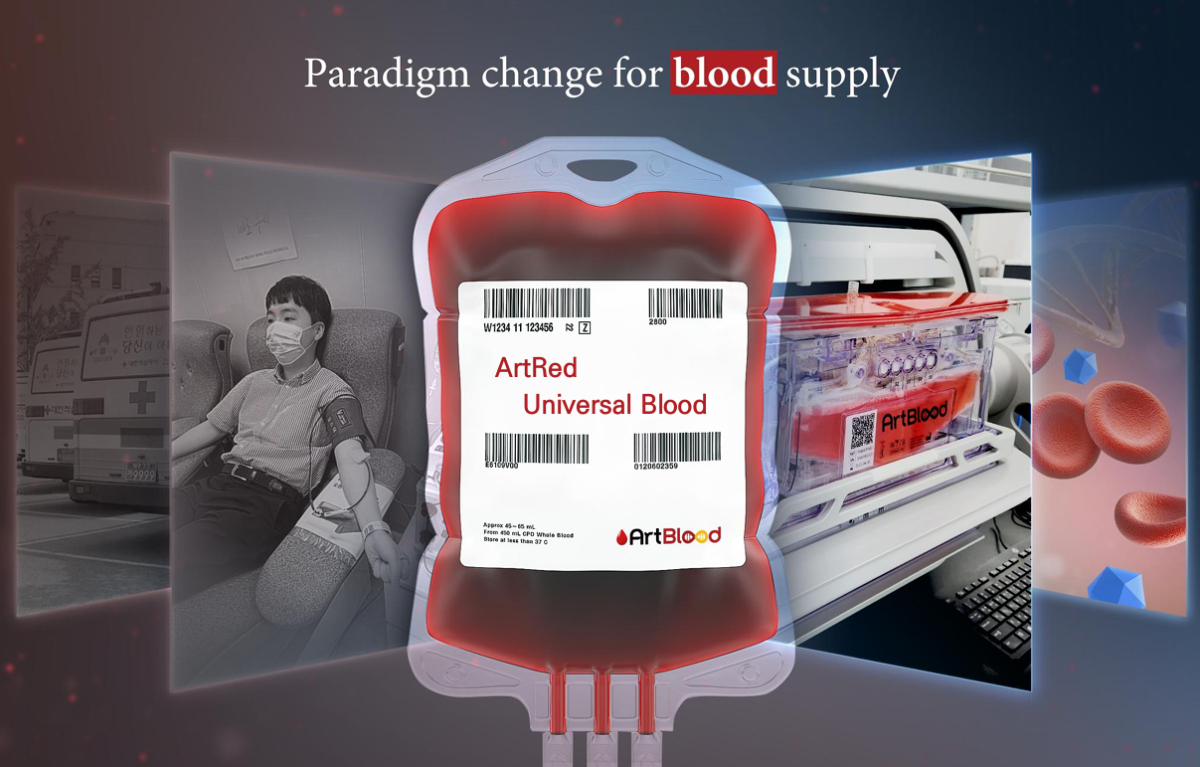
Existing methods for creating artificial red blood cells include culturing hematopoietic stem cells, which are the origin of blood cells, or utilizing induced pluripotent stem cells (iPSCs) that can differentiate into various cell types. However, hematopoietic stem cells have limited capacity to proliferate ex vivo, and iPSCs face the challenge of a complex process for differentiating and maturing into red blood cells.
Artblood is overcoming these limitations by establishing cell lines capable of long-term proliferation from progenitor cells, which correspond to an intermediate stage in the formation of red blood cells. The method involves regulating the expression of genes involved in cell proliferation to maintain the proliferative capacity of progenitor cells, followed by producing red blood cells through differentiation and maturation processes. Since established cell lines can be repeatedly cultured to produce red blood cells, it reduces the burden of having to secure new hematopoietic stem cells each time.
Recently, the company has improved production efficiency by achieving high-concentration culture and a high enucleation rate. Enucleation is the process in which immature red blood cells expel their nuclei to transition into mature red blood cells. To produce transfusable red blood cells, it is important to secure a sufficient number of cells while maintaining a high enucleation efficiency.
The company is also achieving results in reducing production costs. It has lowered the costs associated with media and reagents, process development, analysis, and quality control to half the level compared to early this year. The plan is to secure price competitiveness through high-concentration culture, reduction of media raw material costs, and improved bioreactor operation efficiency.
CEO Bae stated, "The key challenges in commercializing artificial red blood cells are consistent mass manufacturing and production unit cost." She explained, "We are developing manufacturing processes in a direction that improves not only cell proliferation capacity but also high-concentration culture, enucleation rate, and separation/purification recovery rate simultaneously."
Targeting Clinical Entry by 2029…Focusing on Chronic Anemia Patients First
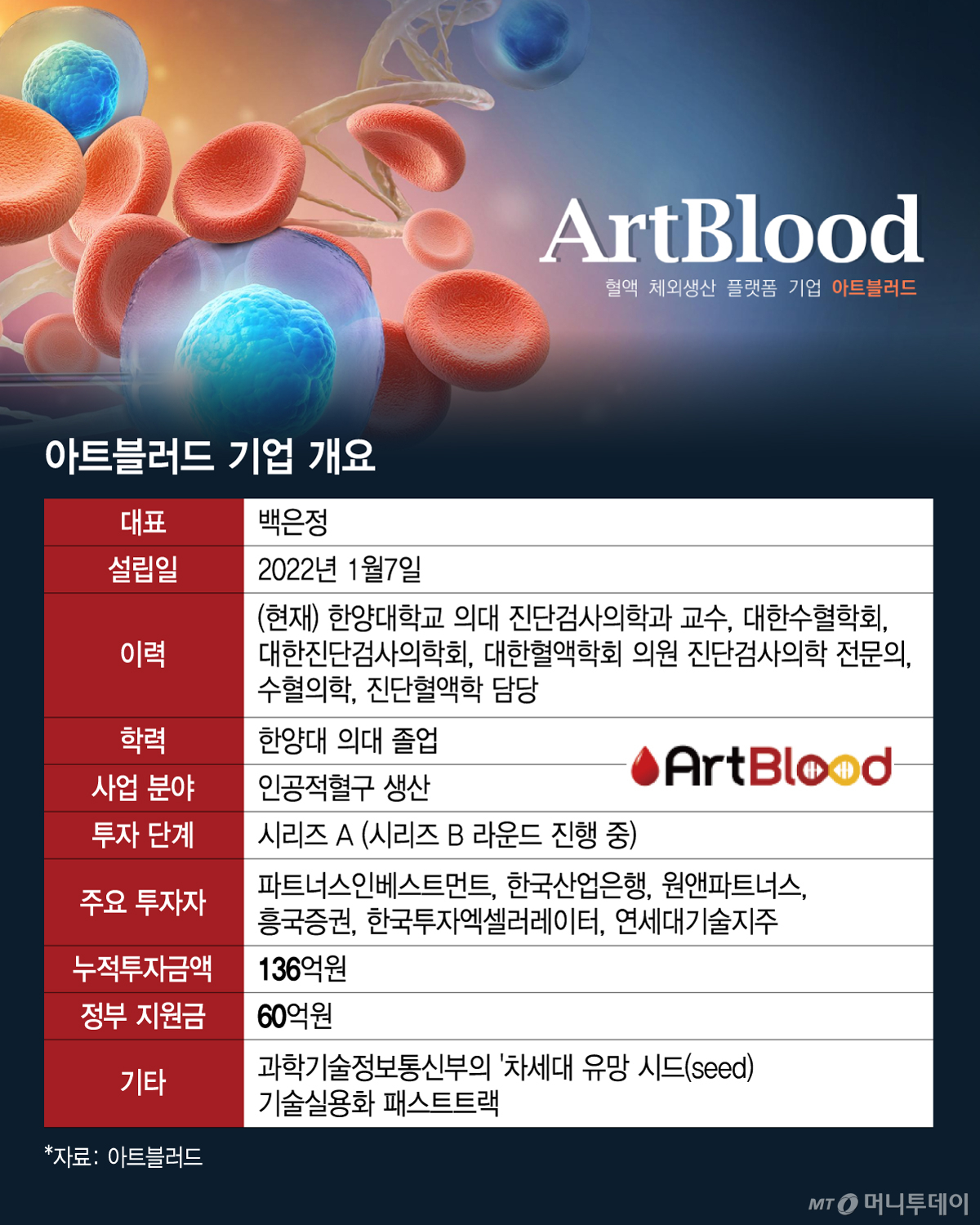
Artblood aims to submit an Investigational New Drug (IND) application to the Ministry of Food and Drug Safety in the fourth quarter of 2028 and enter clinical trials in 2029. Currently, it is preparing for clinical entry by establishing a GMP (Good Manufacturing Practice) master cell bank, validating analytical methods, and conducting preclinical safety assessments.
In early clinical trials, the company is considering evaluating safety, in vivo survival period, and red blood cell function in patients with chronic anemia who require long-term, repeated red blood cell transfusions.
In particular, the artificial red blood cells developed by Artblood are based on O-negative (O Rh negative) and have the characteristic of being negative for major blood type antigens. Based on these characteristics, the company plans to expand its scope of application to patients who face blood type compatibility issues during repeated transfusions or those with rare blood types.
Additionally, it is expected that the method of producing red blood cells ex vivo will help reduce quality variations depending on donors and lower the risk of certain transfusion adverse reactions.
CEO Bae stated, "We plan to first supply patients with chronic anemia who require repeated transfusions by manufacturing ex vivo-produced red blood cells into pharmaceuticals of consistent quality." She added, "In the long term, we will develop it into a product that can be utilized in regions with insufficient blood supply or special medical environments."
The company is also concurrently developing artificial red blood cells for canine transfusions. Based on cell production and culture technologies secured in human artificial red blood cell research, it succeeded in the ex vivo production of dog blood. It was selected for the Ministry of Science and ICT's "Next-Generation Promising Seed Technology Commercialization Fast Track" project last year and is currently advancing related research and development.
Beyond Transfusion to a Drug Delivery Vehicle…Expanding the Scope of Red Blood Cell Utilization
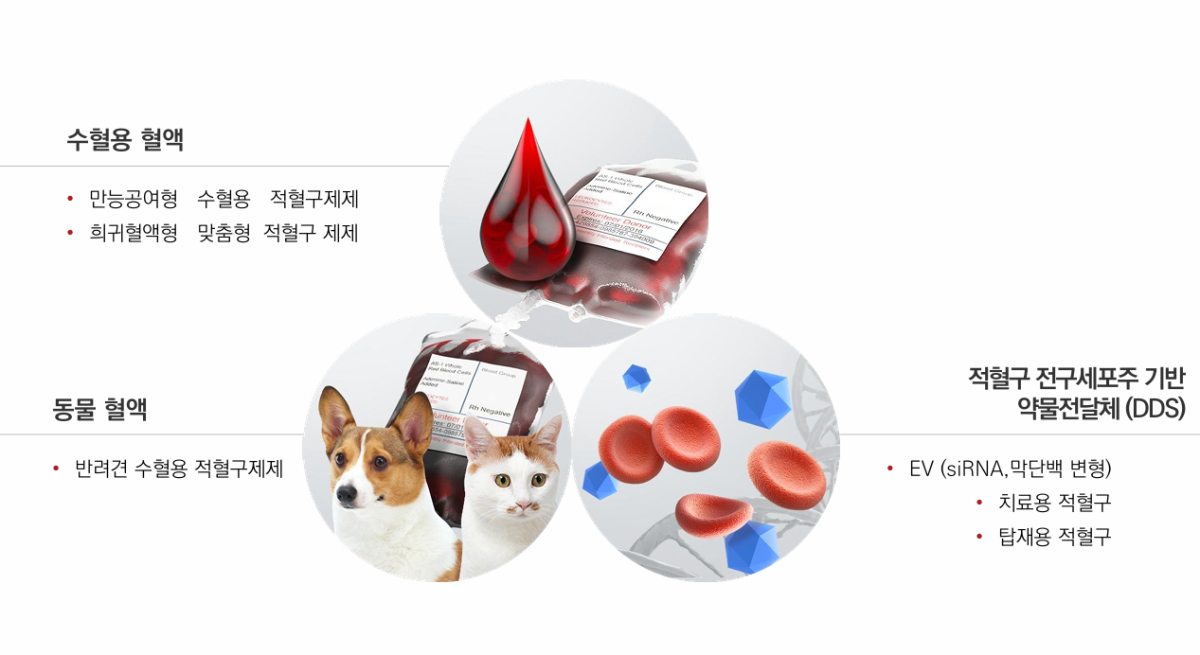
Artblood is also conducting research on utilizing artificial red blood cells not only for transfusion but as a means of delivering therapeutic substances. Recently, it succeeded in expressing specific proteins in progenitor cells at the stage before maturing into red blood cells, and is developing technology to impart functions that recognize specific organs or cells on the surface of red blood cells.
If these technologies are commercialized, they are expected to be utilized as a "drug delivery vehicle" for delivering therapeutic substances to specific cells in the body using red blood cells. Artblood plans to seek business opportunities through joint research and technology transfer with pharmaceutical and biotech companies in the future.
CEO Bae stated, "We will grow into a global biotech company that solves the problem of insufficient blood supply through a manufacturing platform based on red blood cell progenitor cell lines and opens up new therapeutic possibilities utilizing red blood cells."
[MoneyToday startup media platform Unicorn Factory]

 in FUTURE


