

More diverse corporate information on the startups mentioned in this article can be found on Unicorn Factory's big data platform, Data Lab.
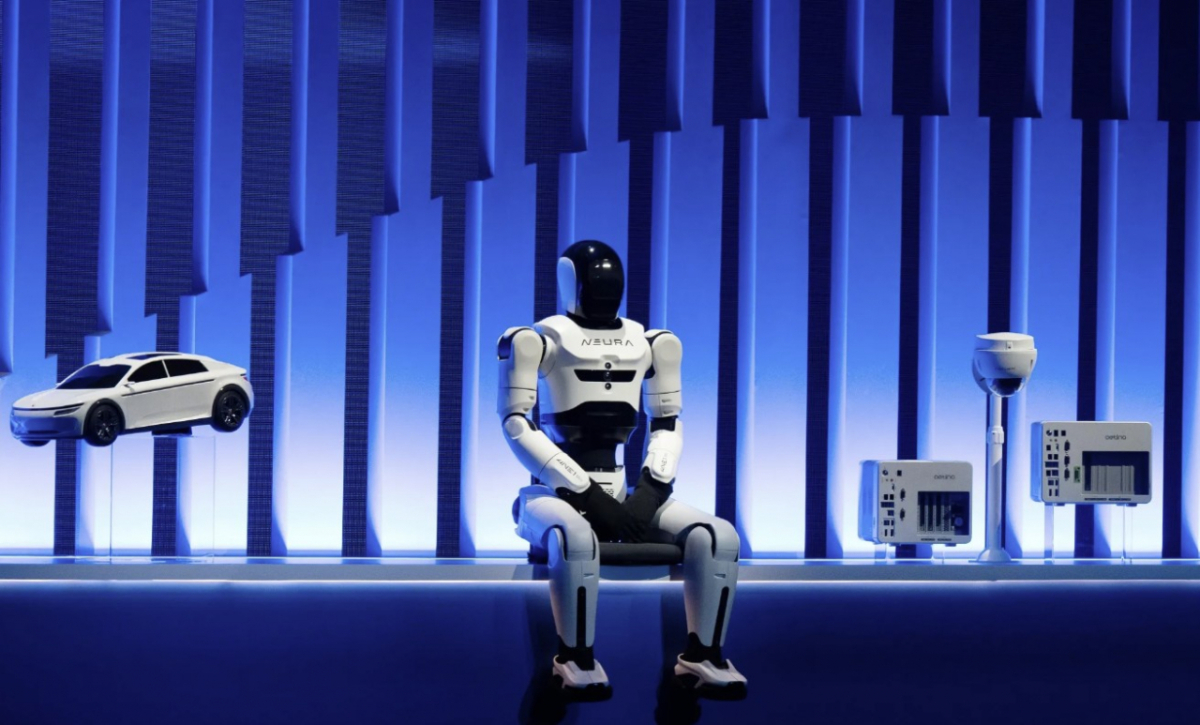
A German robotics startup developing a "robotic Android" project has attracted over 2 trillion won in investment. Just as Google secured dominance of the mobile ecosystem by providing its Android operating system to smartphone manufacturers, global investors have lined up for this company, which aims to build a platform connecting robot hardware worldwide through its own OS and shared intelligence network.
From Tether to NVIDIA, Amazon, and Qualcomm... The robot supply chain has come together.
According to a summary of foreign media reports including Bloomberg and Crunchbase on the 20th, NEURA Robotics recently secured an investment of approximately $1.4 billion (about 2 trillion won) in its Series C round. This marks the largest single round for a full-stack robotics company. Through this round, NEURA Robotics' corporate valuation surged to approximately $7 billion (about 10.7 trillion won).
Tether, the world's largest stablecoin issuer, led this round of investment, with participation from NVIDIA, Amazon, Qualcomm, Bosch, Schaeffler, and the European Investment Bank (EIB). It is noteworthy that the entire robot supply chain is represented on the investor list, including NVIDIA, the number one company in the AI chip market; Amazon, the largest demand source for logistics automation; and Bosch and Schaeffler, leading companies in the robotics components sector.
Neura Robotics was founded in 2019 in Metzingen, Germany. Its founder and CEO, David Legger, coined the term "Cognitive Robotics." While sequentially founding three robotics-related high-tech companies in Switzerland, he experienced the limitations of the existing robotics industry and became convinced of the economic potential of cognitive robotics. Upon returning to Germany to establish Neura Robotics, he envisioned developing cognitive robots as a core objective to address structural issues such as an aging population, labor shortages, and rising demand for skilled work.
Neura Robotics is one of the few "full-stack" companies that directly develops and produces its entire line of robots in Europe. Its major product lines include: humanoid robot "4NE-1," mobile robot "MAV," collaborative robotic arms "LARA·MAIRA," home and service mobile robot "MiPA," and quadruped walking robots.
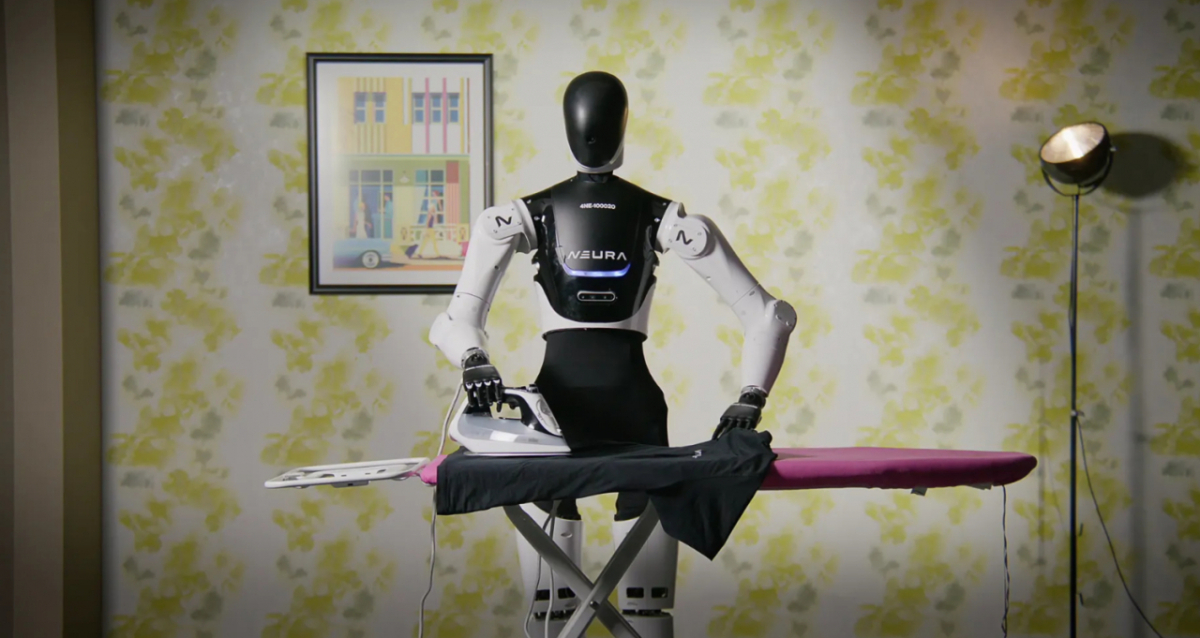
The company aims not merely to be a robot manufacturer but to build "NewLabs," an ecosystem for sharing technology and experience among robots. This system is also the background behind why global investors have focused on NewR Robotics.
The existing robot learning method follows a centralized structure where data from around the world is trained on headquarters servers and then distributed via OTA (over-the-air transmission technology), resulting in slow update cycles. This is easy to understand by recalling Tesla's Autopilot approach.
On the other hand, Neuravus is a platform that enables robots at Factory A to share their newly acquired skills in assembling new parts with robots at Factory B and homes without routing through a central server. It also includes a marketplace structure where developers or partners can share specific skills on the platform, allowing other robots to download and use them immediately. The goal is to build an open infrastructure that enables all robots worldwide to share capabilities and learn from each other in real time.
The Legacy CEO stated, "Just as smartphones transformed the mobile market, robots must also enter our daily lives," adding that "the future of AI (artificial intelligence) will not be confined to screens but will move and learn in the physical world, working alongside humans." He further noted that once the NewRavers structure is completed, a network effect will occur where the more robots are deployed, the faster learning will take place.
Meanwhile, according to Dealroom's aggregation of institutional investors, cumulative investment in global robotics companies in the first half of this year reached $55.8 billion (approximately 85.5 trillion won), marking a record high. This level is equivalent to twice the total amount for the entire previous year.
"China's AI Rise": DeepSeek Mobilizes National and Big Tech Funding
Global AI Chinese startup DeepSeek has completed fundraising of approximately 11 trillion won, securing a corporate valuation of 76 trillion won. This comes one year after it stunned Silicon Valley and Wall Street by unveiling low-cost, high-performance AI models.
According to major foreign news outlets including Bloomberg, Reuters, and The Wall Street Journal, DeepSeek raised more than $7.4 billion in its first external funding round and was valued at over $50 billion.
Founder and CEO Liang Yuanfeng personally invested $3 billion (approximately 4.6 trillion won), while China's leading big tech firm Tencent, the world's No. 1 electric vehicle battery manufacturer CATL, e-commerce company JD.com, and game developer NetEase also participated in the investment. The "National AI Industry Investment Fund," established by the Chinese government, was also listed among the investors.
This investment was structured in a special way to maintain CEO Liang Yuanfeng's control. External investors chose to put their funds into a limited partnership managed by Liang Yuanfeng, rather than into DeepSeek itself. This is a form where the founder directly holds the authority to execute incoming external investments. The mandatory holding period is five years, and investors cannot exercise voting rights. This effectively blocks investments seeking quick profit realization while maintaining control over management and fund operations.
Foreign media outlets noted that this investment round signals China's accelerating efforts to build a domestic-centric industrial ecosystem spanning AI model development to power and energy infrastructure. With high-end chip procurement blocked by U.S. export restrictions on semiconductors to China, DeepSeek has played a role in boosting the performance of domestic AI semiconductors through cooperation with Chinese chip companies such as Huawei. A significant portion of the newly secured investment funds is expected to be allocated to research and development (R&D) and the expansion of computing infrastructure.
Space satellite company iPsy sees corporate valuation quadruple in six months
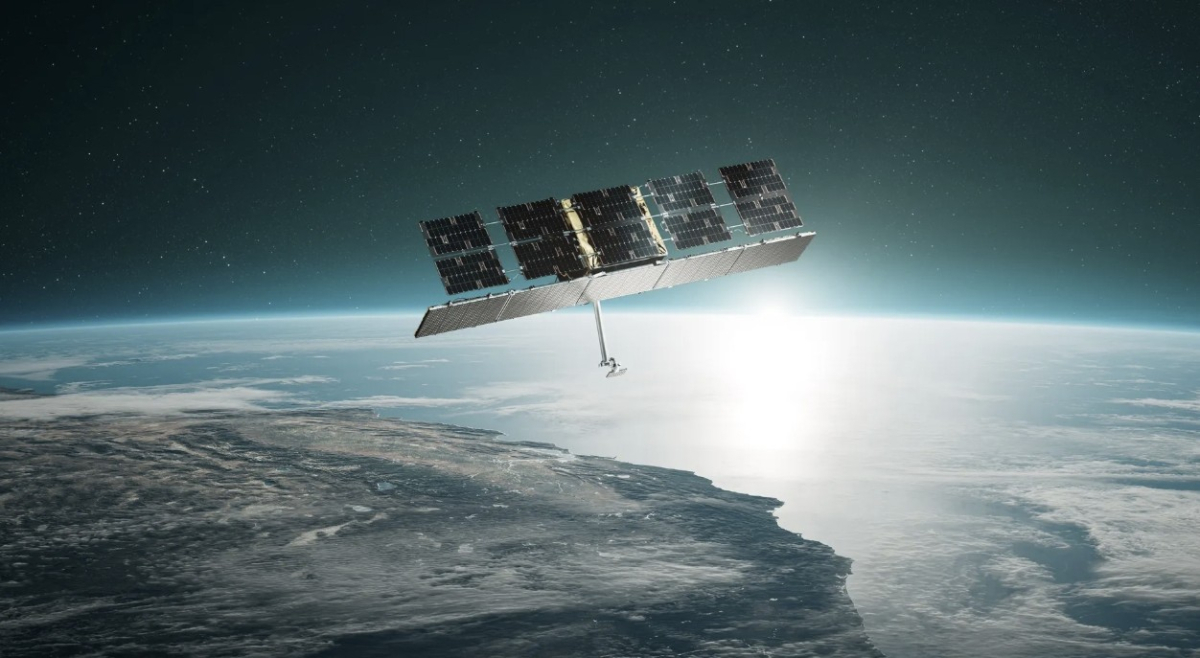
The corporate valuation of Finnish SAR (Synthetic Aperture Radar) satellite startup ICEYE has more than quadrupled in six months. This surge was directly driven by a series of contracts with major countries, aligned with the trend of increasing defense spending in Europe.
According to Bloomberg, TechCrunch, and Crunchbase, AI Psy raised 450 million euros (approximately 80 billion won) in its recently closed Series F round. In this round, the corporate valuation reached 10 billion euros (approximately 17.6 trillion won), more than four times higher than the 2.4 billion euros valuation during the Series E round six months ago.
This round was led by the global private equity firm General Atlantic. Qatar Investment Authority, Nokia, and TCV joined as new investors. Existing investors including Solidium, Tesi, Barma, and LifeLine Ventures also contributed funds.
Although it was initially expected that this round would be launched with a scale of 250 million euros, investor demand surged, resulting in an actual fundraising size that is much larger. The background for why iPsy has attracted attention in the investment market includes a sharp increase in orders and strong performance.
The backlog for orders of its sovereign satellite systems, purchased by governments in seven European countries including Germany and Poland from iPsy, has exceeded 1.5 billion euros (approximately 2.6 trillion won). Sales, which were 250 million euros (about 440 billion won) last year, are expected to surpass 500 million euros (around 880 billion won) this year.
The funds raised this time will be invested in expanding the SAR constellation, R&D of next-generation sensing technologies, upgrading data platforms for government and institutional investors, and expanding into defense system integration sectors. The goal is to double satellite production capacity from the current annual level of 50 units to 100 units by 2028.
[Money Today Startup Media Platform Unicorn Factory]

 in FUTURE


