

[For more diverse corporate information on startups mentioned in this article, please visit Unicorn Factory's big data platform 'Data Lab'.]
"I was diagnosed with cancer, but the doctor's explanation ended in just two minutes. Patients leave the clinic holding test result sheets filled with English medical terminology without understanding the content. As a result, many patients upload their test results to online communities asking 'What does this mean?' and rely on brief explanations from self-proclaimed experts."
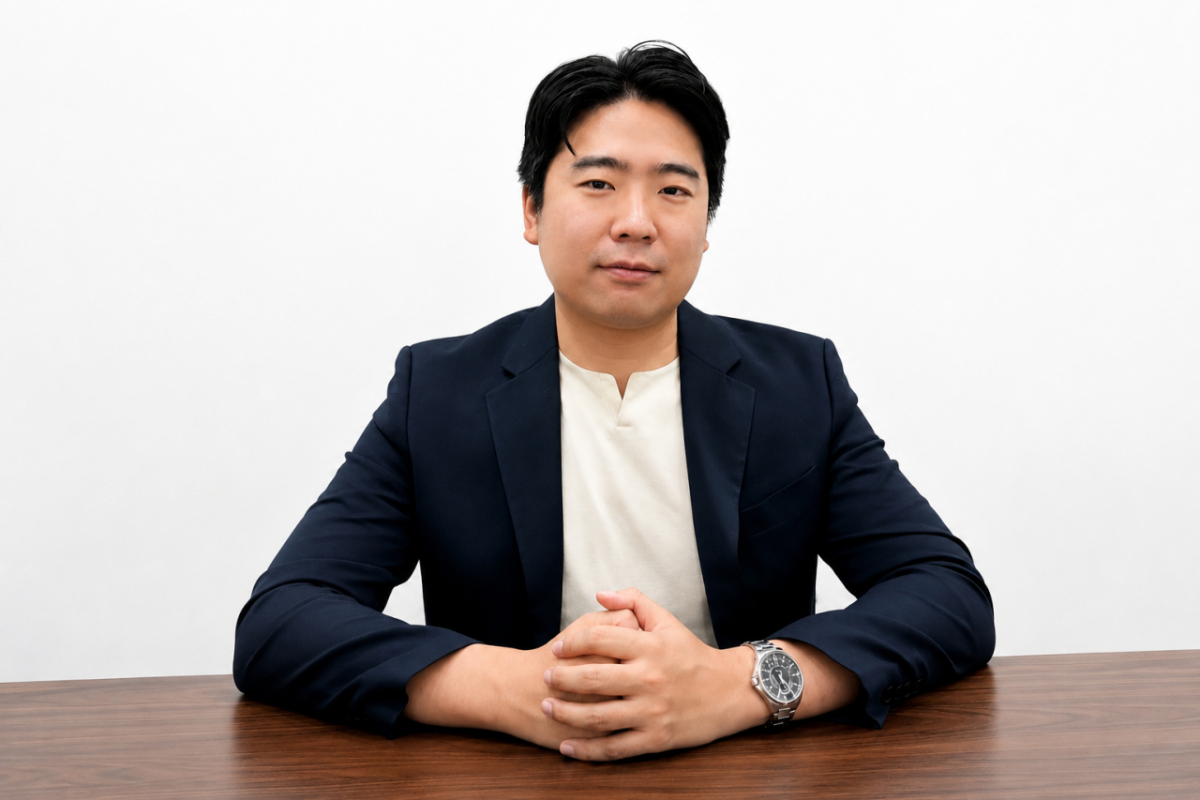
Lee Su-hyeon (CEO), CEO of __NAME_1__, which operates the AI healthcare platform 'Ontol', recently explained how the company arrived at its current business model (BM) in an interview with MoneyToday's startup media platform, Unicorn Factory.
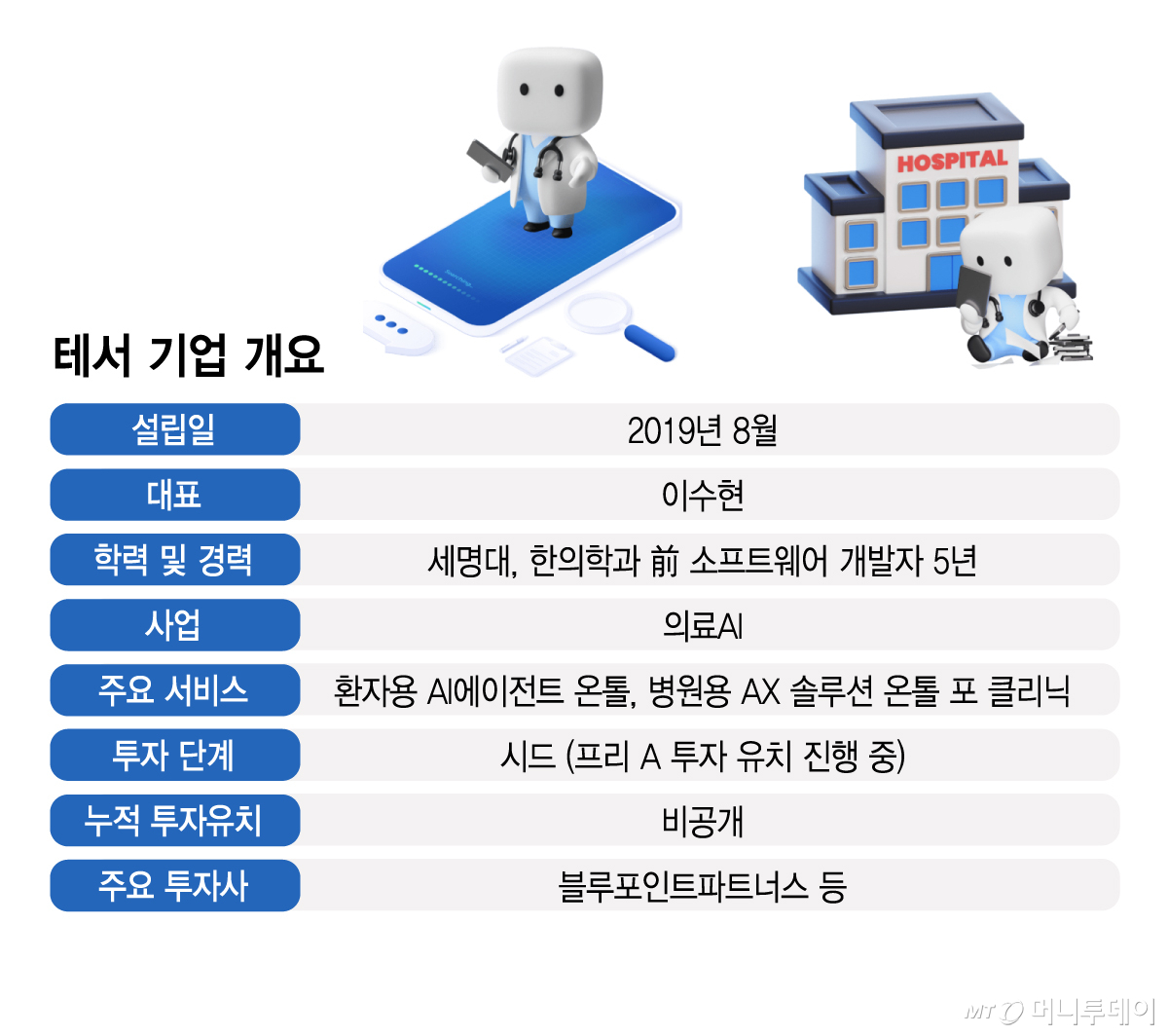
Lee (CEO), who founded Tesser while studying at a college of Korean medicine, did not initially set out to create a health checkup AI agent. Having long enjoyed software and app development as a hobby, he was convinced that AI would fundamentally transform the healthcare market. Initially, the company focused on developing an clinical data platform where physicians could search and utilize clinical data and research papers in one place, along with AI for analyzing CT and MRI medical images. However, Lee (CEO) realized that limiting services to medical professionals alone would reach a ceiling in expanding the market.
While rethinking the company's direction, Lee (CEO) learned about the reality faced by cancer patients. Lee (CEO) stated, "In cancer treatment, there are many decisions that patients must make themselves, such as choosing surgery or chemotherapy, yet many return home without truly understanding their diagnosis results." He added, "I realized what patients need most is a service that explains difficult medical terminology in simple terms."
Tesser moved quickly. It developed the first version of 'Ontol' in just three days and launched it in 2022. At that time, generative AI had not yet emerged, so Lee (CEO) and medical professionals operated the service by directly reading patients' test results and explaining them one by one in simple terms. After accumulating data for about a year, the company trained its own AI model and later integrated large language models (LLMs) such as ChatGPT to evolve into the current AI-based test result interpretation service.
As the service operated, patient responses continued to pour in. Lee (CEO) said, "I once received a handwritten letter from a 70-year-old patient who had lung cancer, saying 'For the first time, I understand my test results.' That experience remains most memorable." Currently, the primary users of Ontol are patients with serious illnesses such as pancreatic cancer and breast cancer in their 20s to 40s. The number of family members using the service on behalf of parents or spouses is also steadily increasing.
Early last year, Tesser began expanding its business from B2C to a B2G focus, concentrating efforts on targeting major hospitals. This decision was based on the judgment that to provide better medical services to patients, the workload of medical professionals must be reduced first. Lee (CEO) said, "Time is ultimately the most important resource for doctors." He added, "If AI handles repetitive administrative tasks such as report writing and organizing consultation records, medical professionals can focus much more on patient diagnosis and counseling."
The result of this consideration was the development of 'Ontol for Clinic,' an AI platform for hospitals. It provides a single platform that includes 'Ontol Scribe' to assist medical professionals in drafting opinions, 'Ontol Report' to provide test result explanations easy for patients to understand, and 'Ontol CRM' to support re-examination notifications, outpatient appointments, and post-care management.
In particular, the flagship feature, Ontol Scribe, automatically generates a draft of comprehensive medical opinions by analyzing health checkup results and diagnostic content using AI. This reduces the time doctors spend writing opinions for each patient from about nine minutes to around one minute. Medical professionals only need to perform final review on the drafts created by AI. According to the company, since implementation, administrative work time for doctors has decreased by up to 88%.
Ontol CRM is currently in the development phase and aims to automate everything from re-examination notifications and outpatient appointments to post-care management. The goal is to connect even patient management areas (follow-up examinations) that are often neglected after health checkups, thereby supporting overall hospital operations.
In particular, Tesser emphasizes a key differentiator: the ability to build the hospital AI solution 'Ontol for Clinic' in just about two weeks. Typically, introducing new AI takes several months because each hospital uses different computer systems and data formats. Tesser significantly shortened the construction period by integrating disparate data into its own standard and managing it on a single cloud platform. Afterward, new AI functions can be applied immediately without separate system restructuring, and the solution naturally integrates with existing hospital systems such as EMR (Electronic Medical Records) and PACS (Picture Archiving and Communication System). Thanks to this, hospitals can quickly adopt AI while maintaining their existing computer environments.
This strategy is already yielding tangible business results. To date, 'Ontol for Clinic' has been implemented in 22 hospitals, with 14 of them secured as paying customers. The service is being supplied to top-tier comprehensive hospitals including Samsung Changwon Hospital, Catholic University of Korea St. Vincent's Hospital, and Kyung Hee University Hospital, and negotiations are underway with an additional 38 medical institutions for adoption.
The future Tesser envisions is a patient-centric AI healthcare platform that connects scattered medical data from individual patients into a single unified source. Currently, health checkup results and medical records are dispersed across different hospitals, so when patients visit other facilities, medical professionals spend considerable time verifying their past treatment history or medications. Tesser plans to integrate health checkup results, medical records, and consultation content on a single platform, creating an environment where medical data can be utilized seamlessly even if patients change hospitals.
Lee (CEO) said, "We aim to build a patient-centric medical platform that connects hospitals and patients organically without disconnection." He added, "Our ultimate goal is to implement a healthcare service that seamlessly connects everything from health checkups to diagnosis, follow-up examinations, and post-care management."
[MoneyToday startup media platform Unicorn Factory]

 in FUTURE

