

[For more diverse company information on the startups mentioned in this article, please visit the Unicorn Factory Big Data Platform 'Data Lab'.]
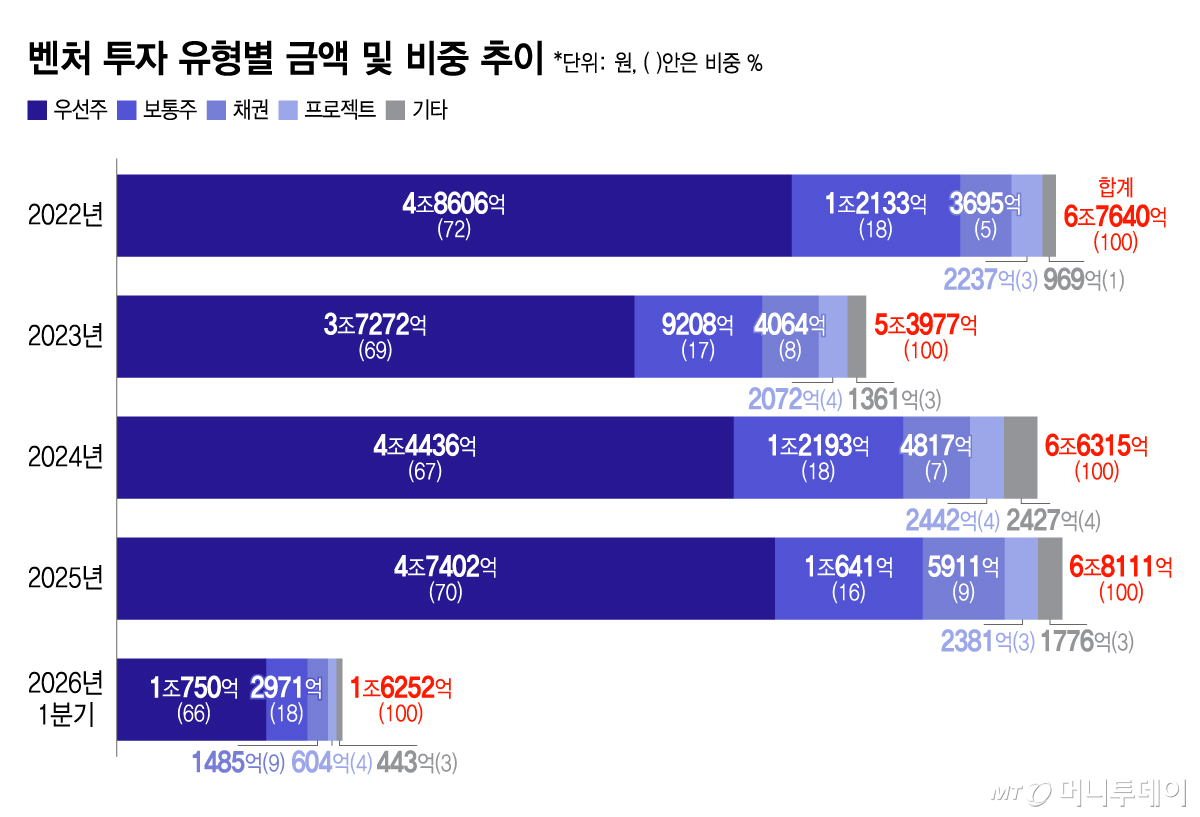
The Ministry of SMEs and Startups has revised the standard contract for venture investments and is now recommending the use of Convertible Preferred Shares (CPS) without the redemption right ('R'). This move aims to break the long-standing practice of using Redeemable Convertible Preferred Shares (RCPS), which have been the default investment method in Korea's venture capital market for over 25 years, and to improve the investment environment in line with global standards. The measure is seen as an effort to resolve longstanding concerns about its practical effectiveness and to ease the burden on startup founders.
RCPS is a type of stock that combines a redemption right (allowing investors to recover their capital if the company turns a profit), a conversion right (to ordinary shares), and dividend priority rights. The problem lies in the fact that, under the Commercial Act, the exercise of the redemption right is only possible when there are 'distributable profits.' Most early-stage or technology-focused startups in sectors such as biotechnology and IT operate at a loss, meaning distributable profits simply do not exist.
Although the right exists on paper, it cannot be exercised when the company is struggling, yet there is no reason to demand repayment from companies that have grown sufficiently to generate profits—a paradoxical structure. Moreover, under accounting standards, RCPS can be classified as debt, leading to consistent criticism that it distorts a startup's financial structure. Despite this, most venture investment contracts still rely on RCPS. According to the Venture Investment Comprehensive Portal, approximately 70% of all annual venture investments are executed in the form of preferred shares. An industry insider stated, "It is safe to assume that the majority of these preferred share transactions involve RCPS."
According to industry sources, RCPS was formally introduced into the investment market around 2001. Following the collapse of the venture bubble at the end of 1999, which caused massive losses for venture capital firms at the time, they began using redemption clauses as a safety mechanism to recover principal. At that time, the primary investment targets of venture capital firms were often large corporations' affiliates, suppliers, or subsidiaries—companies that already generated a certain level of profitable returns. However, anticipating scenarios where recovery through an IPO might become unlikely, RCPS was adopted as a universal investment tool.
A VC screening officer said, "In the case of biotech companies, there are many instances where distributable profits do not arise even after going public, making investment via RCPS practically meaningless." He added, "While this practice has been maintained out of long-standing convention, only recently have alternative forms such as CPS investments begun to be considered."
Industry observers estimate that it will take at least two to three years for CPS to replace RCPS and become the standard in the investment market. The biggest obstacle is the structural 'lock-in' effect caused by pre-seed rounds. When existing shareholders who entered via RCPS participate in follow-on investments, they often resist when new investors attempt to use CPS, with limited partners (LPs) questioning, "Why should we accept unfavorable terms?" Even foreign VC firms that typically prefer ordinary shares or CPS find it difficult to unilaterally change investment terms unless they are the lead investor in domestic deals, leading them to simply follow the existing RCPS template.
Critics also point out that the Ministry of SMEs and Startups' revision remains at the level of a non-binding 'recommendation,' which is a significant limitation. Without specific guidelines issued to asset management departments or investment teams within each fund, there is a high likelihood that field practitioners will continue to rely on familiar RCPS contracts due to institutional inertia. Furthermore, entities under the jurisdiction of the Financial Services Commission, such as New Technology Business Finance Companies (Shingisa), fall outside the Ministry's authority and thus have little incentive to waive redemption rights.
An Hee-cheol, managing partner at DLG Law Firm, stated, "A standard contract without legal binding force makes it difficult for VCs to persuade conservative LPs." He added, "Policy incentives such as granting points for CPS investment cases in Korea Venture Capital's capital contribution projects must accompany the reform for both LPs and VCs to actively pursue a transition to CPS."
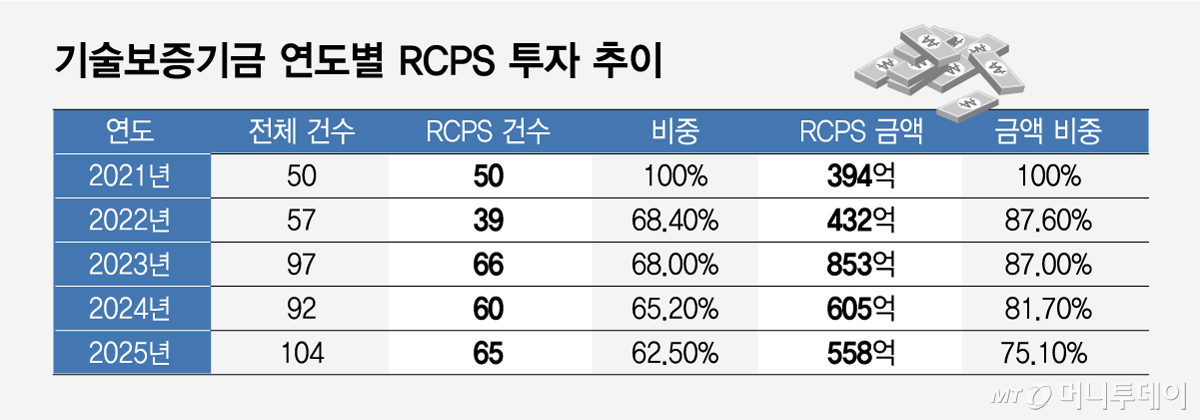
Internal regulations of policy financial institutional investors and conservative financial sector LPs also contribute to maintaining the status quo. Due to audit burdens that require determining liability in case of losses, field practitioners continue to include redemption rights in contracts as a 'psychological safety net,' even though they are aware that distributable profits rarely exist and actual exercise is unlikely.
This preference for RCPS is clearly reflected in data. An analysis of the Technology Credit Guarantee Fund's investment records over the past five years shows that a significant portion of its direct investments were executed in the form of RCPS.
A VC insider remarked, "Removing the practically ineffective redemption clause would reduce the burden on VCs regarding contract review and management, making the process far more efficient." He further noted, "Changes at the field level will accelerate only if major LPs revise their investment guidelines or offer incentives alongside regulatory improvements."
[MoneyToday startup media platform Unicorn Factory]

 in FUTURE

