

The government will move to build large-scale 'full-stack AI (artificial intelligence) infrastructure' next year by combining CPUs (central processing units), GPUs (graphics processing units), and domestic NPUs (neural processing units). AMD is also expanding cooperation with domestic AI companies, leveraging its open ecosystem.
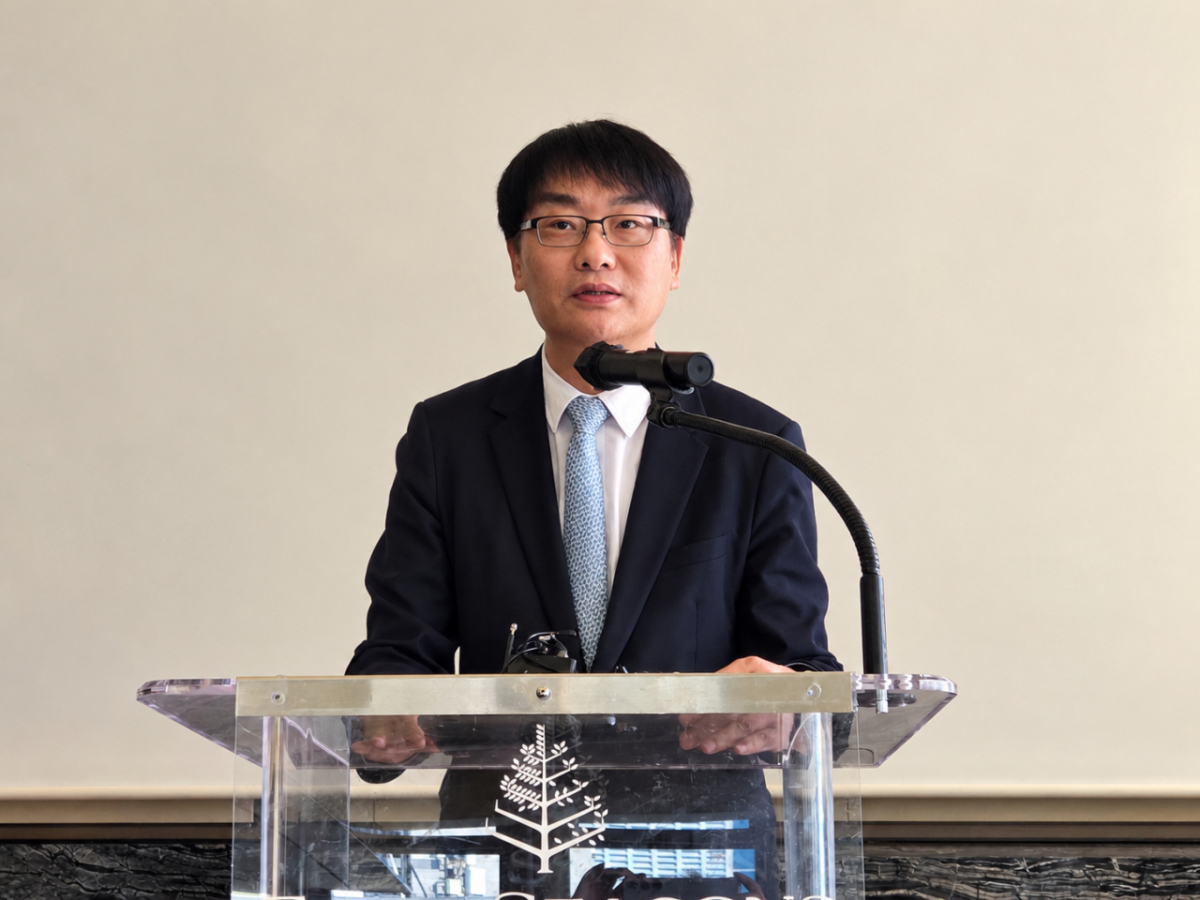
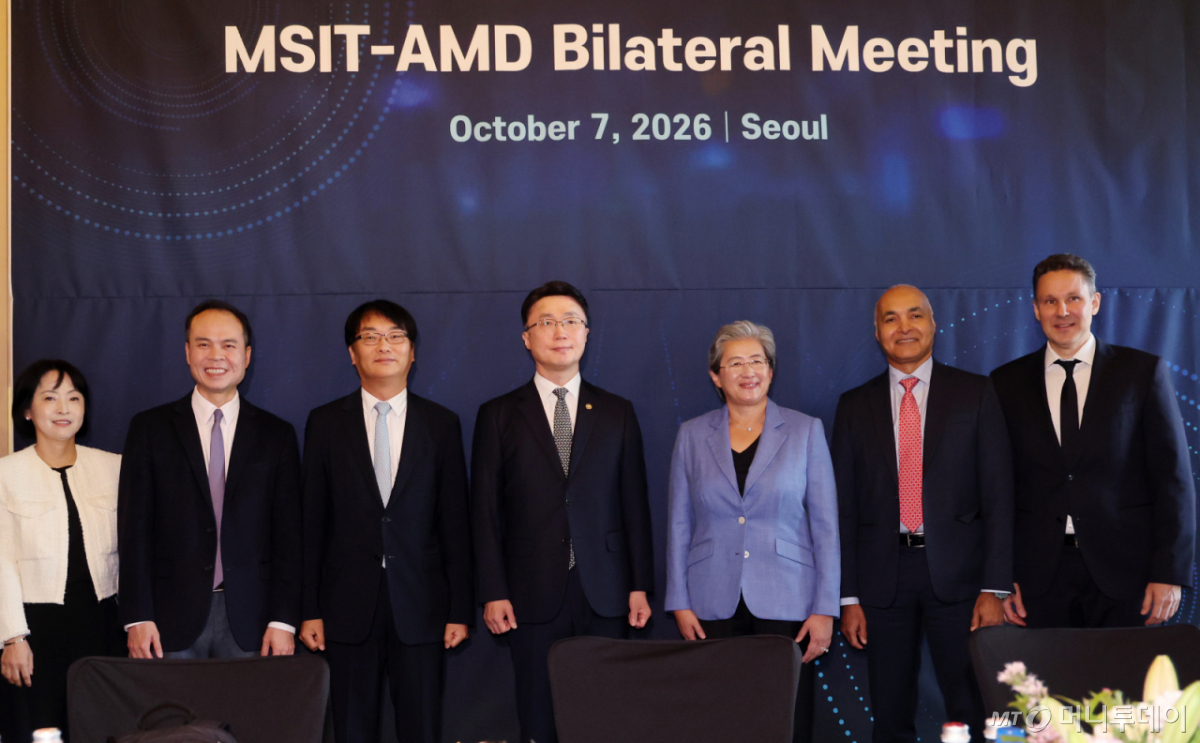
On the 7th, the Ministry of Science and ICT held a roundtable at the Four Seasons Hotel in Jongno-gu, Seoul, involving 13 domestic AI ecosystem companies, following a meeting between Ryu Je-myeong, Second Vice Minister of the Ministry of Science and ICT, and Lisa Su, CEO of AMD.
Lee Do-gyu, Director of the Information and Communications Policy Office at the Ministry of Science and ICT, stated in a back briefing, "Previously, domestic NPUs were often supplied only as chips, which limited their global expansion." He added, "Next year, we plan to build large-scale full-stack references including CPUs, GPUs, CXL (Compute Express Link), and software." The government intends to solicit multiple projects so that companies can participate in the form of a consortium. Participation by specific companies will not be restricted, meaning AMD is also eligible to participate.
Companies also presented specific cooperation plans. Hyperexcel proposed building 'sovereign AI infrastructure' by supplementing the domestic shortage of CPUs and training GPUs with the AMD ecosystem, while combining domestic accelerators, networks, and software. AMD expressed agreement with this proposal and indicated its intention to pursue it together.
NPU companies such as FuriosaAI and Hyperexcel discussed plans to connect AMD CPUs and GPUs with domestic accelerators. Upstage proposed software engineer support and a joint research hub within Korea, while Ellice Group suggested rapidly introducing AMD's latest systems into modular data centers. Mango Boost, Rota AI, Denotia, Fanea, and Padu also submitted proposals regarding software optimization and improving the efficiency of memory, storage, and interconnects.
CEO Su stated, "AMD has always taken openness as a principle, ensuring that our products run side by side with all other products," and revealed that the company is open to cooperation in connecting CPUs with various accelerators. AMD plans to expand ROCm (Radeon Open Compute Platform), an open AI software platform corresponding to NVIDIA's CUDA, to support not only data center GPUs but also CPUs and PC chips. The goal is to make it easy to utilize different computing devices within a single software environment, thereby broadening the heterogeneous computing ecosystem.
Investment in Korea will also be concretized. CEO Su reiterated that AMD will establish a CoE (Center of Excellence) in Korea involving hundreds of engineers over the next few years. The government and AMD are currently consulting with the goal of establishing it within this year, and plan to detail the location and operational methods at next month's steering committee.
However, discussions did not extend to the scale of domestic supply for AMD Instinct GPUs or the adoption of national AI computing infrastructure. Director Lee added, "We did not go as far as specifying exactly how many chips would be supplied."

 in TECH

