

[More diverse corporate information on startups can be viewed at Unicorn Factory's Big Data platform 'Data Lab'.]
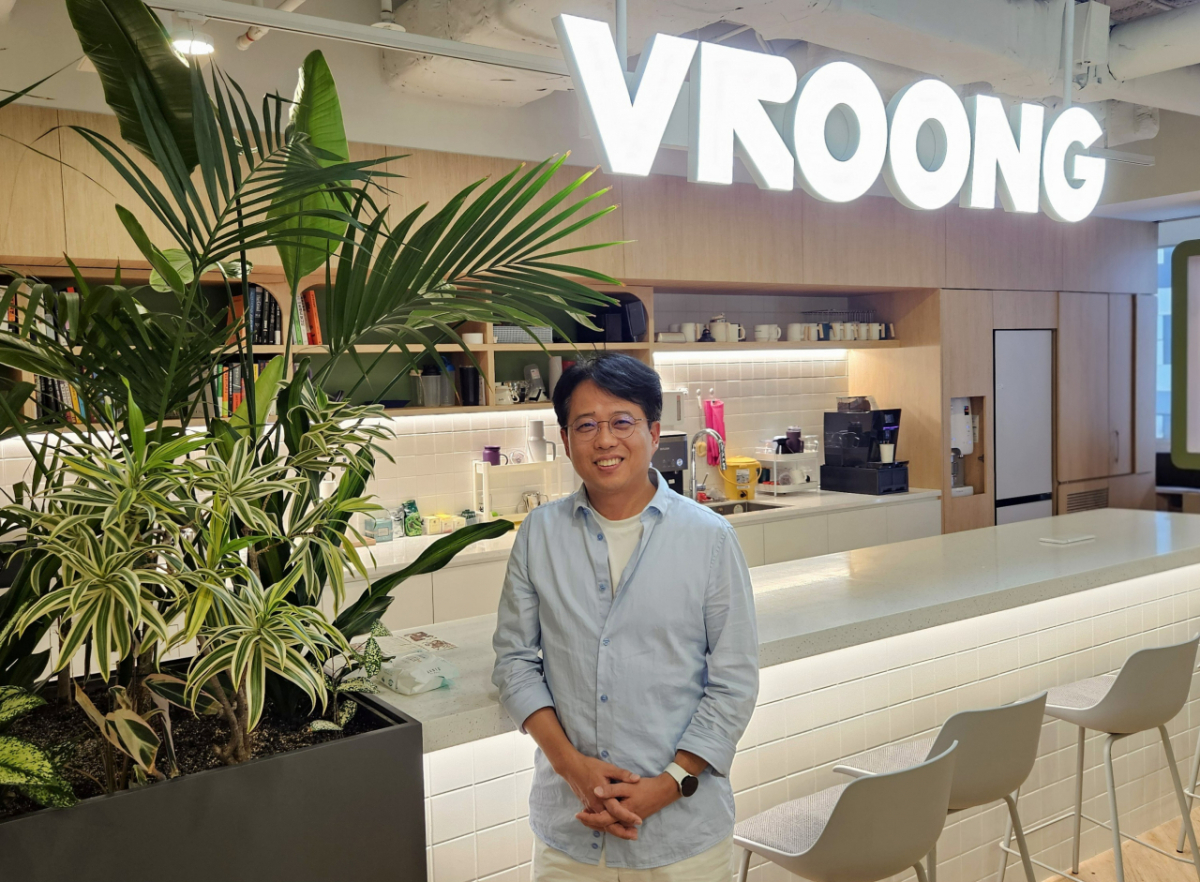
"Delivery technology has now moved beyond a race to optimize single orders for speed. We must create a 'mutually beneficial logistics standard' that simultaneously provides stable income for riders and predictable quality for stores and customers."
Jang Soo-baek, CTO of the delivery proxy platform "Bburung," said, "In the past, dispatching in the delivery proxy market was mostly based on 'combat dispatch,' where drivers competed to grab calls first, or relied on the intuition of on-site managers."
Jang Su-baek, CTO, previously served as Executive Vice President of Samsung Electronics' Mobile Business Division, Chief Information Officer at Coupang, and CTO at Yogiyo before joining Buling in early last year. Before dedicating himself to South Korea's startup ecosystem, he majored in computer science at the graduate school of Southern Connecticut State University in the United States and worked at IBM for 17 years.
He is a technology expert with experience in designing and operating cloud-based infrastructure, including AWS (Amazon Web Services) and GCP (Google Cloud Platform), as well as holding more than 70 global patents. Since joining Buling, he has enhanced the AI (artificial intelligence) automatic dispatch system "Buling Plus."
“Prioritize speed over perfection”... ‘AI dispatch’ with guardrails
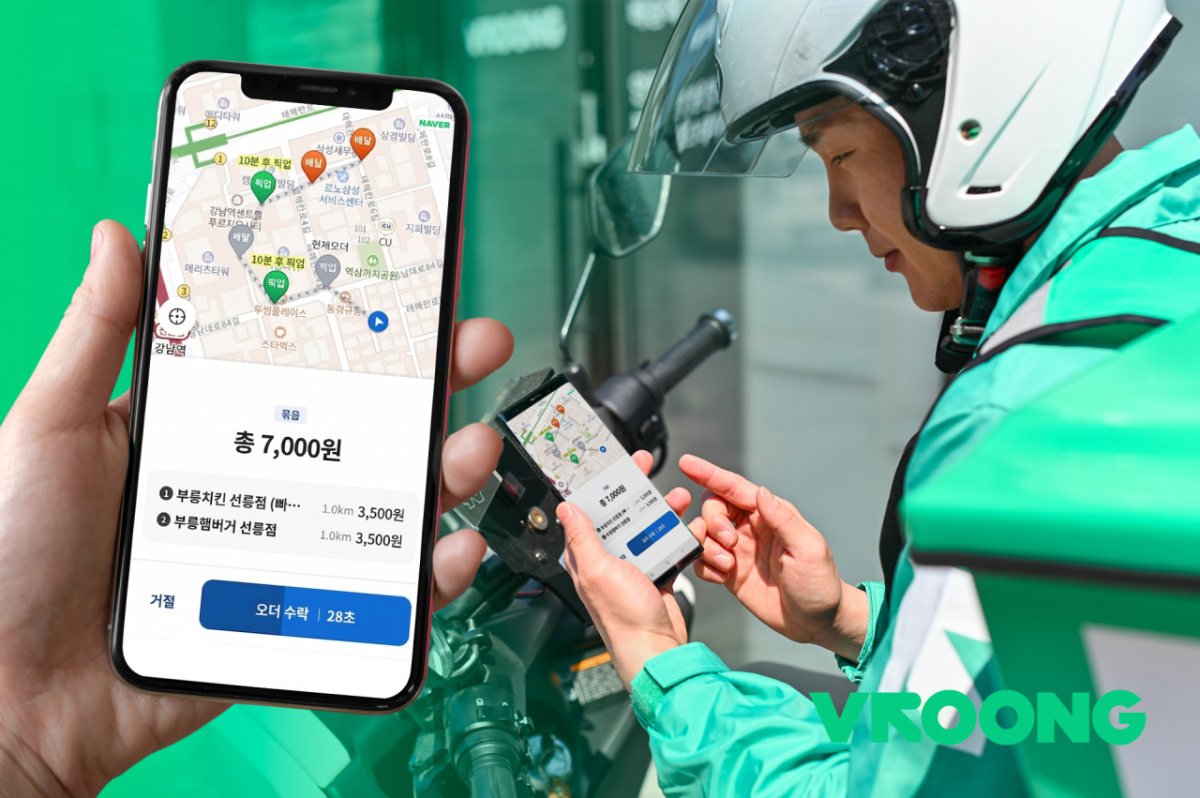
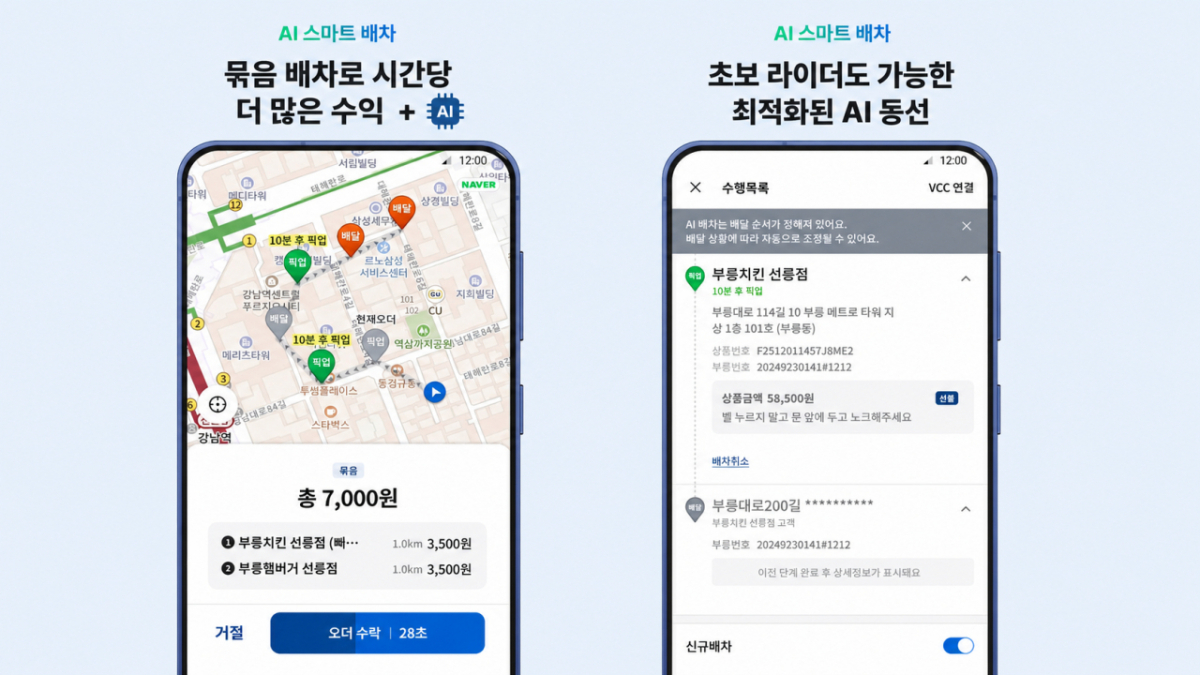
CTO Jang emphasized that Booreung Plus's technical differentiator lies in its "operational AI with built-in guardrails." Just as road guardrails prevent vehicles from veering off, this means that when the AI decides on dispatching, it ensures optimal dispatching occurs within a minimum threshold line that must not be crossed.
The explanation is that when an order comes in, rather than immediately assigning it to any available rider, the system virtually simulates multiple scenarios—such as "What would happen if this rider were assigned?" or "How about that rider?"—to calculate the potential impact on delivery time, rider routes, and future order flows.
He said, "Bulbul Plus comprehensively analyzes order locations, riders' real-time positions, estimated travel times, preparation times per restaurant, and regional order flows," adding, "In fact, the areas with peak orders differ between 5 p.m. and 7 p.m. Dispatch is conducted by predicting future order occurrence possibilities."
In particular, the core principle is to completely exclude any dispatch plan that poses a risk of falling below standards for service quality (SLA, the quality level promised to customers and stores) or driver acceptance rate (the proportion of assigned calls actually accepted by riders), even when calculated from multiple angles.
CTO Jang said, "While deliveries can be completed quickly, if the approach involves assigning all orders to specific riders, those riders are likely to refuse, lowering acceptance rates; conversely, prioritizing rider convenience alone will delay deliveries and reduce SLA performance." He added, "If either of these two metrics appears likely to fall below the standard, we seek alternative solutions."
We do not entrust everything to AI. CTO Jang stated, "In the event of sudden variables like torrential rain, we have a 'human-in-the-loop' mechanism that allows operators to intervene," adding that "regional managers can directly adjust surcharge or dispatch criteria."
Delivery time reduced by 30%... "Finding the optimal rider determines quality"
The results of Bbureung Plus are showing up in the numbers. An analysis of the 17th regions where Bbureung introduced Bbureung Plus in the first half of this year revealed that the average travel time from dispatch to arrival at a store decreased from the previous 12.7 minutes to 9.2 minutes, a reduction of approximately 30% (3.5 minutes).
It was confirmed that there is a strong negative correlation between store transit time and delivery quality (a relationship where one value increases while the other decreases). CTO Jang stated, "Data has confirmed that how quickly we find the optimal rider is the key factor determining delivery quality."
While there were regional variations, the improvement was significant. The Bucheon Wonmi area saw the largest improvement, with SLA rising by 10 percentage points compared to before its introduction, followed by Daegu Dalseo (9.7 percentage points), Seoul Jungnang (9.4 percentage points), and Seoul Seongbuk (8.5 percentage points).
CTO Jang said, "When we first introduced Bbunbplus, both stores and drivers found it inconvenient because it differed from their existing habits, but after adapting, the stores that had reduced orders are now entrusting even larger volumes than before."
He explained that this also improves riders' profitability. He said, "While fast-responding riders had an advantage in combat dispatches, we increase their earnings by bundling two or three deliveries along a route through 'bundled dispatch,' and we continue to explore ways to further advance bundled dispatch."
"Delivery on demand"... Aiming to service the last mile
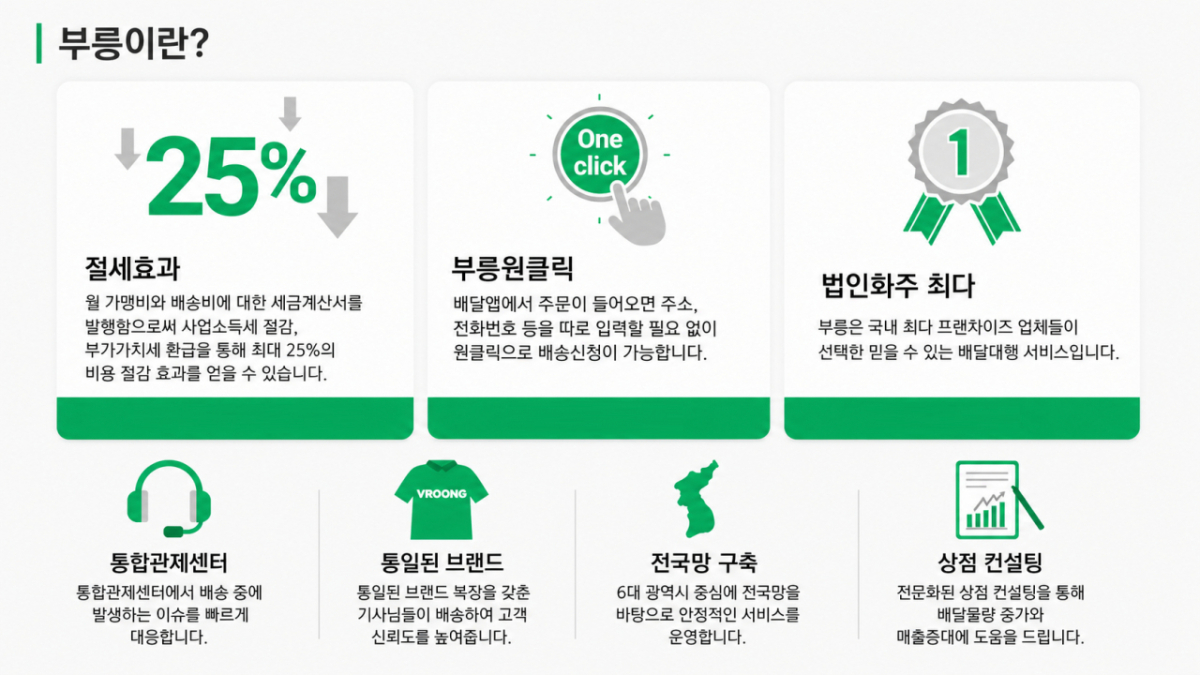
CTO Jang first addressed the "data" that Bburi had accumulated over time. By migrating fragmented data to a Snowflake-based data lakehouse, he integrated the "Bburi Data Agent," which answers queries in natural language with reports on sales and article status, into Slack.
The ultimate vision is the service-ification of last mile (the final delivery segment before reaching consumers). He stated, "We will expand the LaaS (Last-mile as a Service) model to make delivery and shipping services available on demand as ready-to-use products."
Currently, the structure involves shops or cargo owners signing delivery contracts, requiring sales staff and operational personnel to coordinate each case individually. In contrast, LaaS allows businesses needing delivery to independently verify whether delivery is available in their area via Bbureung, select a plan, and subscribe immediately.
The CTO said, "Companies with development teams integrate delivery functions into their own apps via API, while those without automatically attach Bulung delivery through POS devices," and emphasized that they aim to spread the perception that just as AWS exists in the cloud, Bulung exists at the last mile.
He added, "Furthermore, our goal is to realize 'Logistics as a Service (LaaS)' across the entire logistics sector. While we are currently handling only the last-mile delivery segment, in the future we will take full responsibility for the entire process of customers sending and receiving goods through a single platform."
[Money Today startup media platform 'Unicorn Factory']

 in FUTURE


