

[For more diverse corporate information on the startup mentioned in this article, please visit the Unicorn Factory big data platform 'Data Lab'.]
"South Korea is a world-leading power in memory semiconductors, but its space semiconductor industry has just begun."
CEO Jung Sung-geun of MID recently told Money Today's startup media platform 'Unicorn Factory', "Currently, South Korea's space industry resembles the Korean electronics industry of the 1970s and 1980s," adding this observation.
In the 1970s and 1980s, domestic companies produced finished goods like TVs and radios independently but relied heavily on Japanese imports for core electronic components such as memory and CPUs. Just as South Korea eventually grew into a global semiconductor powerhouse by localizing these critical components, Jung believes the domestic space industry must now move beyond assembling satellites with foreign parts to directly manufacturing the core components within them.
Jeong (CEO) stated, "Just as South Korea leaped to become a semiconductor power by developing memory and electronic components independently, the space industry can advance to the next level only by localizing EEE (electrical, electronic, and electromechanical) components and space-grade semiconductors."
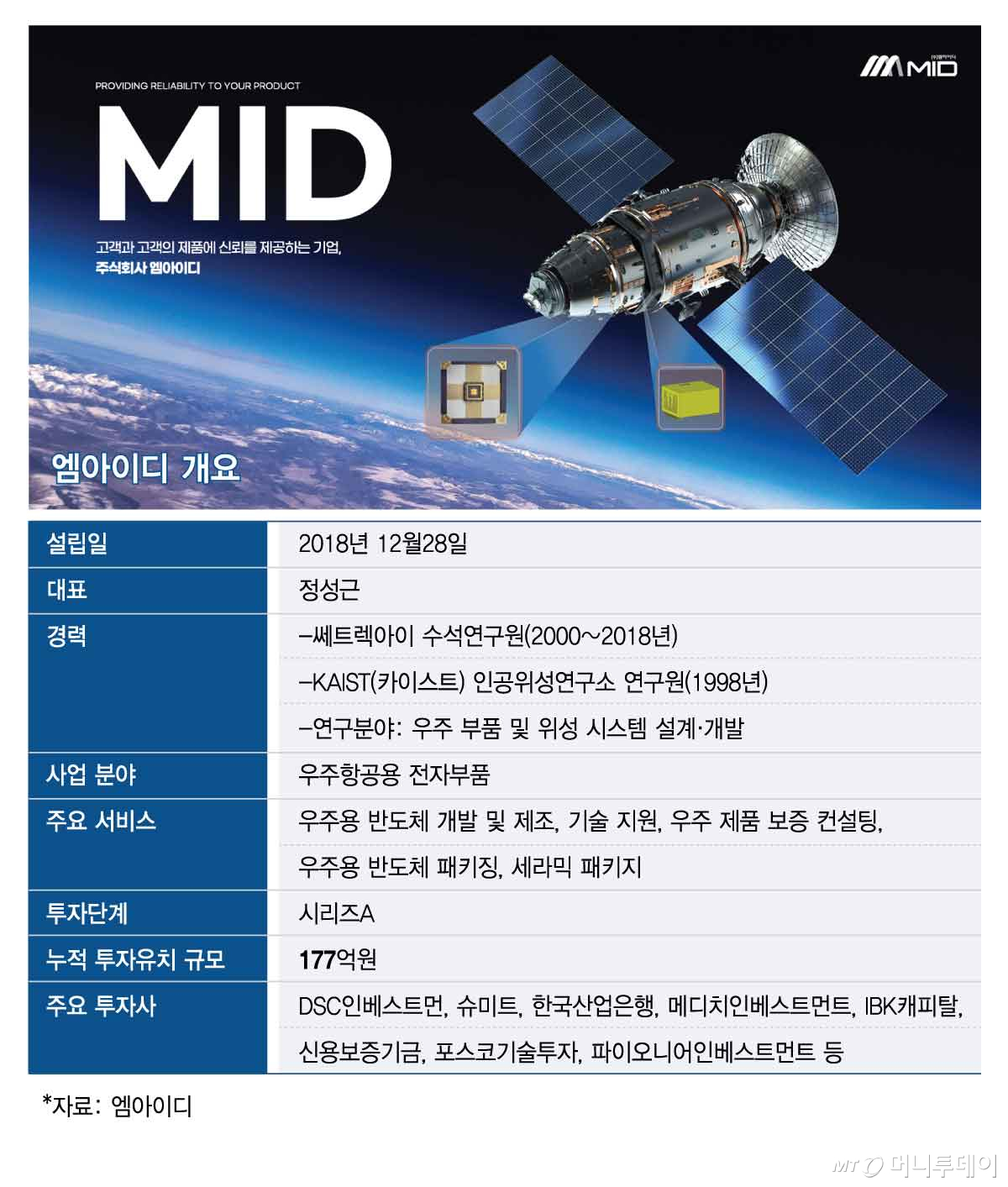
Founded in 2018, MID is South Korea's first specialized company for space-grade electronic components. It provides one-stop services ranging from overseas procurement of space parts to testing, evaluation (CPPA), and quality certification, securing stable revenue streams. Cash generated from CPPA projects is reinvested into the direct development and production of space semiconductors. Considering the semiconductor industry's characteristic need for massive facility investments, MID has adopted a strategy of maintaining stable cash flow through its CPPA business while continuing technology development.
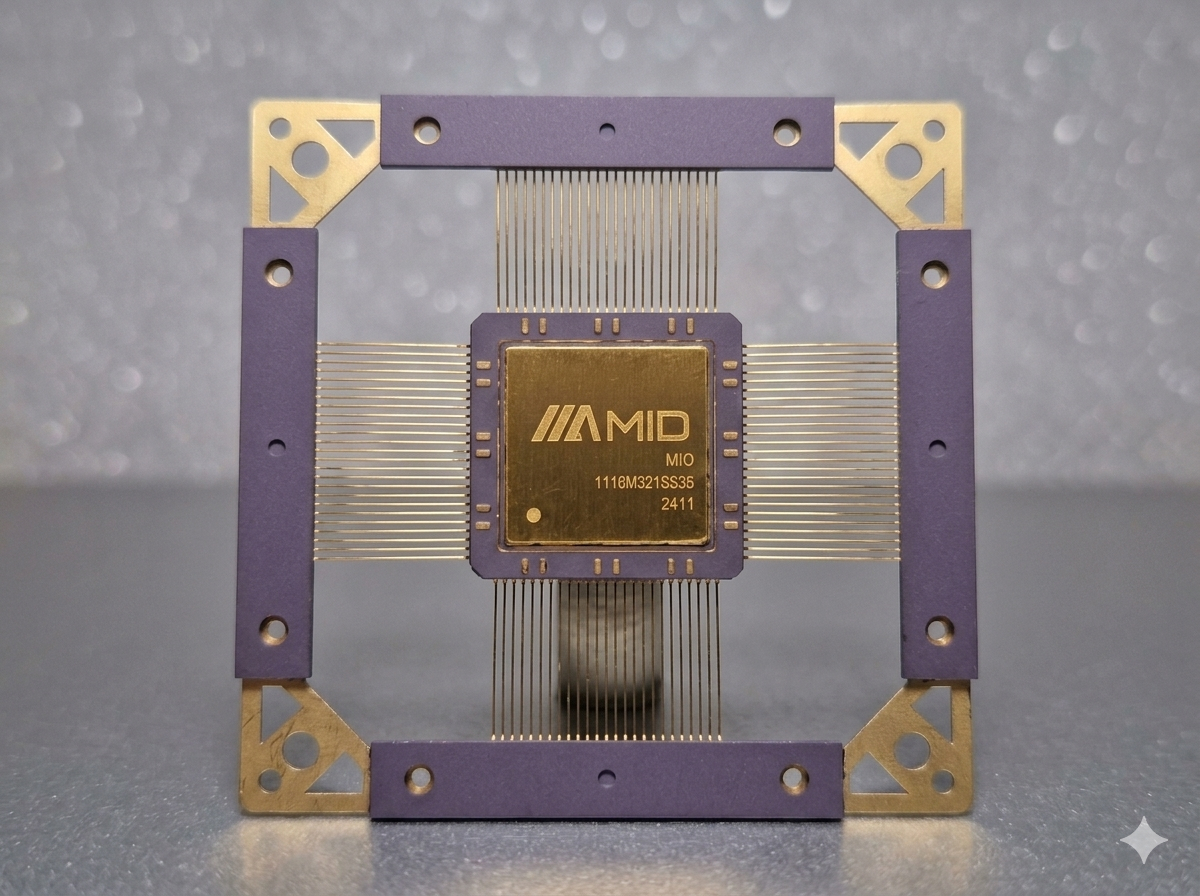
The challenge to localize space semiconductors is already yielding results. MID successfully developed South Korea's first space-grade memory '16Mbit SRAM (Static RAM)' based on hermetic ceramic packaging. This product was mounted on the first domestic component and parts verification satellite launched via Nuri rocket's fourth mission and has been designated as a 'new space technology' by the Space Administration. Currently, MID is developing high-capacity NAND flash memory of 128Gbit or more based on hermetic epoxy (plastic) molding packaging. This product is scheduled to be applied to the ultra-small satellite 'Daejeon Sats-1', which will be launched aboard Nuri rocket's fifth mission in the second half of this year.
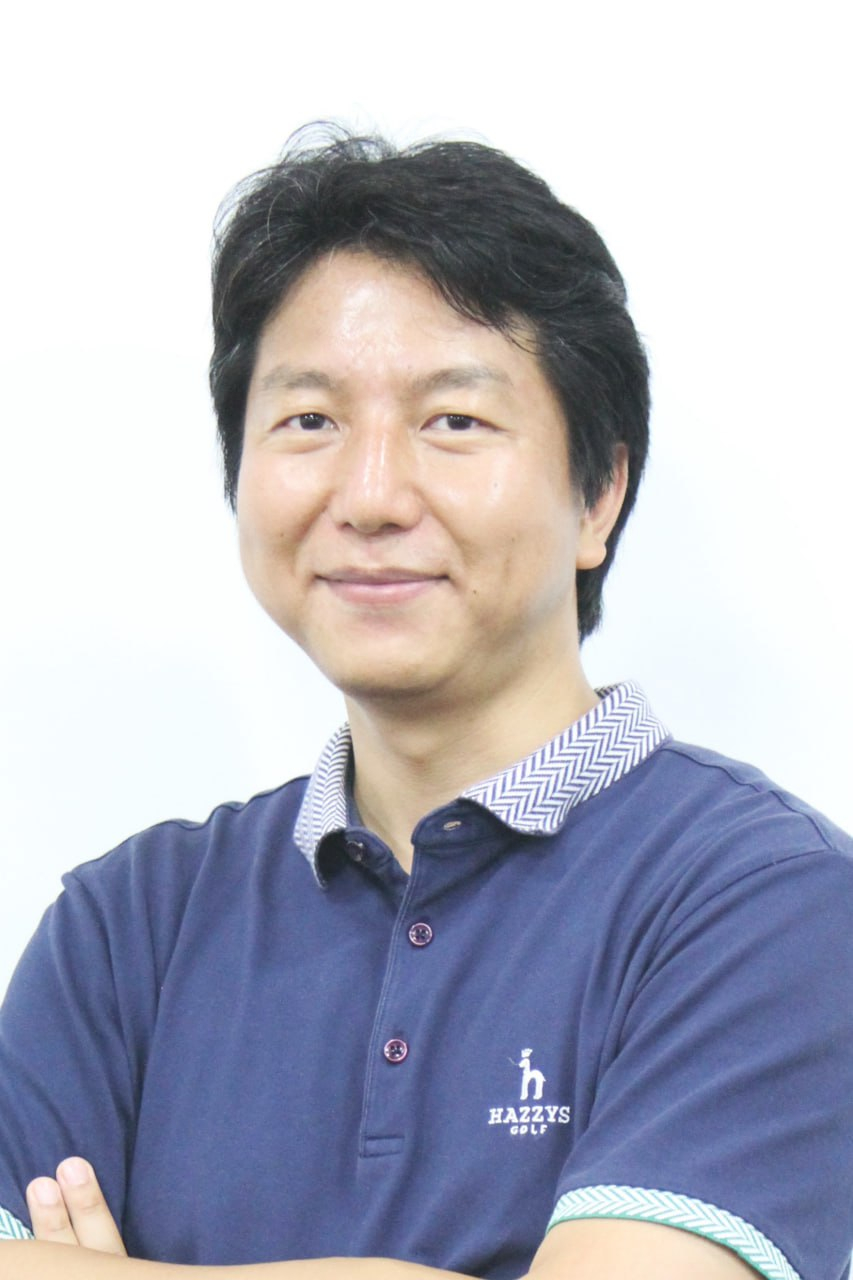
The background behind Jeong (CEO)'s entry into space component localization lies in his 18-year experience as a satellite engineer at Setrak AI. He was responsible for developing high-capacity memory storage devices for satellites. Earth observation images captured by satellites cannot be transmitted directly to the ground; they must first be stored in the satellite's internal memory and then downlinked when communication with ground stations is possible. As higher-resolution images require larger data volumes, large-capacity, high-reliability memory storage devices are essential for satellites.
Through repeated development of satellite storage devices, Jeong (CEO) accumulated expertise in the space memory field. He unexpectedly took on another role at the time: manufacturers from the US and Europe proposed that Setrak AI, which uses the most space-grade memory domestically, entrust them with domestic supply and technical support for their products.
After accepting the project, Jeong (CEO) distributed overseas space components to domestic companies while once again recognizing structural limitations in South Korea's space industry. Jeong (CEO) stated, "Although satellites are designed and assembled locally and considered localized, if all core components inside are imported from abroad, it cannot be regarded as complete localization." He added, "I concluded that for the domestic space industry to grow sustainably, it must establish its own component supply chain."
At the time, this business was internally referred to by the code name 'MID (Middleman)', signifying a technical partner connecting overseas manufacturers with domestic satellite companies. Jeong (CEO), who handled technical support at the time, and Seo Jin-wook, currently Executive Vice President (former co-founder of MID), who managed procurement, later used this name as the company's official name when they co-founded MID.
Jeong (CEO) remarked, "Initially, our company served as a bridge connecting overseas space components with domestic enterprises, but as we have grown into a company that directly develops and produces core components for supply, our meaning has also expanded." He added, "Ultimately, our goal is to become the 'hub' of the global space supply chain."
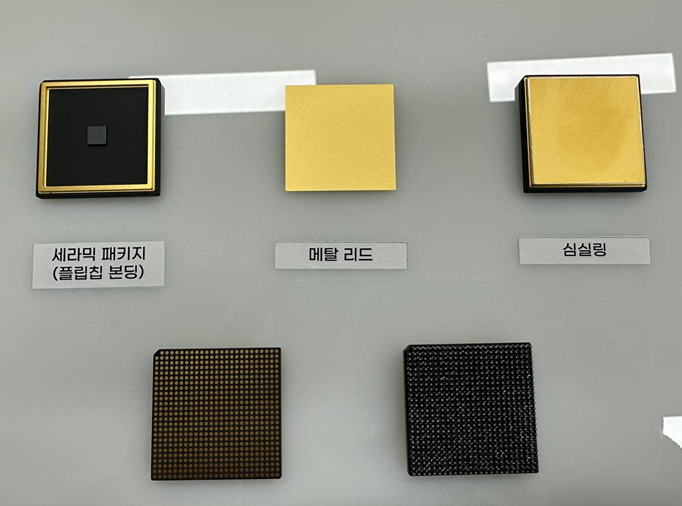
In particular, ceramic packaging technology is MID's most significant future growth driver. This technology offers superior heat resistance and radiation tolerance compared to plastic (epoxy) packages, making it primarily suitable for long-duration space missions. While plastic packages are generally used in low-Earth orbit satellites with operational lifespans of 3–5 years, ceramic packages are predominantly employed in geostationary satellites requiring operations for 7–10 years or more and lifespans around 15 years.
Currently, Japanese companies such as Kyocera and Niterra dominate over 90% of the global ceramic packaging market, monopolizing space-grade ceramic packaging technology as well.
MID has recently secured core process technologies for self-producing space-grade ceramic packages and completed the construction of a pilot line. After finishing production facilities by the end of this year, the company plans to begin mass production in Yangsan next year. Based on this, MID aims to establish itself as a new supplier capable of replacing Japan-centric global ceramic packaging supply chains.
Recognized for these technological capabilities, MID recently secured Series A investment totaling 15.7 billion won. The raised funds will be allocated to building a space-grade package manufacturing line in Daejeon Pyeongchon Industrial Complex and advancing HTCC (High-Temperature Co-fired Ceramic) packaging processes in Yangsan.
Jeong (CEO) predicted, "Just as memory shortages are occurring due to the expansion of AI data centers, increasing demand for space-grade data centers and satellites will rapidly drive up memory demand within them, leading to supply shortages."
He continued, "Just as South Korea became one of the biggest beneficiaries of the AI era by localizing memory semiconductors, in the space industry too, only countries capable of independently producing core components will gain competitiveness."
[Money Today startup media platform Unicorn Factory]

 in FUTURE


