

[For more diverse company information on startups, you can view it at Unicorn Factory's Big Data Platform 'Data Lab'.]
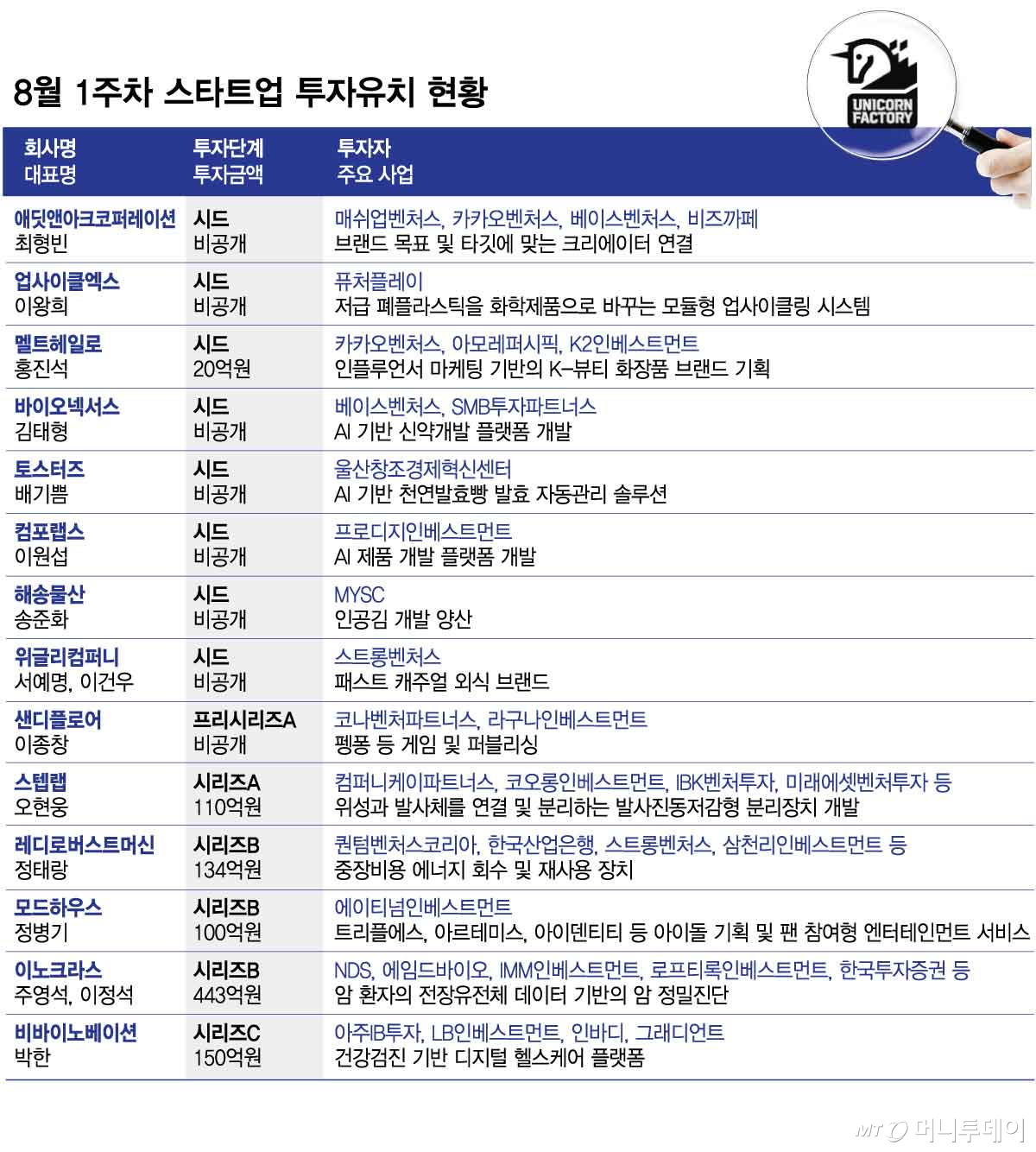
Even during the first week of August, which falls within the summer vacation season, news of domestic startups securing funding continued. Startups in materials, components and equipment (MCE) and deep tech sectors such as space and aviation showed strong performance, while investment news also continued in IP (intellectual property) industries including game developers and entertainment companies.
The company that announced the largest fundraising amount was Innoclass, a startup specializing in precision cancer diagnosis based on genomic data. Innoclass secured Series B funding of 44.3 billion won. Other startups that secured mega-deals exceeding 10 billion won included ReadyRoverMachine, BiByInnovation, and StepLab.
Startups that received investment during this period include: Addit & Arc Corporation, UpcycleX, Melt Halo, BioNexus, Toss Tunes, Compo Labs, Haesong Trading, WeeGly Company, Sandy Floor, StepLab, ReadyRoverMachine, ModeHouse, Innoclass, and BiByInnovation.
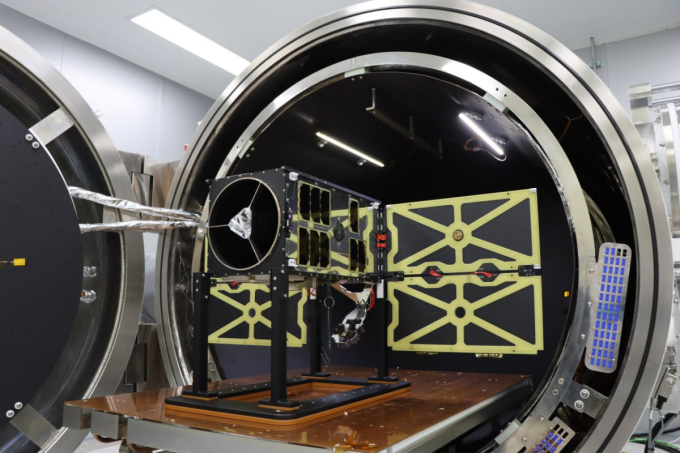
StepLab, a company specializing in ultra-small satellite systems based on space mechanism technology, secured Series A funding of 11 billion won.
Investors participating in this round include Company K Partners, Kolon Investment, IBK Venture Capital, Mirae Asset Venture Investment, SL Investment, Korea Technology Credit Guarantee Fund, and DeCamp (Youth Startup Foundation for Bankers). Existing investor Company K Partners participated in follow-on investment.
Founded in June 2021, StepLab has secured capabilities in payload and ultra-small satellite system development based on space mechanism technology that "grasps, releases, deploys, and moves satellites." Oh Hyeon-ung (CEO) has been researching the field of satellite vibration reduction as a professor at Korea Aerospace University.
The company's flagship product is the Separation Ring, a launch vibration-reducing separation device that connects and separates satellites from launch vehicles. It is also developing STEP POD, an injection tube for cube satellites that integrates independently developed vibration reduction technology (VIS). STEP POD will be applied to the 16U cube satellite 'DaejeonSAT-1' scheduled for the Nuri rocket's 5th launch this year. StepLab aims to secure space flight verification (space heritage) through this launch.
Oh Hyun-woong, CEO of StepLab, stated, "Through this investment, we will fully launch global commercialization of space mechanism products and promote space verification of next-generation payload technologies. Based on our technological competitiveness covering space mechanisms, payloads, and ultra-small satellite system technologies, we aim to grow into a global space systems company."

Melt Halo, the startup operating the K-beauty brand '6 Pence', secured seed funding of 2 billion won. This round was led by Kakao Ventures, with participation from Amorepacific and K2 Investment.
Instead of the traditional seeding method of simply providing products to influencers for free, 6 Pence utilizes affiliate marketing, paying commissions based on actual sales performance to verify market response. Through this approach, it secures real sales data such as conversion rates and repurchase rates, reflecting them immediately in product refinement and brand strategy.
6 Pence plans to use the investment funds to strengthen brand competitiveness and expand global marketing. In particular, it aims to accelerate its entry into overseas markets by actively utilizing social selling and affiliate channels, and will gradually promote open innovation collaboration with Amorepacific, which participated as a strategic investor.
An Hye-won, Senior Reviewer at Kakao Ventures, said, "This is a team that has experienced both large-scale beauty companies and indie brands, leading product planning and global channel growth. They highly evaluated 6 Pence's approach of quickly verifying market response through influencer channels and connecting it to product refinement, as well as their execution capability."
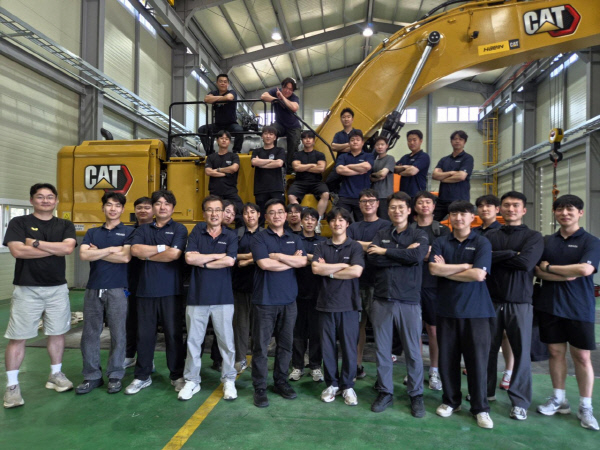
ReadyRoverMachine, a startup developing hardware for energy efficiency in heavy equipment, secured Series B funding of 13.4 billion won. Since its establishment in 2022, ReadyRoverMachine's cumulative fundraising has reached 22.9 billion won.
Investors participating in this round include lead investor Quantum Ventures Korea, along with Samcheonri Investment, Ubiquitous Investment, K-Ren Ventures, and over 30 other venture capital firms (VCs).
ReadyRoverMachine is developing a device called 'ReadyX' that recovers and stores energy wasted to the hydraulic tank when excavators and other heavy equipment operate, then reuses it during engine operation. Installing this on a 30-ton class excavator can reduce annual fuel costs of approximately 10 billion won by 20–30%.
ReadyRoverMachine supplied ReadyX to Hyundai Steel's Incheon and Dangjin plants, achieving fuel efficiency improvements of up to 36% in 30-ton class HD construction excavators and 19.4% in 50-ton class HD construction excavators.
ReadyRoverMachine plans to develop its own excavator using the investment funds and launch it before the end of this year. The goal is a plug-in HYBE lead-type excavator capable of continuous operation for 10 hours on a single charge. Jeong Tae-rang (CEO) stated, "We will accelerate domestic business growth by establishing a mass Yangsan system and a nationwide sales network, and will fully enter advanced global heavy equipment markets centered on our Japanese subsidiary."

ModeHouse, a fan-participation entertainment company, secured additional investment from Atnum Investment in its Series B round. The fundraising amount is 10 billion won. Including this investment, the total funding for the Series B round has increased to 31 billion won.
ModeHouse operates multiple artist IPs including Triple S, Artemis, and Identity. In particular, its business model combining multi-artist IPs with a fan platform called 'Cosmo' attracted investor participation. Cosmo is a platform that allows fans to make key decisions such as selecting title tracks, forming activity units, and setting concert setlists. A cumulative 530,000 members have joined Cosmo.
Business results are also becoming visible. ModeHouse recorded sales of 32.3 billion won last year, achieving an annual album sales volume of 1.16 million copies. Triple S's third full-length album 'ASSEMBLE26' achieved initial sales of 560,000 copies, while Identity's third EP 'itsnotover' recorded initial sales of 580,000 copies. Artemis expanded its overseas fandom by conducting world tours in 28 cities.
Kim Dong-jun, Senior at Atnum Investment, explained, "ModeHouse has proven the reproducibility of production capabilities by continuously succeeding with artist IPs even within a competitive landscape dominated by large entertainment companies. Since the early stages of its founding, it has built its own fan platform to implement a differentiated business model where IP and platforms grow together. The virtuous cycle structure is now operating, where fan participation leads to purchases and data accumulation, which in turn drives the growth of new IPs."

BiByInnovation, which operates the health checkup result interpretation platform 'Chakhan Doctor', secured Series C funding of 15 billion won.
Investors participating in this round include Ajou IB Investment, LB Investment, InBody, and Gradient. In particular, InBody plans to establish a cooperative system with BiByInnovation to implement precise personalized medical services by linking body composition data and lifestyle habit data from personal health information.
BiByInnovation operates Chakhan Doctor, a digital healthcare platform based on health checkups. It uses AI to interpret checkup results.
With the investment funds, BiByInnovation will advance in upgrading AI technology, expanding clinical data platforms, and strengthening strategic partnerships. It also plans to develop services that predict individual health risks using AI and suggest follow-up observation directions based on checkup data. Additionally, it announced plans to pursue Real-World Evidence (RWE) businesses that support pharmaceutical companies' new drug development and diagnostic companies' identification of new medical testing targets by utilizing health checkup big data and medical AI.
Cancer genomic big data company Innoclass Korea secured 31 million dollars (approximately 45.1 billion won) in follow-on Series B funding.
New investors participating in this round include IMM Investment, Korea Investment & Securities, Woori Investment Securities, and Shinhan Investment Corp. Existing investors Danam Partners, DSC Investment, and Interwest also participated in follow-on investment. Strategic investors included NDS and Aimed Bio.
Founded in 2020, Innoclass is a precision cancer diagnosis startup founded by medical scientists and geneticists from KAIST and bioinformatics experts. Based on its own bioinformatics technology, it analyzes whole-genome sequencing (WGS) data of cancer patients to provide information necessary for cancer diagnosis and treatment. Currently, over 100 cancer specialty medical institutions in Asia are utilizing Innoclass's whole-genome-based precision cancer diagnosis solutions.
Danam Partners highly evaluated Innoclass's technological capability and business viability in converting whole-genome data into information usable in clinical settings.
Lee Kang-jun, CEO of Danam Partners, said, "It is a company that analyzes whole genomes reaching 30 billion base pairs using its own algorithms. It will not only advance cancer and rare disease diagnosis but also become a data platform company leading new drug development."
Based on this investment, Innoclass plans to target the U.S. hospital market for its whole-genome-based precision cancer diagnosis solutions. It aims to expand hospital adoption in the U.S. based on clinical experience accumulated in Asia, including Korea and Hong Kong, and strengthen local sales networks and operational infrastructure.
[MoneyToday startup media platform Unicorn Factory]

 in FUTURE


