

[For more diverse corporate information on the startup featured in this article, visit the Unicorn Factory big data platform 'Data Lab'.]
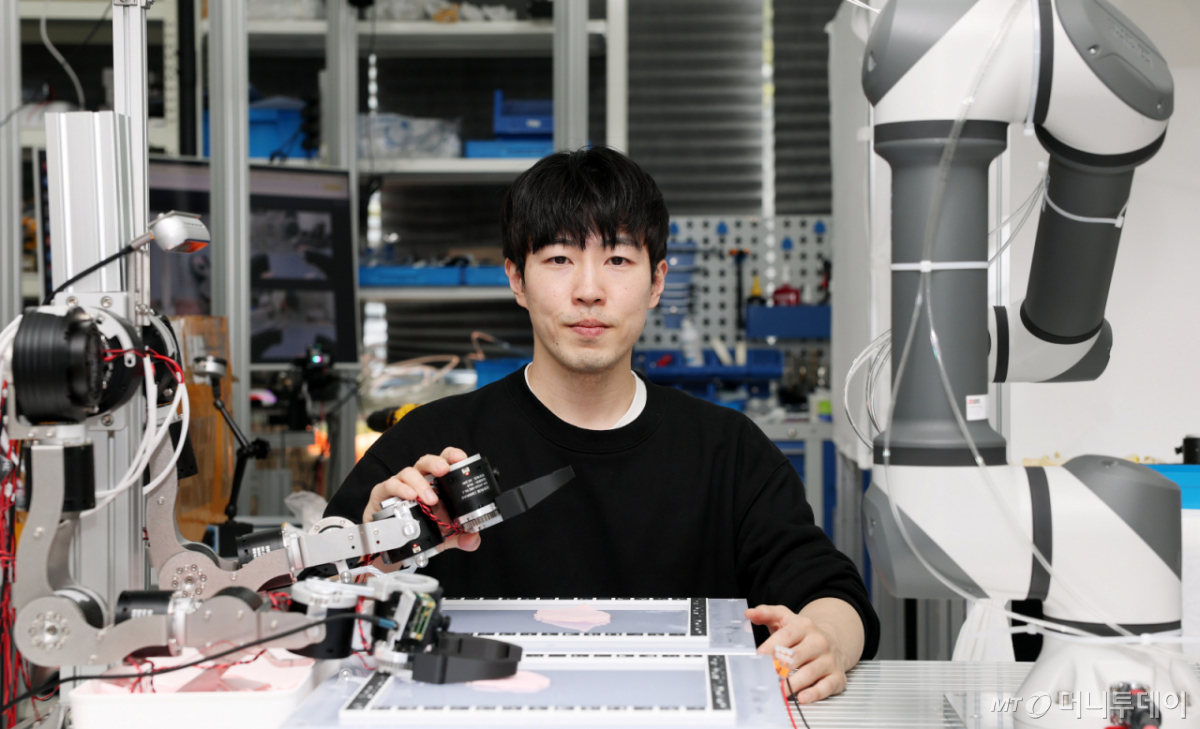
Early this year, South Korea was swept by a "Duchonku (Dubai Chewy Cookie)" craze. Long lines formed to buy Duchonku, and some stores even experienced "open runs." Companies wanted to leverage Duchonku for IP (intellectual property) marketing, such as character merchandise, but it proved difficult. It took five months just to produce a character doll. Given the increasingly short trend cycles, they were hesitant to place orders.
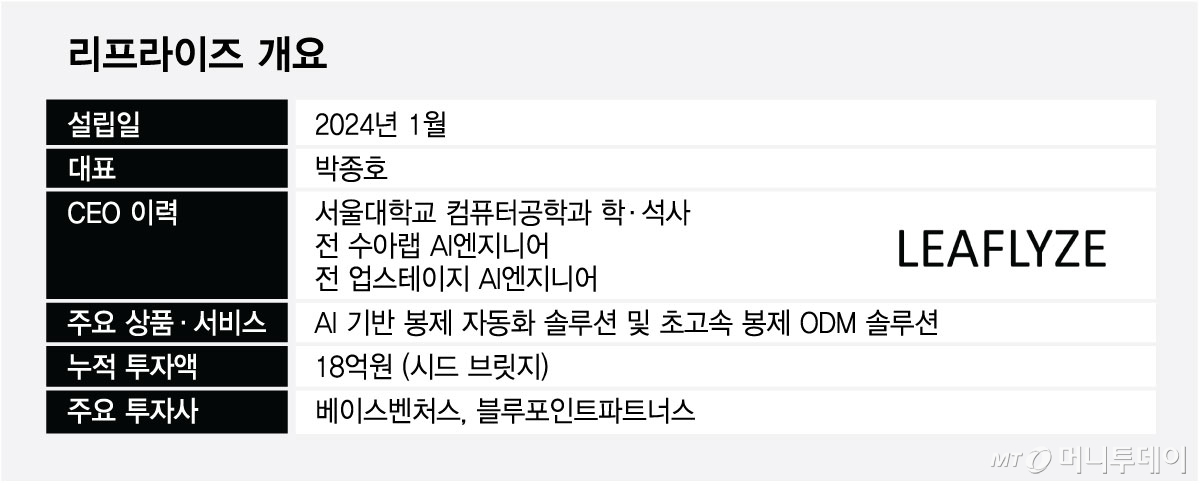
Reprise is a sewing startup aiming to solve these concerns for companies. By introducing an AI (artificial intelligence)-based design solution into the analog-centric sewing market, it can complete doll production in as little as two weeks. Through this, Reprise created "Chun-sik and Duchonku collaboration dolls" with Kakao Friends early this year and sold them within the trend period.
Park Jong-ho, CEO of Reprise, said, "As the duration of trends on SNS (social media) shortens, it has become difficult for companies to leverage them," adding, "Reprise helps companies capitalize on trends (trend hijacking) by speeding up the production of sewn goods."
Trial and Error Ended in Virtual Space… Shortening Production Time
Reprise reduced the time required to produce sewn goods by completing trial and error in a virtual space. Typically, for sewn goods, results cannot be known until a physical sample is produced about two weeks after the production request. Reprise provides a "virtual sample" that can be checked on a computer within two days of the order. This is achieved through a sewing design AI trained on the characteristics of fabrics and fillings, with minimal difference from the physical product.
CEO Park stated, "Considering that design drawings must undergo several rounds of review and revision even after sample confirmation, the traditional method takes at least two months just to finalize the design," adding, "Reprise can finalize designs in a few days, reducing the burden of review and revision, which allows for the creation of more satisfactory physical products."
Physical production is carried out at its own robot-based manufacturing plant. While manufacturing costs are higher than those in China or Southeast Asia, small-batch production is possible, so total costs do not increase significantly. Overseas factories typically require minimum orders of several thousand units, leading to a heavy cost burden from inventory.
"Goods Are Just the Beginning… We Will Expand to the Entire 'Sewing Industry'"
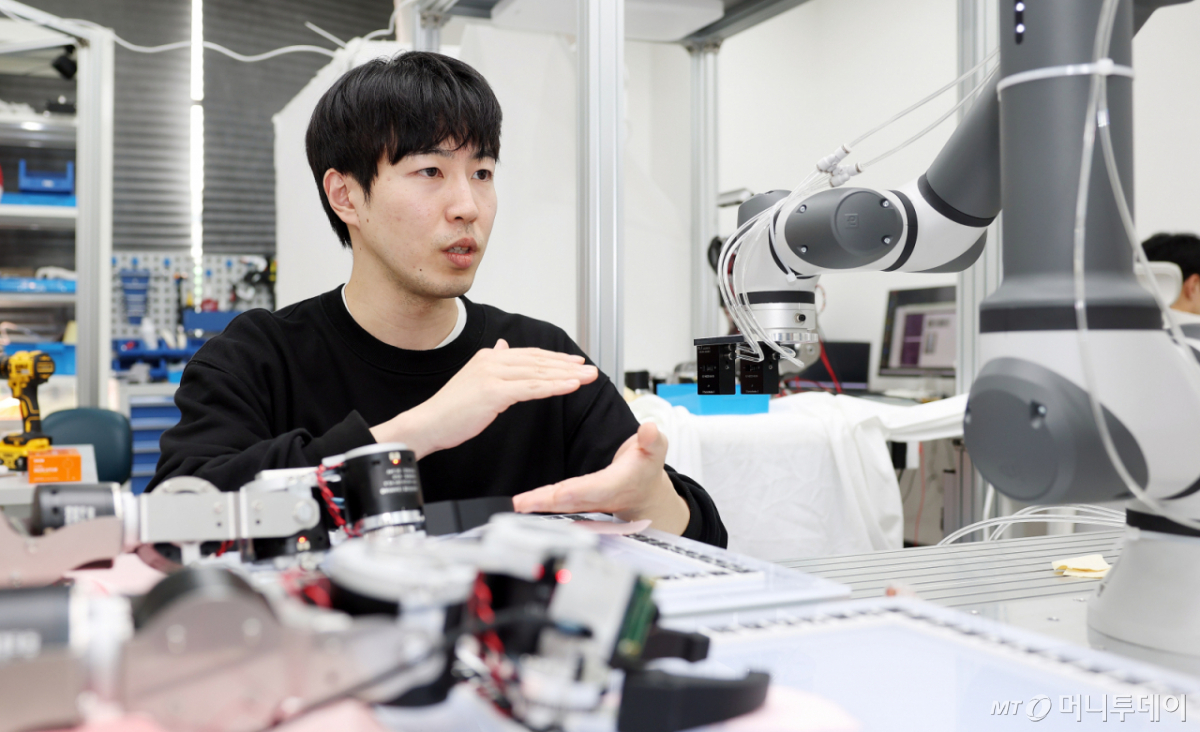
CEO Park believes that speed will be the solution not only for goods but also for the inventory problem facing the entire sewing industry. All fashion brands must determine production volumes based on estimated sales four to six months in advance, meaning that if predictions are off, they face either shortages or accumulated inventory.
CEO Park said, "Accurately predicting the market is not easy," adding, "The fundamental solution is to shorten the prediction period itself through rapid manufacturing." He explained that determining production volumes while monitoring market reactions using short production cycles is the answer. Reprise produced sewn goods for Genie Lamp, a liquor company founded by BTS member Jin, in this manner, minimizing inventory costs.
Reprise estimates the global sewing market size at 106 trillion won annually. Clothing accounts for the largest share at 67%, followed by shoe uppers (8%) and bags (8%). Toys, including goods, account for less than 1%. Reprise plans to expand its domain from goods into the clothing market.
The 106 Trillion Won Market Without an Owner… "We Will Become the TSMC of Sewing"
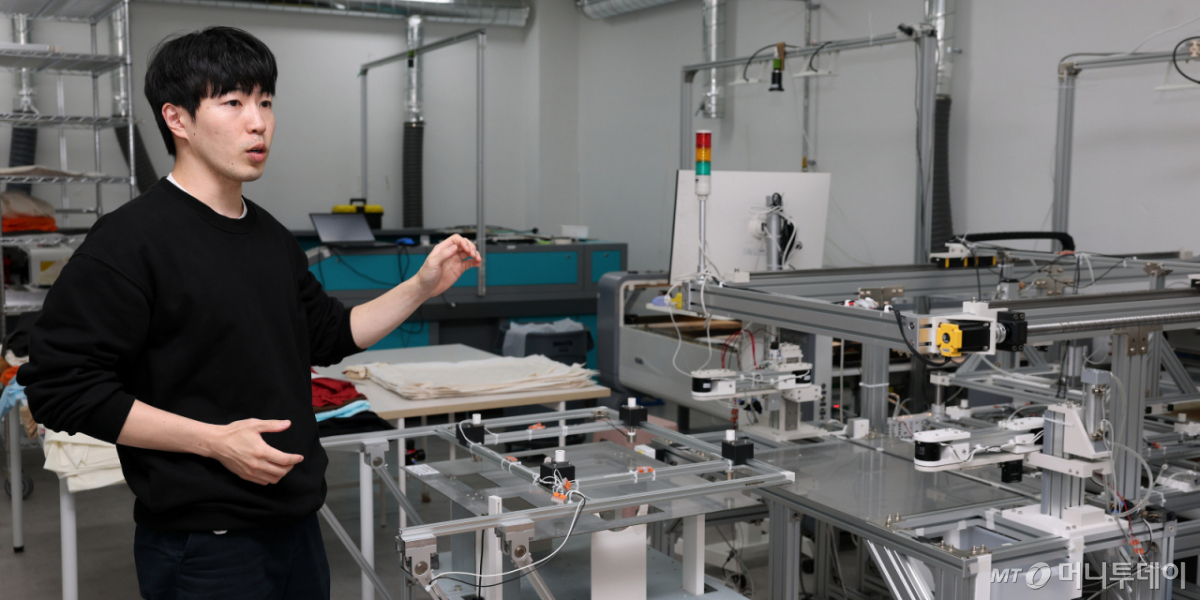
CEO Park emphasized, "The sewing market is a massive market exceeding 100 trillion won annually, but it has no dominant player." Unlike other industries where the top company holds half the market share, in sewing, even the leading manufacturer has a share of less than 1%. Competitiveness in sewing accumulates with people rather than companies; when skilled workers move to other firms, their competitiveness leaves with them. It is a structure where companies have few differentiators to build up.
CEO Park, an AI developer who worked at Suah Lab and Upstage, founded the sewing startup because he saw this point. Automation technologies such as AI and robotics were means to bring know-how scattered among individuals into company systems. CEO Park said, "AI and robot technology can accumulate human know-how and skills into company systems," adding, "If a system for accumulating know-how and technology is established in the sewing industry, we can create a company that shakes up the market."
CEO Park compared Reprise's goal to semiconductor company TSMC. Just as TSMC dominated the market by best implementing customers' semiconductor designs, Reprise aims to become the manufacturer that best implements character and brand IPs. CEO Park stated, "Our goal is to become the TSMC of the sewing industry through AI and robot technology."
[Money Today Startup Media Platform Unicorn Factory]

 in FUTURE


