

[For more diverse company information on the startups mentioned in this article, you can view them on Unicorn Factory's big data platform 'Data Lab'.]

Amidst the venture investment industry being shaken by allegations of falsifying financial documents of As We Make, the operator of the food ingredients mart platform 'Q-Market', a self-mocking assessment that such tragedies are "force majeure" is emerging. This is because VC (venture capital) and AC (accelerator) firms, which primarily invest in startups, face clear physical limits in conducting due diligence on each individual investment firm.
To prevent a recurrence of such incidents, there is a call for the need to support ERP (Enterprise Resource Planning) systems so that startups can manage their operations transparently under the management and supervision of investment firms. Additionally, voices are being raised that investors and investees must build a consensus on ensuring startups have the basic framework as corporations.
According to the venture investment industry on the 16th, the core of the As We Make incident is "accounting fraud." It is reported that since the second half of 2023, data with falsified sales figures and bank balances different from reality have been submitted to investors. Son Su-yeong (CEO) announced his intention to resign on the 5th, taking responsibility for this. Most investment firms immediately launched legal responses upon grasping the actual situation.
Falsification of startup financial documents is an incident that often occurs. The case of 'Sensi', a braille content startup for the visually impaired, is representative. Sensi told investment firms that overseas sales and operating profits were generated annually, but this was reported to be untrue. After the accounting firm issued a "refusal of audit" last year, Sensi CEO Seo In-sik disappeared to the United States. Police are currently investigating on suspicion of embezzlement of investment funds.
In one startup, a finance team manager was caught paying for approximately 1.8 billion won worth of game items using a corporate card opened without the knowledge of the investment firm. The financial documents were directly manipulated, and they went undetected by investment firms for a long time. One VC discovered anomalies in the financial documents submitted by an invested company and launched an emergency due diligence, but could not fully resolve its doubts. Judging that conducting a full-scale due diligence could cause the startup to collapse, they quietly disposed of only the old shares they held. This structure, where raising issues could lead to the collapse of the invested company, created silence.
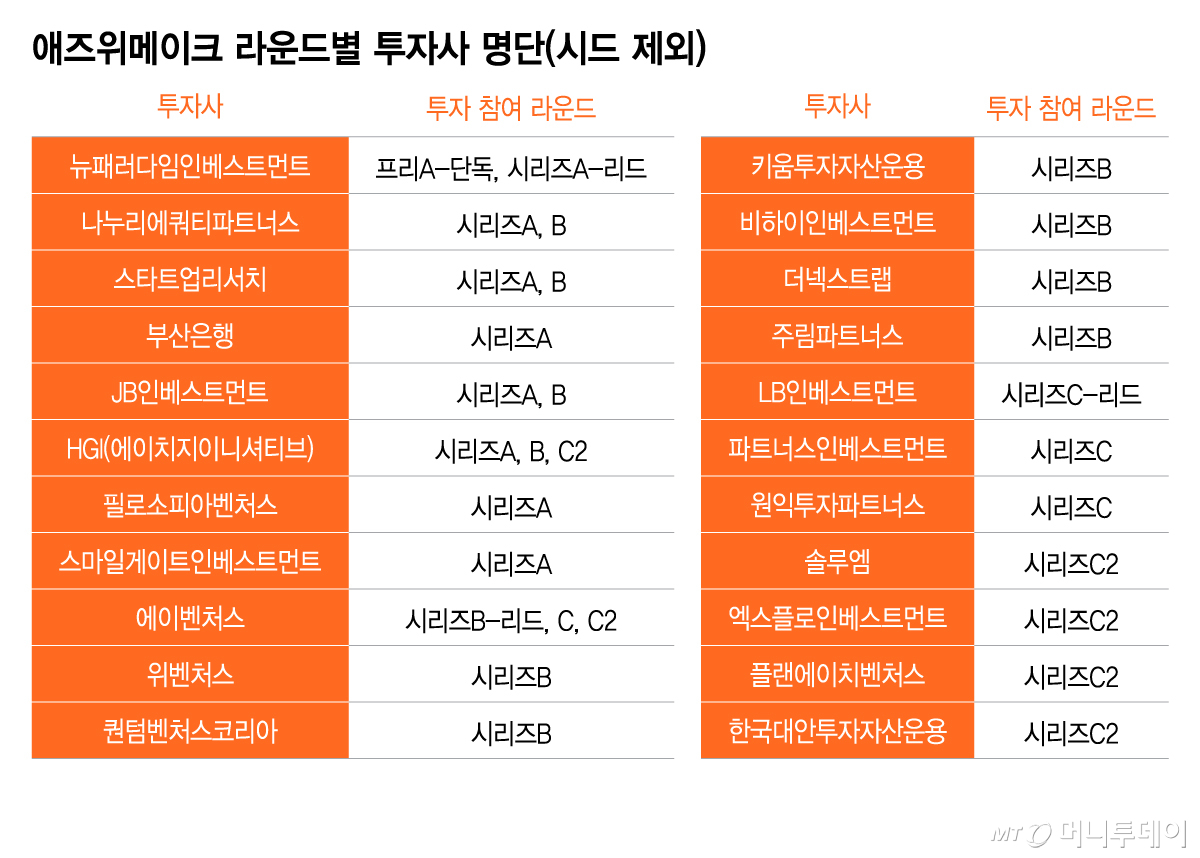
Recently, As We Make, which has become a hot topic, raised funds from over 20 investment firms from its Series A investment in November 2022 through December last year. Even excluding the undisclosed Series C2 investment, approximately 26 billion won was raised. Some criticize that numerous investment firms neglected due diligence on As We Make.
However, on the ground, physical limits of due diligence and post-investment management are pointed out. With a single reviewer responsible for dozens of portfolio companies, it is difficult to continuously verify the financial reality of all companies. Reviews often proceed based on the assumption that audit reports and balance certificates submitted by companies are factual, and there is also a practice in subsequent rounds of lowering due diligence intensity by trusting the verification of previous investors.
The relationship between investors and founders itself makes verification difficult. If an investment firm begins requesting data based on suspicion, the trust relationship breaks down, making normal collaboration difficult. Additionally, for companies with steep growth indicators, competition among investors intensifies, reducing the time available for due diligence.
The effectiveness of representations and warranties (R&W) clauses included in investment contracts is also limited. While they explicitly allow for claims of return of investment funds or damages if financial documents differ from reality, actual recovery becomes difficult if the company has no remaining funds.
In some cases, accounting fraud is prevented in advance through system construction rather than strengthened surveillance. One VC developed its own ERP system and supplies it to portfolio companies. By providing back-office functions that startups find difficult to establish on their own, they increase work convenience while allowing investment firms to transparently verify accounting and business data. This VC is also emphasizing this point to LPs (limited partners).
There are also calls for the need to spread the same approach at the government level. Kim Sung-hoon, a lawyer at Mission Law Firm, stated, "We can consider a plan where the Ministry of SMEs and Startups policy helps startups build ERP systems and data rooms that can be shared with investment firms." He added, "Only then will domestic and foreign investors find it easier to invest with confidence, believing that 'Korean startups have systems comparable to listed companies.'"
In the venture investment industry, there are also criticisms that problems arise due to a lack of understanding specifically regarding the corporation system. The corporation system views the "company" and the "founder" as separate legal entities. Therefore, the Commercial Act and Civil Code grant the company a separate personality called a "legal person." Legally, the assets of the company and individuals (founders) are separated, and in exchange, shareholders bear only "limited liability" up to the amount they contributed. To maintain this structure, separation of ownership and management, proceduralization of decision-making, and transparency in accounting and information are necessary.
Lawyer Kim stated, "Tragedy begins when many founders cannot distinguish between corporations and sole proprietorships," pointing out that "there are quite a few places that don't even know what a 'data room' is, which involves organizing company information during the corporate due diligence process."
Furthermore, he emphasized, "Problems such as the joint liability practice where investment firms place excessive burdens on founders, boards of directors operated only in formality, and startups' poor internal financial systems all stem from the same root: 'misunderstanding of corporations.' Both founders and investment firms need to receive education so they can properly recognize what a corporation is."
[MoneyToday startup media platform Unicorn Factory]

 in FUTURE

