

[For more diverse company information on the startups mentioned in this article, please visit the Unicorn Factory big data platform 'Data Lab'.]
'Why should we accept the inconvenience of going to a hospital for accurate testing? Is there really no way to easily check our body's condition at home?'
Bio AI (artificial intelligence) startup Amply started from this very question. The company currently sells diagnostic kits under the brand 'Winty' that allow users to easily check their body's condition at home using samples such as urine or saliva. Its goal is to create a new health management habit called "daily diagnosis."
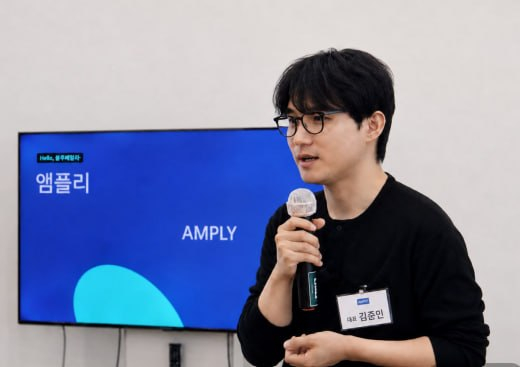
Kim Jun-min, CEO of Amply, said, "While we manage our health every day by taking supplements and exercising, medical checkups are only done once a year," adding, "I have always felt frustrated that the biochemical data needed to determine whether I am truly managing my health well or which supplements to choose can only be confirmed at a hospital."
For Kim (CEO), the possibility of entrepreneurship was shown through COVID-19 self-diagnostic kits. Although diagnostic kits themselves existed before, the COVID-19 pandemic made it common for anyone to collect samples and check results directly at home.
Kim (CEO) explained, "I saw new possibilities opening up with the emergence of generative AI technology after the COVID-19 pandemic," adding, "If we combine AI with smartphone cameras to improve accuracy and sensitivity, we can expand the diagnostic field not only for diseases but also for everyday health management."
The company name 'Amply (AMPLY)' also came from this concept. It is derived from the 'Amplification' technology that amplifies trace substances or signals to make them detectable. It reflects the company's technical direction of capturing even minute signals in samples with high sensitivity to improve diagnostic accuracy.
"1,000 actual uses within one month"... Cross-purchase rate reaches 64%
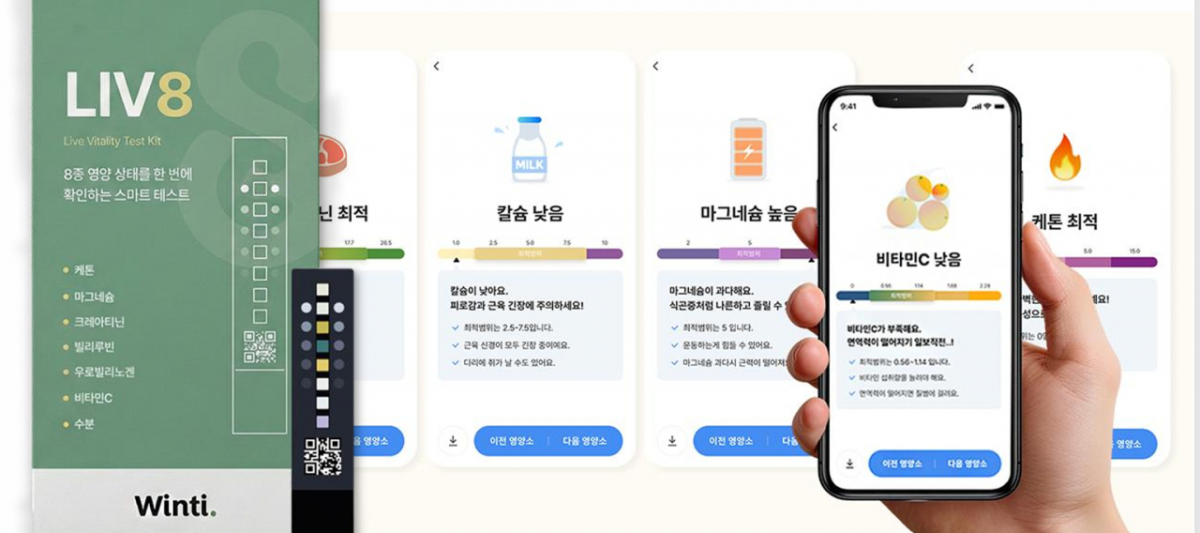
To achieve such "daily diagnosis," Amply launched the nutritional balance self-diagnostic kit 'LIV8' in June. It allows users to check eight nutrition-related indicators, including vitamin C and magnesium, through urine. By scanning a provided QR code with a smartphone, the user takes a photo of the kit stained with urine, and AI reads the results.
LIV8 secured more than 1,000 pieces of actual customer usage data in less than one month after its launch. Some customers confirmed that their existing supplement intake and eating habits were appropriate, while others expressed interest in rechecking after identifying deficiencies and adjusting their supplements or lifestyle habits.
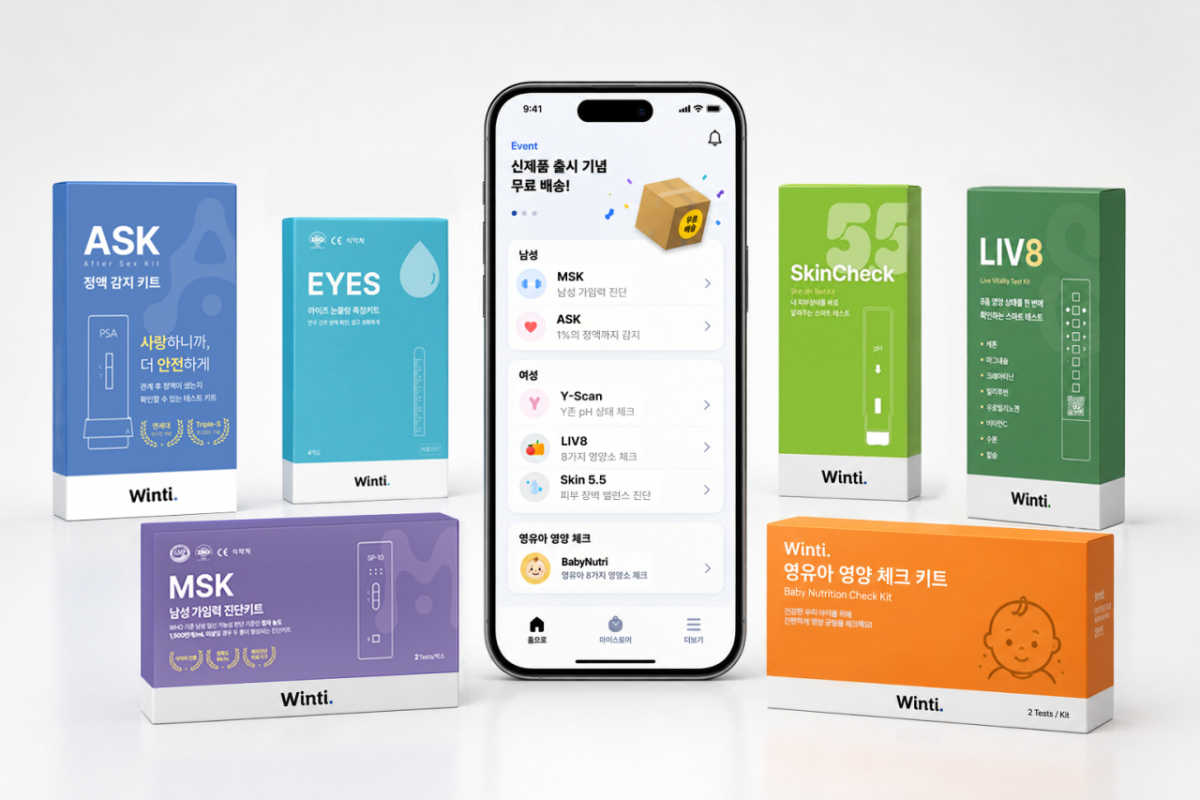
Amply does not limit itself to checking nutritional status. Before LIV8, the company released 'ASK,' a semen detection kit in August last year that allows users to check contraceptive status by detecting sperm presence in genital samples after sexual intercourse. In March this year, it introduced 'Skin Check,' a skin diagnostic kit using skin samples. Recently, it also launched 'MSK,' a fertility diagnostic kit that allows users to check sperm concentration at home.
According to the company, MSK is Korea's only male fertility diagnostic kit available for home diagnosis. It received certification from the Ministry of Food and Drug Safety over approximately one year and six months. MSK detects SP10, a protein present in sperm, to confirm sperm concentration (whether it is 15 million/mL or higher), which is the World Health Organization's (WHO) criterion for judging male fertility. Its key feature is reducing the hassle and psychological burden of having to collect semen samples directly at a hospital for testing.
Regarding the background of this product diversification, Kim (CEO) explained, "From the planning stage of each product, I frequently asked myself, 'What other body conditions might customers who bought this product be curious about?'" He added, "Rather than focusing on a single diagnostic kit, we are building a portfolio of multiple products that allow one customer to continuously check various body conditions they wonder about in daily life."
According to Amply, the cross-purchase rate for customers who bought LIV8 and also purchased other diagnostic kits reached 64%. Male customers tend to buy both LIV8 and the male fertility diagnostic kit, while female customers often purchase LIV8 together with the skin diagnostic kit.
Even if shaken or photographed upside down, it's OK… 'AI that adapts to people'
Turning homes into diagnostic spaces also involves overcoming technical barriers. In laboratories, lighting and shooting angles can be controlled, and high-quality data can be utilized, but actual consumer usage environments involve various variables.
Photos may be shaky or out of focus; users may photograph the kit upside down contrary to instructions, or hold it in their hands instead of placing it on a floor. In general AI development processes, such data is treated as 'noise' and removed, but Amply does the opposite: it re-trains its AI using 'unreadable' data generated during actual usage processes. The company repeatedly trains models until reading accuracy is maintained even for photos that are blurry or taken in unexpected ways, then applies the improved models to actual services.
Kim (CEO) emphasized, "The company's biggest differentiator is not making users adapt to AI, but enabling AI to understand diverse users," adding, "What matters most is how much user diversity we can accommodate while maintaining high performance."
Because of this, the more than 1,000 pieces of actual usage data secured from LIV8 hold significance beyond simple sales figures for Amply. As customers use the product, data generated in real-world environments accumulates and is reused for AI training, further advancing the reading model.
"Leaping toward a lifecycle health management platform"
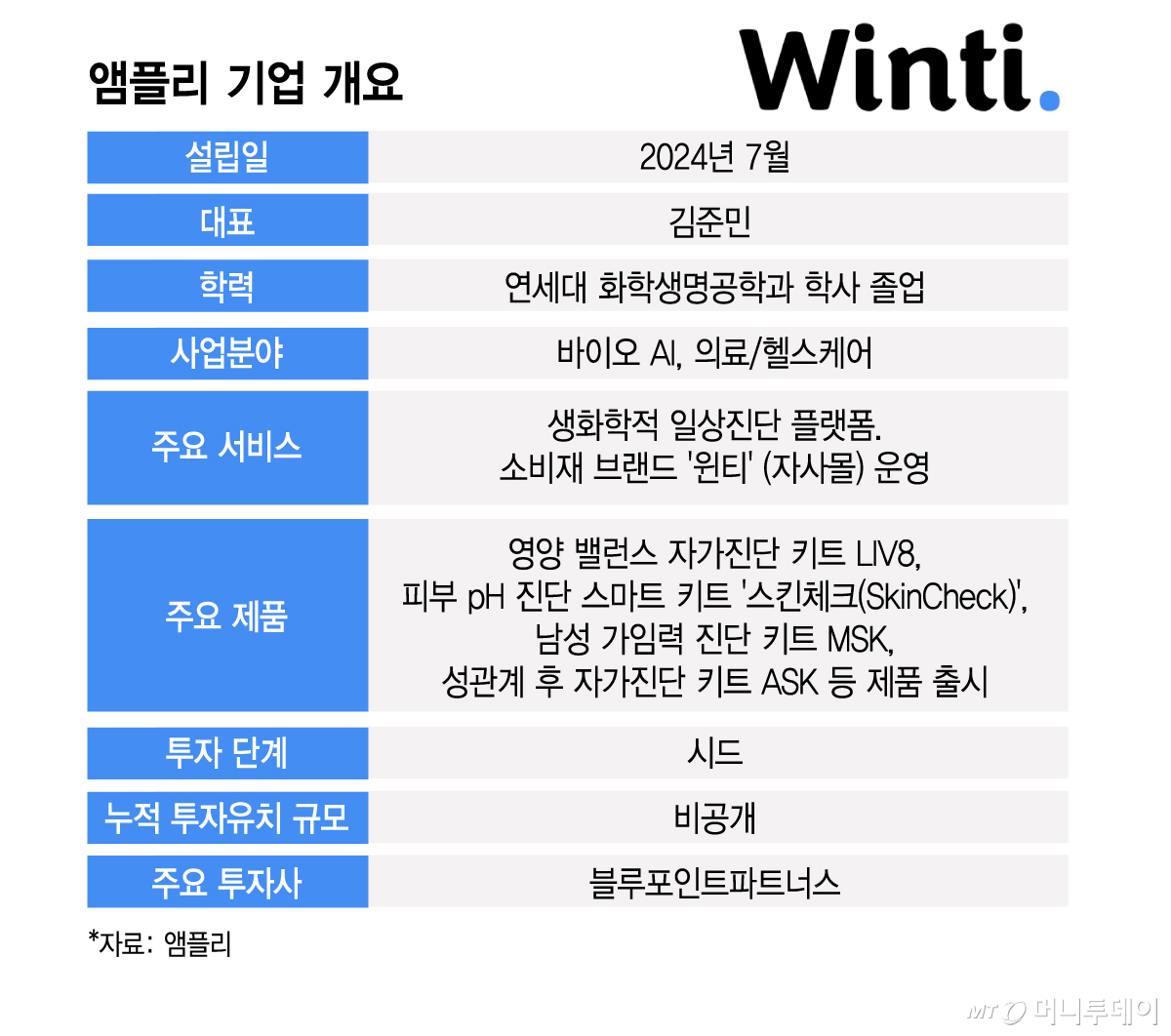
The future Amply ultimately envisions goes beyond selling individual diagnostic kits: it aims to become a "lifecycle health management platform." The plan is to build a virtuous cycle where users measure their own condition through urine or saliva, interpret results using AI, select necessary health management solutions, and then re-measure to confirm effectiveness.
Kim (CEO) stated, "Amply does not aim to replace hospitals but to fill the gaps that existing medical systems fail to address in daily life," adding, "We want customers to feel a sense of efficacy in 'managing my own health' by not stopping at diagnosis but selecting appropriate solutions based on diagnostic results and then measuring their effects."
[MoneyToday startup media platform Unicorn Factory]

 in FUTURE


