

[For more diverse corporate information on the startups mentioned in this article, please visit the Unicorn Factory Big Data Platform 'Data Lab'.]
"We are a company that supplies core solutions necessary for AI (artificial intelligence) transformation. We optimize and provide solutions in the desired form according to customer orders. Just as companies supply engines tailored to the requirements of finished vehicle manufacturers, we deliver models suited to various car types (client companies)."
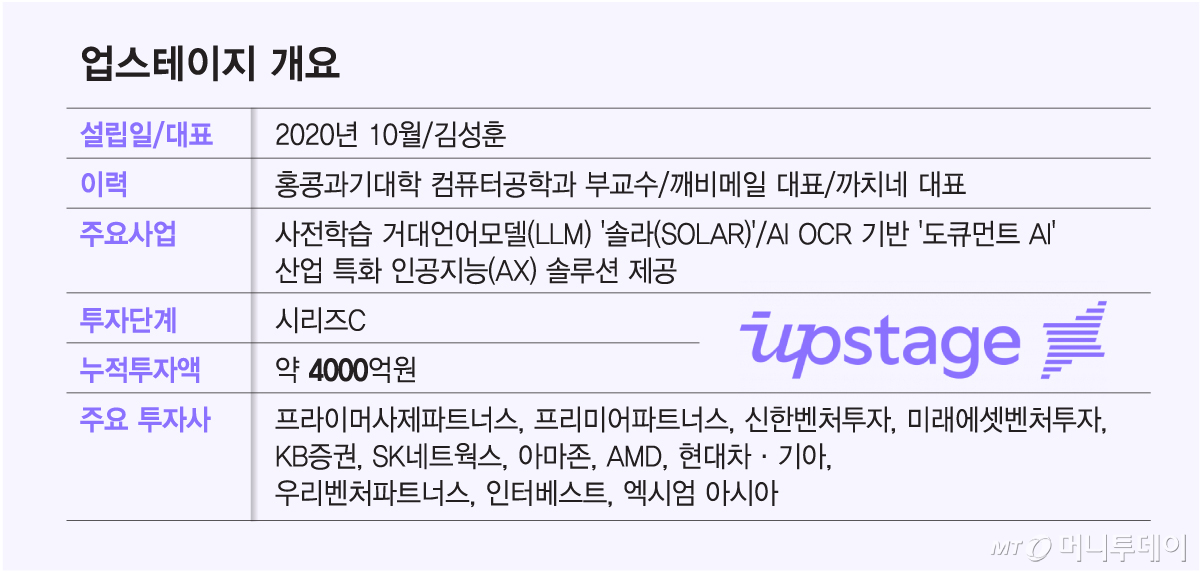
Upstage is expanding its 'Enterprise' AI transformation (AX) service targeting major domestic corporations. Starting with document recognition AI and establishing itself as a company that develops its own AI models, it has now shifted to building AI models and solutions tailored to each enterprise's needs, driving revenue growth. In particular, it is scaling up its business by supplying on-premises AX solutions to large enterprises in sectors such as finance and manufacturing.
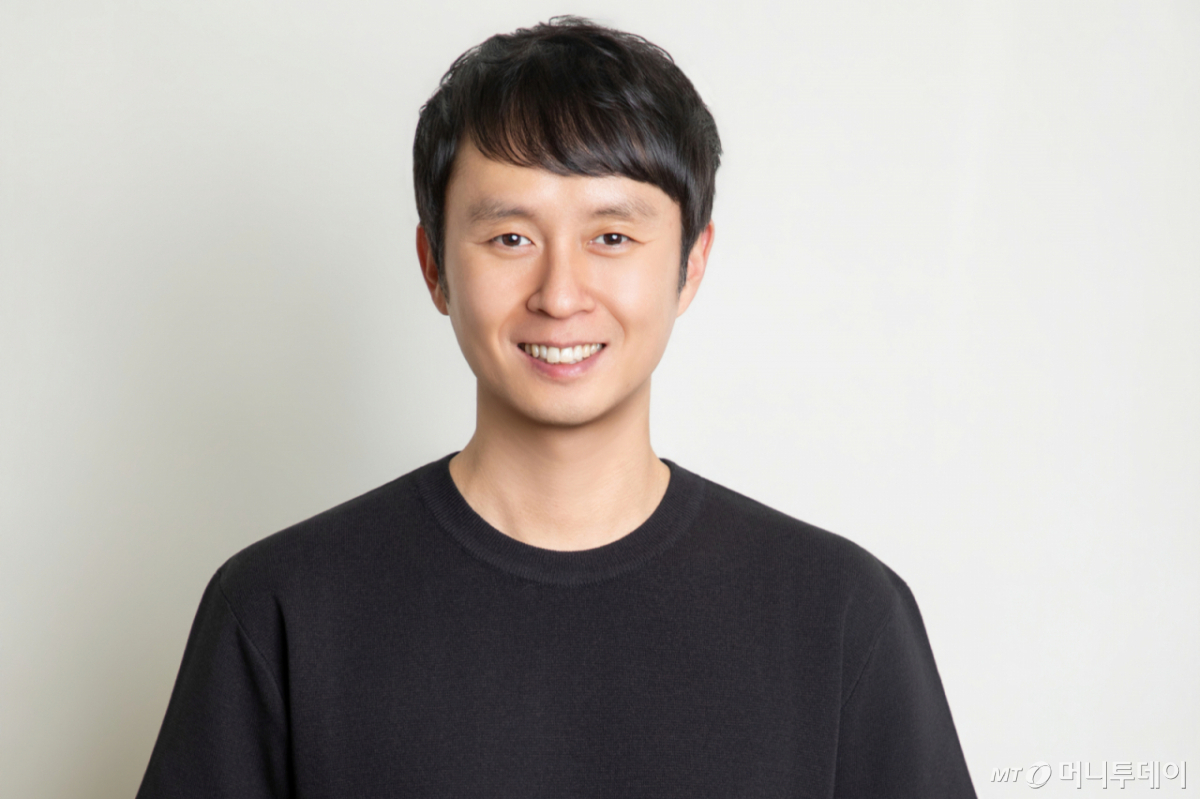
Choi Hun, Head of the Enterprise Business Division at Upstage, explained in a recent interview conducted at the company's office in Gangnam-gu, Seoul, that "Enterprise represents the broadest area within our business portfolio and has the largest revenue target," adding that it is "the organization driving the entire company."
Expanding AX beyond document AI into non-document areas
Upstage's business is broadly divided into four pillars: Enterprise, Partner, Public, and Cloud. The Partner business involves collaborating with other companies to discover new markets and sell proprietary AI models. The Public business targets the government and local governments, while the Cloud business provides AI solutions through external cloud platforms and charges fees based on usage volume.
The Enterprise business builds AI solutions tailored to corporate needs and operates on an annual subscription model. Choi explained that "we typically complete around 30 to 50 implementation projects in a year before transitioning them to subscriptions." The project structure involves collaboration among the Implementation Team, Product Team, and Model Team. Choi described it as follows: "The Model Team is like the team making high-quality soy sauce in a traditional jar; the Product Team is like the team cooking that soy sauce in a large cauldron; and the Implementation Team adjusts the final product to meet customer requirements."
Until now, Upstage has primarily secured clients in industries that handle large volumes of documents—such as finance, insurance, law, and healthcare—by leveraging its document recognition and processing technologies. Choi stated, "Our company's document recognition capabilities are so advanced that they challenge the global top tier," adding, "By first addressing the urgent needs of customers who conduct business centered on documents, we are laying the foundation for AI transformation."
Recently, Upstage has expanded its Enterprise business into areas not directly related to document processing. A representative example is a financial sector risk management project. In this approach, AI directly analyzes data to validate hypotheses developed by decades-experienced data scientists based on their expertise. For instance, if a hypothesis states that "changes in stock trading patterns during late-night hours will lead to lower loan repayment rates," the AI identifies new anomalous patterns and verifies the hypothesis's validity.
"Korean companies show low willingness to pay for software... proving value is key"
He identified "low willingness to pay" as the biggest challenge in the domestic Enterprise market. Choi noted, "Companies often set budgets based not on pure value assessment but on how much employee workload will be reduced by implementing a solution, then ask us to fit within that budget." He added, "To generate customer willingness to pay, we must demonstrate value beyond simply reducing time and costs."
However, he explained that once a solution is adopted, customer retention rates remain high. One life insurance company introduced a document automation solution in one department and later expanded its application to other departments. The project has now reached its seventh iteration, with the number of adopting departments steadily increasing. He stated, "When we prove value that customers can directly experience, it creates a 'lock-in effect' where they continue to pay for our services."
Upstage emphasized that on-premises AX implementation can reduce enterprises' AI operational cost burdens. While external API-based AI services incur variable costs depending on usage volume—making operational expenses difficult to predict—on-premises solutions allow customers to install models on their own GPU servers, enabling relatively stable and predictable costs. Choi compared this to "installing a water purifier at home instead of buying bottled water every month."
Building on its proven competitiveness domestically, Upstage's next goal is to expand into overseas markets. The company has established subsidiaries in South Korea, the United States, and Japan, with increasing inquiries from the Middle East and Asia-Pacific regions. In particular, it is promoting "full-stack" exports that bundle models, cloud infrastructure, and neural processing units (NPUs) for countries struggling to secure their own AI models. Choi remarked, "We are receiving requests not just for models but for complete packages including cloud and NPU capabilities, along with our proprietary know-how. We expect Upstage to play a central 'brain' role in this process."
A key differentiator in its overseas business is the ability to respond directly at customer sites. Upstage maintains an Implementation Team of over 40 members operating for more than four years, supporting both domestic and international clients with AI adoption and implementation. Choi described these teams as "frontline warriors who actively engage on-site," adding, "Our strength lies in having an organization capable of absorbing challenges that arise during the customer's AI adoption process directly at the site."
Upstage aims to pursue an initial public offering (IPO) around next year. Choi stated, "For a successful IPO, we must drive revenue up to meet market expectations," and added, "This year, Enterprise is expected to lead at least half of our total revenue target."
[MoneyToday startup media platform Unicorn Factory]

 in FUTURE

