

[For more diverse corporate information on the startups mentioned in this article, please visit the Unicorn Factory big data platform 'Data Lab'.]
"When designing a hyper-sonic vehicle, if heat cannot be predicted accurately, design must inevitably be overly conservative. This makes the vehicle heavier. We use AI (artificial intelligence) to predict heat quickly and accurately, helping to optimize the weight of the vehicle."
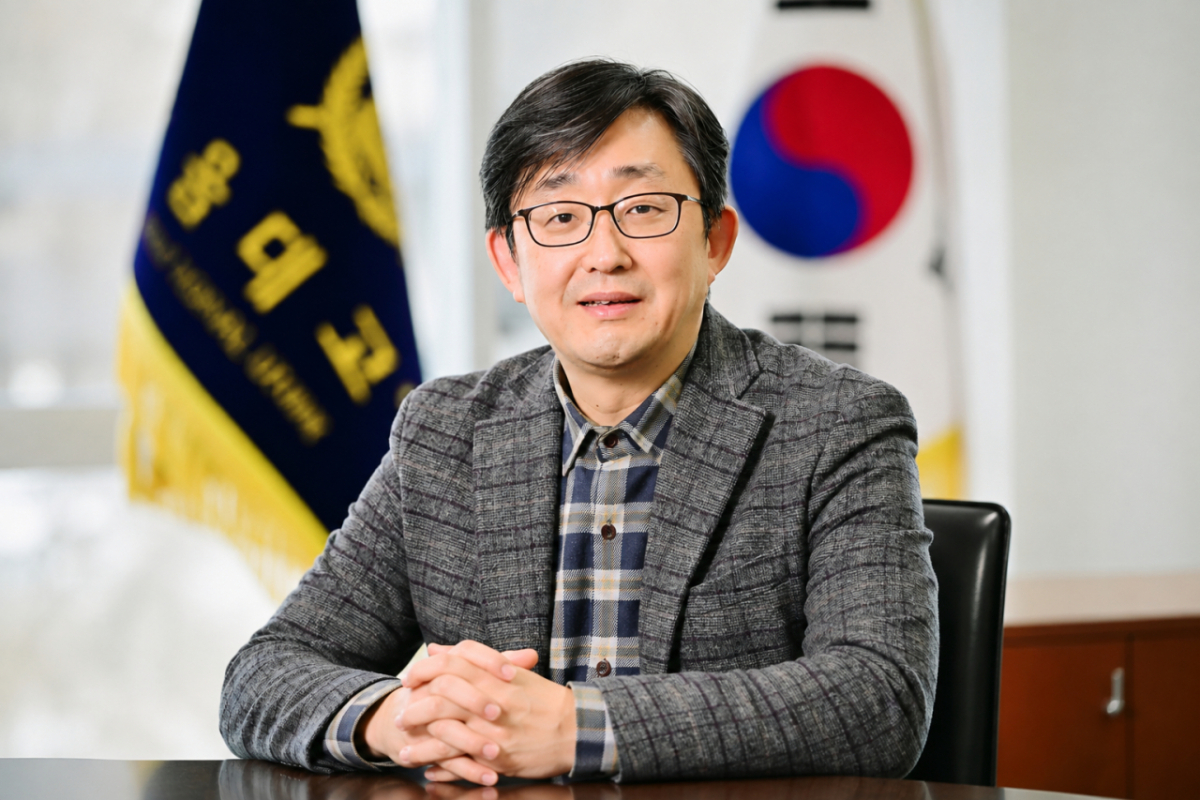
Kim Kyu-hong Ha I-peo-sol (CEO) (Seoul National University Aerospace Engineering Joo Gong-hak-gwa (Prof.)) recently stated this after meeting with Unicorn Factory, a startup-focused media platform of MoneyToday. HyperSol is a startup developing simulation solutions that combine AI with heat and flow analysis technologies required for the development of hyper-sonic missiles and space vehicles. Simply put, it helps design vehicles by calculating and analyzing how much heat is applied to which part of the vehicle through simulation and what impact that heat has on the structure.
The company is implementing software that allows the technology accumulated by Kim (CEO) over a long period while researching hyper-sonic flow and aerodynamic heating at Seoul National University to be utilized in industrial settings. Hyper-sonic generally refers to the region where flight speed exceeds five times the speed of sound (Mach 5). This same hyper-sonic region is traversed not only by hyper-sonic missiles but also when space vehicles like the Space Shuttle re-enter Earth's atmosphere after completing their missions. At this time, as the vehicle enters the atmosphere at high speed, surrounding air is strongly compressed, generating immense heat. A representative example is the scene in movies where a spacecraft glows red around it upon returning to Earth.
Therefore, accurately predicting how much heat will be applied to which part of the vehicle is crucial in vehicle design. If heat is overestimated compared to reality, thicker thermal protection structures and materials must be applied than necessary to ensure safety, making the vehicle heavier. Conversely, if heat is underestimated, the vehicle may not withstand extreme flight environments, leading to safety issues. Kim (CEO) stated, "Accurate heat analysis allows us to ensure safety without making thermal protection structures unnecessarily heavy," adding, "Optimizing vehicle weight and improving performance through this is key."
Adding AI to lab technology: 'One week → Instant'
The background behind Kim (CEO)'s decision to start a business was the gap between university research achievements and industrial reality. Even if new analysis technologies and programs are developed at universities, it is difficult for companies to use them immediately. While programs need to be refined for actual field conditions and continuously maintained and supported, it is also difficult to entrust this to graduate students who must write papers. Kim (CEO) explained the motivation for founding the company by saying, "Even if results created at schools are delivered to research institutes or companies, applying them immediately is not easy. We judged that an organization is needed to make research achievements usable in industrial settings."
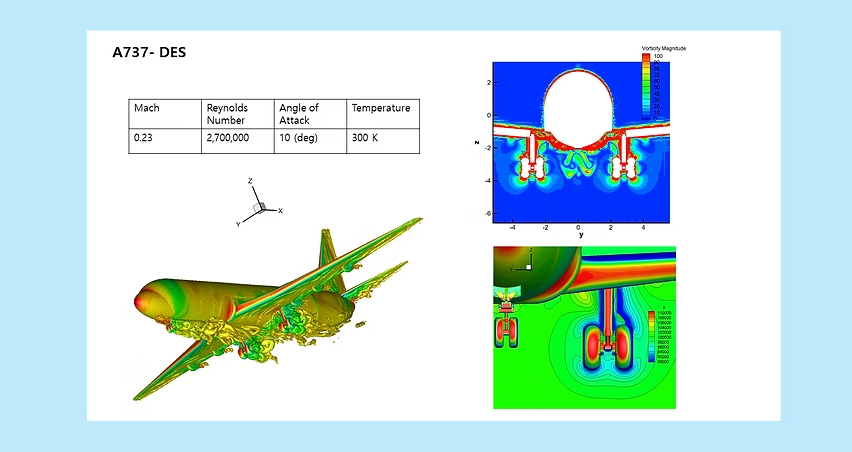
HyperSol integrated AI into this process. Simulating hyper-sonic environments with precision requires massive computing resources, and calculating a single condition can take about a week. HyperSol pre-generates high-precision simulation results for various conditions, trains AI on them, and enables immediate prediction of results when new design conditions are input. Kim (CEO) explained, "Previously, it could take a week to calculate one case, but by creating results in advance and training AI, we can answer new questions immediately. It is similar to the concept of receiving an instant answer when asking ChatGPT."
In particular, HyperSol's strength lies in its ability to produce data required for AI learning independently. In the defense sector, securing external data is difficult due to security concerns. Based on the hyper-sonic heat and flow simulation technology accumulated by Kim (CEO)'s research team over a long period, HyperSol directly generates data for various flight conditions and utilizes it for AI training. Kim (CEO) emphasized, "One of the reasons why AI integration in the defense sector is slow is the difficulty in obtaining data. Our greatest competitive advantage is that we can produce AI training data independently."
Beyond consulting to subscription-based SW... "Anyone can perform sophisticated heat analysis"
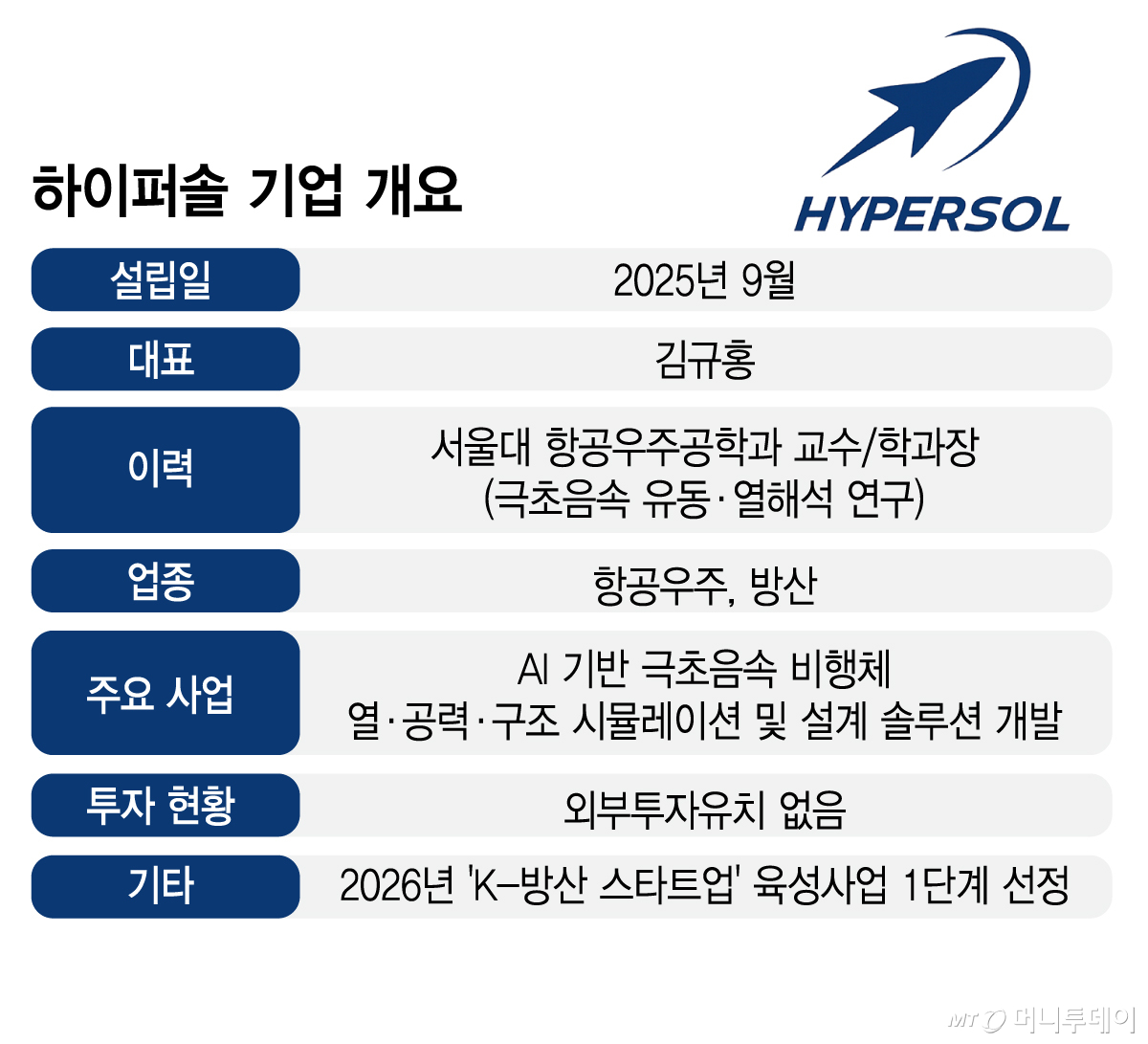
HyperSol is currently conducting consulting projects to develop and verify programs tailored to each company's requirements. It is also pursuing business with major domestic defense conglomerates. Currently, the focus is on a model where HyperSol directly performs simulations and analysis upon client request, but ultimately, it plans to transition to a subscription-based software business where clients adopt the program and perform necessary analyses themselves. For large defense companies, it intends to supply via an on-premise method installed on the client's internal servers considering security, while providing SaaS (Software as a Service) forms to SMEs (small and medium-sized enterprises) and universities/research institutions.
Recognized for its technology and potential, HyperSol was recently selected as a Phase 1 company in the Defense Acquisition Program Administration's 'K-Defense Startup Incubation Project'. The K-Defense Startup Incubation Project is a program that discovers startups with excellent technologies and supports them step-by-step from entering the defense market to achieving independence. In Phase 1, HyperSol aims to establish a growth roadmap, conduct defense education, and develop prototypes, then proceed to Phase 2 research and development (R&D) projects providing up to 500 million won after performance evaluation.
What the company ultimately seeks is to change the design methods of domestic space and defense companies. The plan is to support decision-making on heat-related issues based on simulation and data rather than relying on the experience of a few experts. Kim (CEO) stated, "In the domestic space and defense sectors, heat analysis and problem-solving experiences are still concentrated among some experts," adding, "Our goal is to create programs that allow anyone to utilize technology accumulated at universities, enabling even those who are not skilled experts to perform sophisticated heat analysis and design."
[MoneyToday startup media platform Unicorn Factory]

 in FUTURE


