

[For more diverse corporate information on startups, visit Unicorn Factory's Big Data Platform 'Data Lab'.]
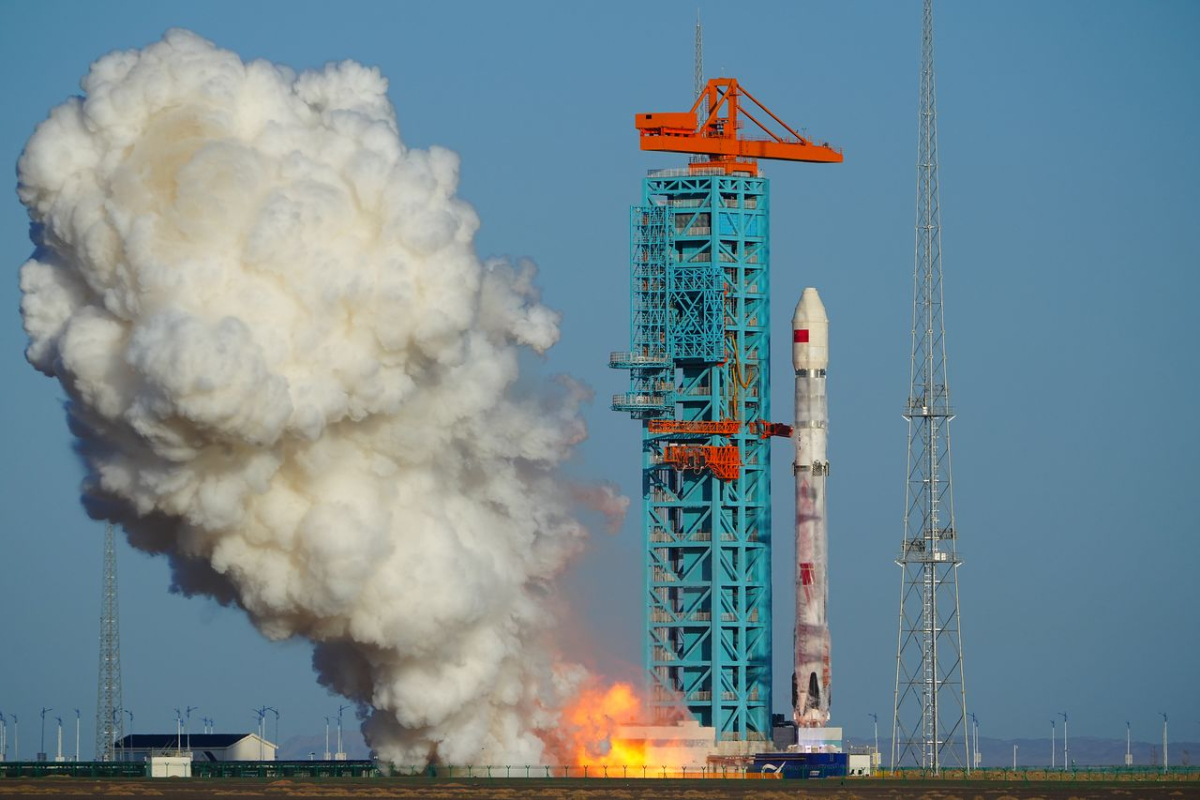
A warning has been issued by a U.S. national security think tank that American global space hegemony, long dominant in markets such as low Earth orbit (LEO) satellite communications, could be shaken. This is because China has recently achieved consecutive successes in demonstrating reusable rocket technology, laying the groundwork for launching large-scale satellite constellations at low cost. Analysts suggest that just as Huawei once dominated the global satellite communication (SATCOM) equipment market by leveraging price competitiveness, a 'Huawei of space' could emerge.
Kathleen Callery, senior researcher, and Sam Bregman, researcher, at the Center for Security and Emerging Technology (CSET) at Georgetown University, pointed out in a recent Nikkei Asia op-ed that "recent consecutive successes by Chinese companies in launching reusable rockets have completed the final puzzle piece of China's space rise," adding that they are "substantially threatening U.S. hegemony over the global space market."
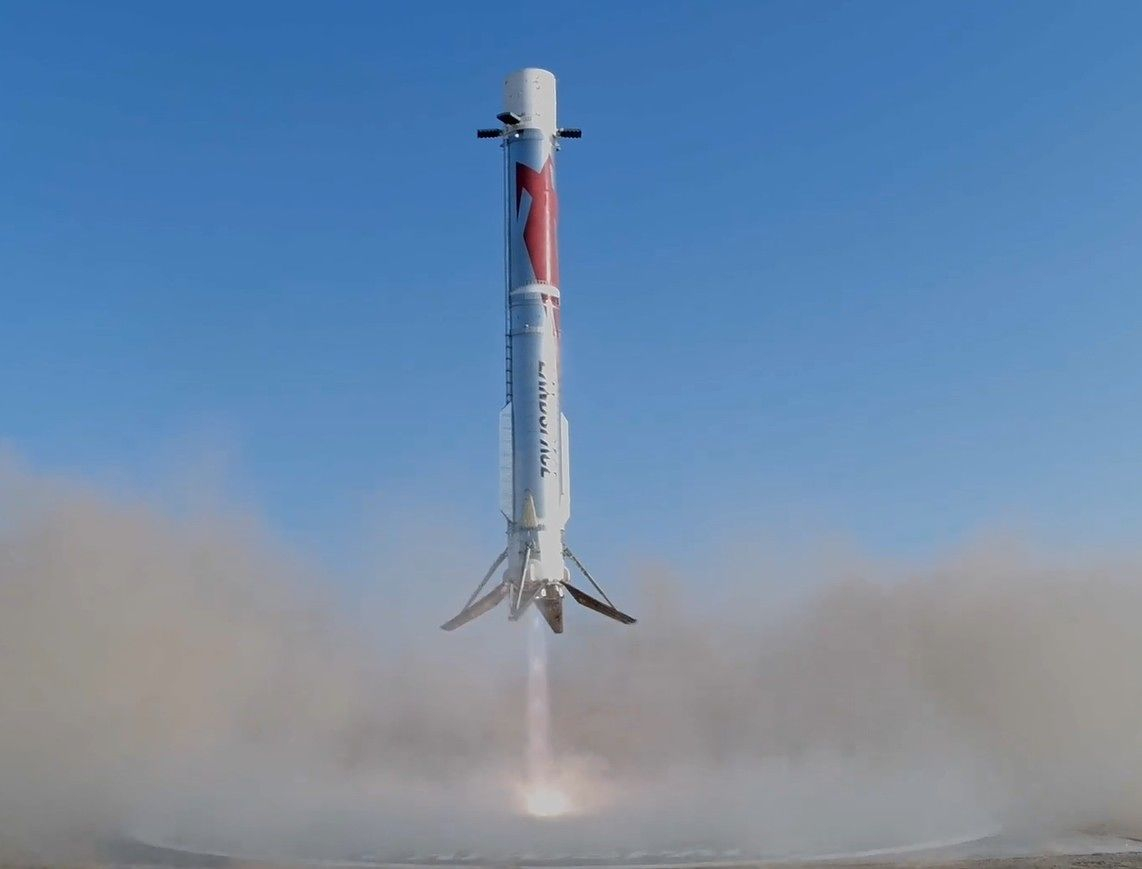
In fact, LandSpace (Chinese name: Lanzhou Hangtian), a private Chinese aerospace company, successfully achieved vertical landing of the first stage of its Zhuque-3 rocket last month. This followed CASC (China Aerospace Science and Technology Corporation), a state-owned enterprise, recovering the booster of its Changzheng 10B rocket from the sea in early July. Both state-owned and private companies have now achieved success in orbit-class rocket recovery. Local media outlets such as the South China Morning Post (SCMP) have highlighted this achievement, noting that Chinese companies are now the third and fourth globally to successfully recover launch vehicles after SpaceX and Blue Origin of the United States.
In particular, LandSpace's Zhuque-3 is seen as highly significant for overcoming its initial failure in December last year. During the first attempt, while the second stage successfully reached orbit, the first stage failed to reignite its engine just before landing, resulting in an explosion engulfed in flames. LandSpace improved its technology by reducing the number of landing ignition engines to simplify the system and adding autonomous safety control features that utilize predicted landing zones.
Successful experiments with reusable launch vehicles are a key factor that could reshape the competitive landscape between the United States and China for building satellite internet networks. China has long planned to construct satellite networks comprising tens of thousands of satellites, including the national-level low Earth orbit project "Guowang" (13,000 units) and Shanghai-supported "Qianfan" (15,000 units). Including satellite launch plans submitted by Chinese companies to the International Telecommunication Union (ITU), the total reaches 200,000 units.
The CSET research team noted that while the high launch costs of expendable rockets previously limited the number of satellites launched from China, this is expected to increase dramatically going forward. They pointed out that China had lagged behind the United States only in terms of affordable means to place large numbers of satellites into orbit, a problem now resolved. Additionally, they assessed that hundreds of aerospace companies are active across all sectors including launch, satellite manufacturing, and services.
The research team analyzed that China's current space strategy precisely mirrors Huawei's 5G rise from a decade ago. In the past, Huawei rapidly captured emerging market telecommunications infrastructure by leveraging price competitiveness through Chinese government subsidies and financial support, growing into the world's largest communications equipment company. Although U.S. allies excluded Huawei equipment from their national government networks citing security risks, Huawei's position in the global market remained largely unshaken.
The CSET research team also projected that the same pattern could be replicated even in the low Earth orbit satellite communication market, currently dominated by SpaceX's Starlink. If China drastically lowers launch costs through reusable rockets, it could establish itself as a substitute for Starlink and trigger another "Huawei moment" in orbit.
The report also emphasized that China's successful reusable launches extend beyond specific companies to directly impact the entire U.S. national security and industrial ecosystem. The researchers stated, "The achievements unfolding in China serve as a strong warning that U.S. space hegemony is no longer guaranteed," advising that "strategic responses must be taken promptly, such as enhancing the competitiveness of the private launch vehicle industry and establishing reasonable space governance with allied nations."
Japan is introducing "robot-integrated homes" where ceiling rail-mounted robotic arms assist with housework. Amid fierce global competition in humanoid (human-shaped) robot development, there is growing recognition that a paradigm shift toward robotizing the home itself warrants attention.
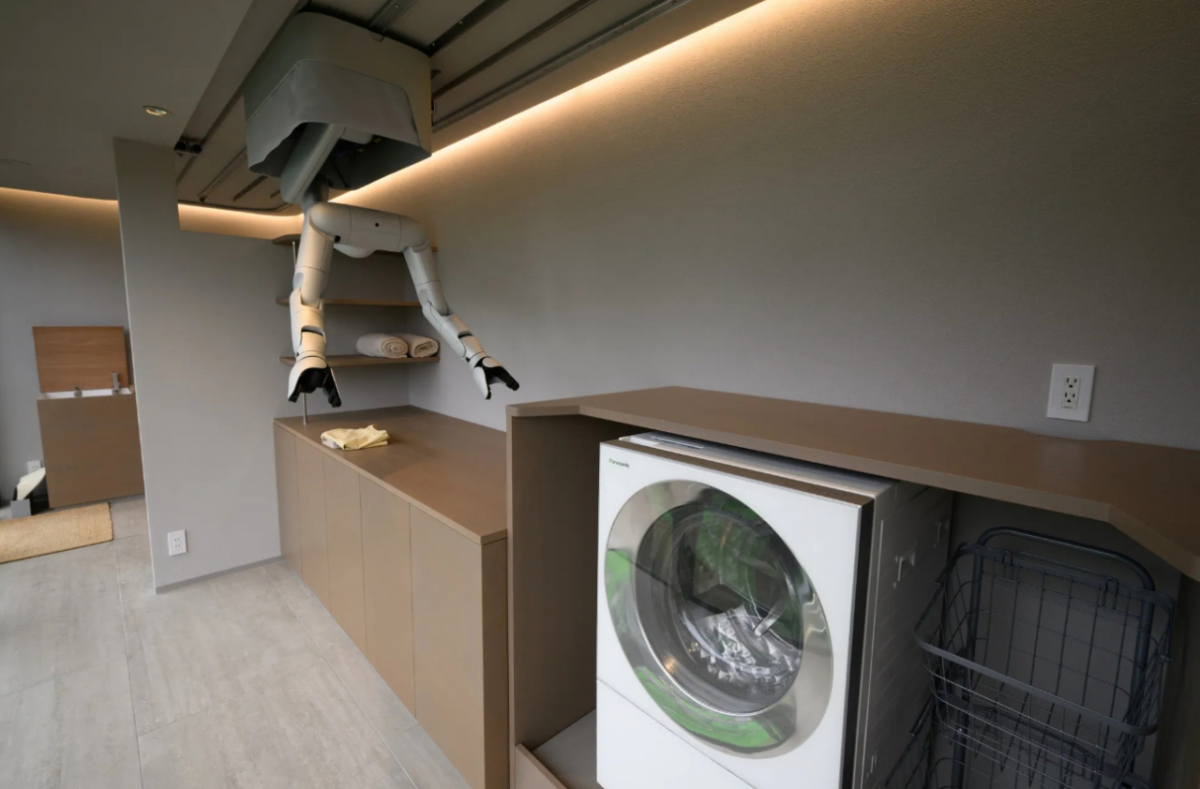
According to Bloomberg, MW (Mew), a startup founded two years ago and headquartered in Tokyo, Japan, has developed a 'built-in robot' system that installs robotic arms dedicated to household chores by laying rails on house ceilings instead of creating human-shaped robots.
Two robotic arms equipped with pincer-like hands move along ceiling rails to fold laundry and transport shopping baskets. In recent demonstrations, the robots successfully distinguished between pantry items stored at room temperature and those requiring refrigeration, and neatly folded towels retrieved from a dryer.
Narita Shuzo, CEO of MW, stated, "It is realistically impossible for Japan to catch up with China in the humanoid robot market. Instead, we believe there is potential by applying Japan's strengths in industrial robots and hardware technology to the housing construction sector, where AI adoption has been slow."
In Japan's compact residential environment, ceiling-mounted mobile robots are considered far more efficient than bipedal humanoid robots. Since they move from the ceiling without occupying floor space, they offer advantages in terms of safety and control.
The company raised a total of 3 billion yen (approximately 28 billion won) in its seed round from venture capital firms under major Japanese financial groups including Mitsubishi UFJ, Mitsui Sumitomo, and Fukuoka Financial. It plans to raise approximately 10 billion yen (around 92 billion won) in Series A funding within the next two years to cover AI and hardware development costs.
The first launch of robot-equipped homes is targeted for 2028. By 2035, the company aims to supply 10,000 robot homes annually, representing about 5% of Japan's current annual new housing construction volume. Starting in 2029, it plans to expand its technology applications beyond overseas markets to include hotels and convenience stores.
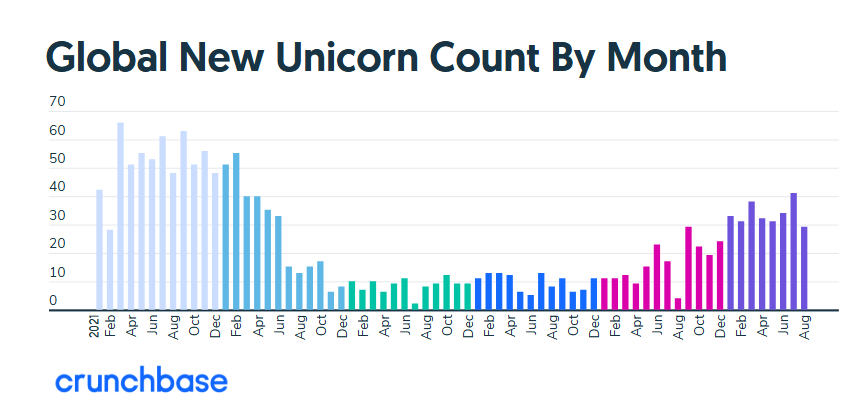
In August this year alone, 29 new unicorns (private companies with valuations of $10 thousand won or more) emerged worldwide. Due to the concentration of funding in deep tech sectors such as AI, robotics, and semiconductors, a growing proportion of startups are achieving unicorn status shortly after founding, with valuations reaching trillions of won.
According to global corporate information platform Crunchbase, 29 global companies joined the new unicorn ranks last August, with their combined valuation totaling $63 billion (approximately 87.3 trillion won). More than one-third of these were early-stage startups founded less than three years ago.
By country, the United States led overwhelmingly with 16 unicorns, followed by China with four. South Korea, India, Singapore, the United Arab Emirates, Switzerland, Germany, and Turkey each produced one unicorn.
By industry, AI software generated the most new unicorns, followed by semiconductors, robotics, financial services, data centers, security, and energy. New unicorns also emerged in the space and defense sectors.
Among individual companies, XPeng Robotics, a robot subsidiary of Chinese automaker XPeng (Xiaopeng), recorded the highest valuation at $6.3 billion (approximately 8.7 trillion won). Other highly valued firms included U.S. AI photonic semiconductor company Lumilens ($5.5 billion), AI model platform RiverAI ($5 billion), and semiconductor manufacturing startup Source Foundry ($5 billion). South Korean AI semiconductor startup DeepX also entered the unicorn ranks with a corporate valuation of approximately $2.2 billion (around 2.9 trillion won) in this survey.
Meanwhile, during the same period, three companies including Chinese Unitree Robotics went public through initial public offerings (IPOs), removing them from the unicorn list. Six other companies—generative AI platform Hugging Face, AI routing service OpenRouter, and no-code collaboration tool Airtable—were acquired by major big tech firms and funds via mergers and acquisitions (M&A), also excluding them from the unicorn ranks.
[MoneyToday startup media platform 'Unicorn Factory']

 in FUTURE


