

[For more diverse company information on the startups mentioned in this article, you can view them at Unicorn Factory's Big Data Platform Data Lab.]
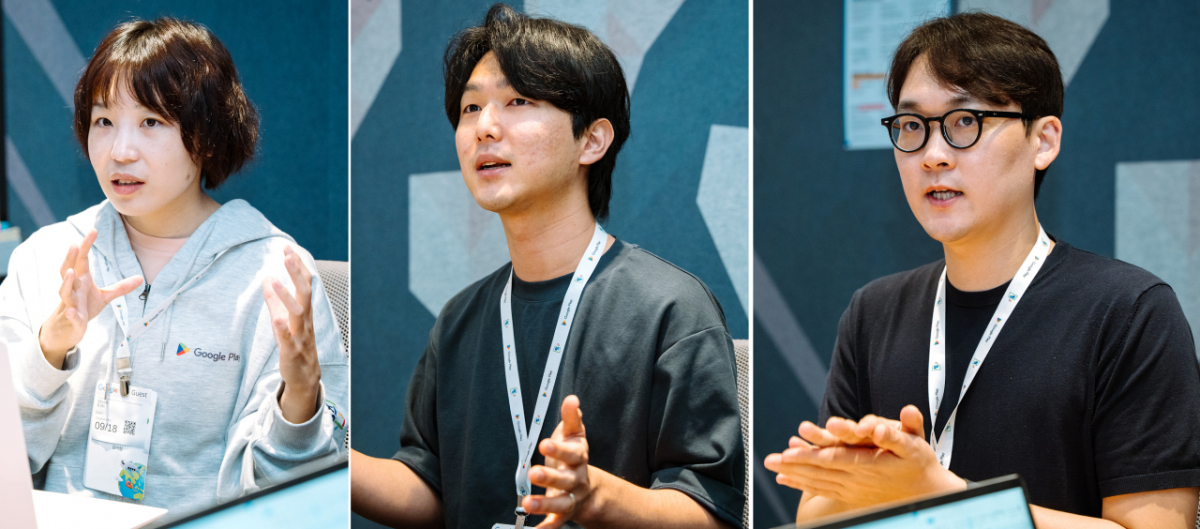
"This is actually an opportunity for small game companies. A team of six released a game in six months that took 30 people from a large corporation a year and a half to create. This is not just a prototype; it is a game being actively serviced with weekly updates."
Kim Mi-rim, CEO of Underdogs, said at the '2026 Gateway Immersion Trip' held in Singapore on the 18th (local time), "Advances in AI (artificial intelligence) technology have enabled small-scale development companies to implement games quickly," adding that this is how they achieved such results.
Underdogs, an eight-month-old company established last January, developed the 4X strategy game (SLG) 'Polaris Crown Legacy' with six employees and released it in July. 4X refers to a game genre composed of core elements such as △Explore △Expand △Exploit △Exterminate.
The game expanded its service area starting from the Philippines, Malaysia, and Singapore, reaching Thailand and Saudi Arabia. Cumulative downloads have surpassed 10,000. While introducing new events and content every week, they also respond immediately to user inquiries (CS).
Kim (CEO) stated, "Without AI, we would not have been able to develop it within six months, and even if released, operating it as we do now would have been difficult." He added, "Large corporations may maintain their existing workforce and work structures even after adopting AI due to inertia, but small teams can prioritize efficiency and design their work methods from the start."
Regarding the decision to choose Southeast Asia rather than Korea as the starting point, he said, "Korea, where a large number of users gather simultaneously, is burdensome for verifying server stability and operational capabilities. Our strategy is to confirm user reactions in small markets without external investment and then expand step by step."
In addition to Underdogs, Stairs, which operates the game 'Raising Charcoal Broilers,' and ConnectFit, the operator of the salary and attendance management app 'Gig,' are also achieving results globally by leveraging AI to optimize operations and emphasizing 'small and fast organizations.'
All three companies built their growth foundation through Google Play's 'Gateway Program,' a joint initiative with the Ministry of SMEs and Startups and the Korea Startup & Venture Promotion Agency to support the growth and overseas expansion of domestic mobile app and game startups. Underdogs and Stairs were selected for the eighth session of Gateway currently underway this year, while ConnectFit is an alumnus of the first session.

Jung Yu-jin, CEO of Stairs, worked as a service developer at Bank Salado for about eight and a half years without any prior experience in the gaming industry before embarking on game development alone. She utilized AI to release an initial version within two months, and cumulative downloads have reached approximately 30,000.
The 'Raising Charcoal Broilers' game drew inspiration from the 'Infinite Company' episode of the popular variety program Infinite Challenge. It portrays a story where an individual fired from their company attempts to make a comeback by grilling and selling food over charcoal fires, while former colleagues gradually join in, turning the situation around, presented as a casual idle game.
The differentiating factor lies in moving away from the typical structure of idle games that simply increase numbers and repeat the same stages. Once rebirths reach a certain level, the food truck expands, opening up new locations and stories. This is a method where the results of growth are reflected together in the screen and the story.
Although it features a Korean narrative of layoffs and self-employment, unexpected reactions emerged even in Japan. Japanese users account for about 20% of total DAU (daily active users). Jeong (CEO) analyzed, "Japan also has an emotional sensibility that dreams of different lives," adding, "It seems they accept the game in a manner similar to isekai works."
Stairs is expanding its service areas to Hong Kong, Taiwan, Singapore, and beyond. They plan not to stop at simple translation or price adjustments but to verify whether the game's graphics, control methods, and expressions are intuitively accepted by local users.
The short-term goal is to increase user LTV (lifetime value). Their long-term vision is to achieve an export volume of $10,000 per month (approximately 14 million won). Rather than immediately increasing headcount, they plan to first systemize operating policies and customer service.
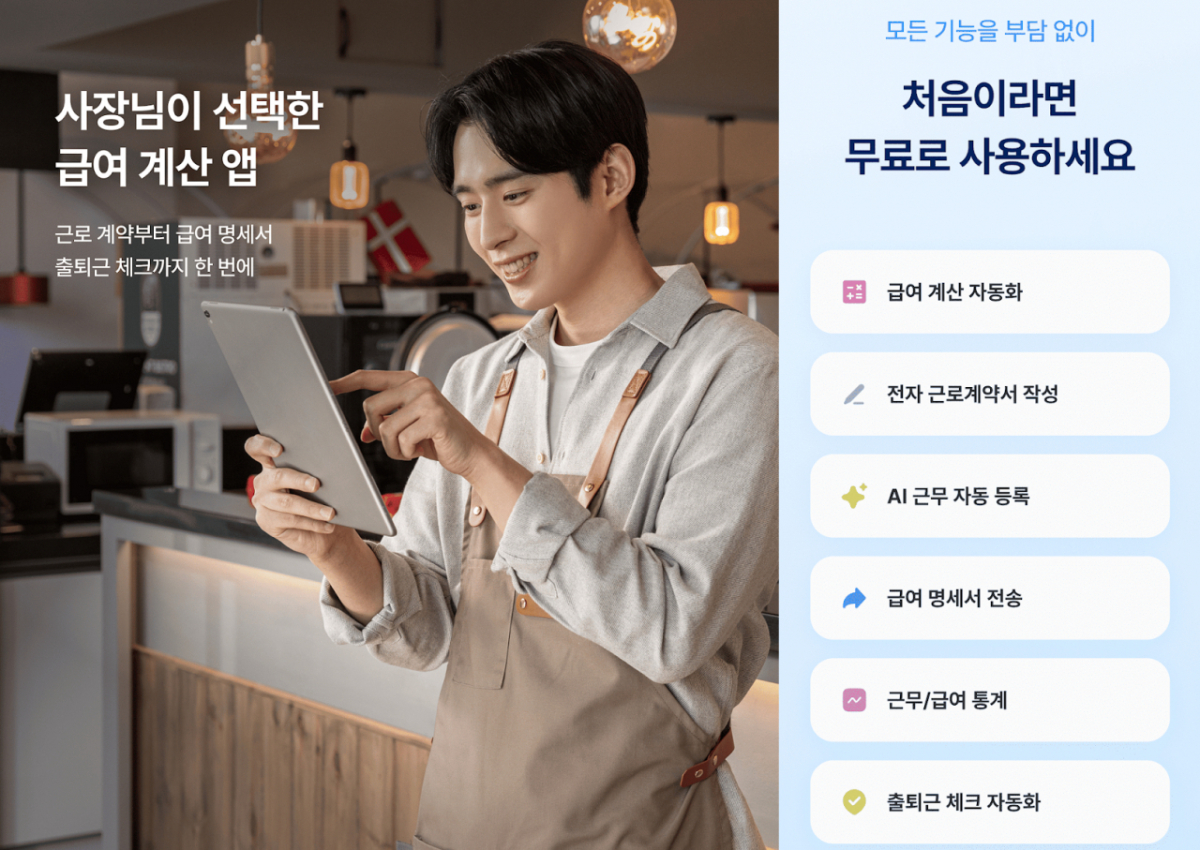
ConnectFit also slimmed down its organization to five members based on AI, achieving 10 thousand won in annual revenue and an operating profit margin of around 30%. They adopted a growth strategy centered on 'unit economics,' prioritizing the revenue and profit generated by each customer over simple user numbers.
Kim Tae-min, CEO of ConnectFit, stated, "We believe that with AI utilization, organizations of fewer than 10 people can generate 10 billion won in sales, and even reach 100 billion won." He added, "Our goal is not to rapidly expand headcount but to increase both sales and profits through a small, elite organization."
Gig helps part-time workers and short-term employees manage their work schedules and expected salaries, while employers can verify attendance records and salary payments. Domestic MAU (monthly active users) stands at approximately 150,000. Cumulative affiliated businesses number 40,000, with about 20% of all Compose Coffee franchise stores using the app.
The number of app updates reflecting user requests has reached 718 times. Especially since employer customers often prefer phone consultations over chat when issues arise, Kim (CEO) personally takes calls and even shares personal contact information.
Overseas, Vietnamese users increased without separate marketing efforts. The related MAU is 50,000; among them, 10,000 are local Vietnamese users, and 40,000 are Vietnamese workers residing in Korea. In the process of attempting overseas expansion by translating the app into multiple languages, they unexpectedly discovered a market for foreign workers within Korea.
Kim (CEO) said, "The number of local Vietnamese users continues to grow, and inquiries are piling up, making it impossible to ignore them now." He added, "We will directly verify local culture and user backgrounds that cannot be known through AI alone and find ways to monetize them."
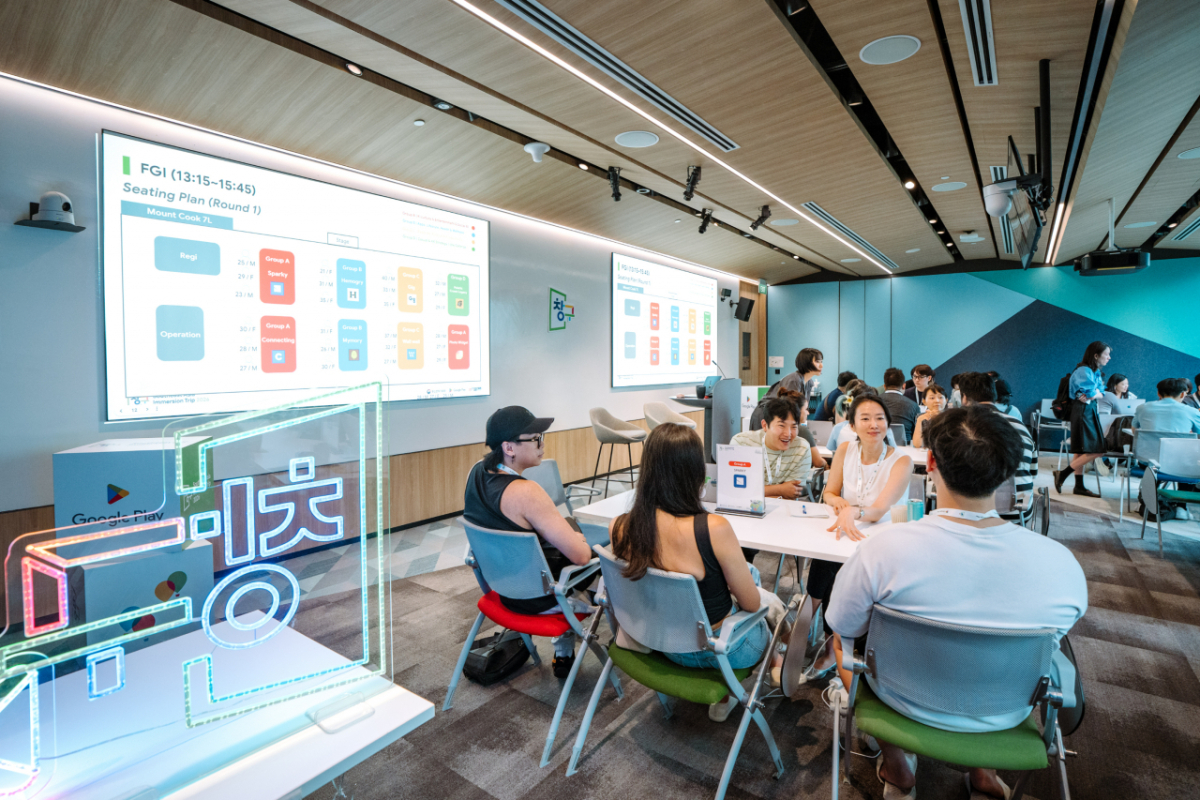
The Gateway Program played a significant role in helping the three entrepreneurs refine their global strategies. Underdogs received advice from Google experts on campaign setup, ad rate adjustments, country-specific benchmark indicators, and localization strategies.
Kim Mi-rim (CEO) stated, "When marketing costs suddenly rise, it is difficult for small development companies to determine alone whether it is due to incorrect settings or market conditions." He added, "Just one confirmation from an expert stating 'there are no problems with the settings' was enough to significantly reduce uncertainty in decision-making."
Stairs highlighted as advantages their direct communication with experts in various fields such as Google Cloud and advertising, and the ability to flexibly use subsidies not only for labor costs but also for marketing and cloud expenses. Through Gateway, they also secured their first publisher contract, increasing the scale of marketing tests.
ConnectFit grew more than fivefold based on marketing support. The biggest turning point was AdMob consulting. Although they were initially passive about adoption due to concerns that ads would harm user experience, they applied ads after receiving expert design and advice, which has now become a major revenue source alongside subscriptions.
Kim Tae-min (CEO) said, "My personal tendency is to avoid seeing ads, so I was also pessimistic about ad revenue models." He added, "Through consultation, I gained the courage that users' resistance was not as high as expected, and after introducing ads, sales have steadily increased."
He further advised, "Actively requesting what you need from Google staff and obtaining as much as possible is the way to utilize Gateway." He noted, "To be selected for Gateway, it is crucial to clearly demonstrate that your app is not merely a simple add-on function of an existing web service but is actively generating real users and sales."
[MoneyToday startup media platform 'Unicorn Factory']

 in FUTURE


