

[For more diverse corporate information on the startups featured in this article, please visit 'Data Lab' on the Unicorn Factory big data platform.]
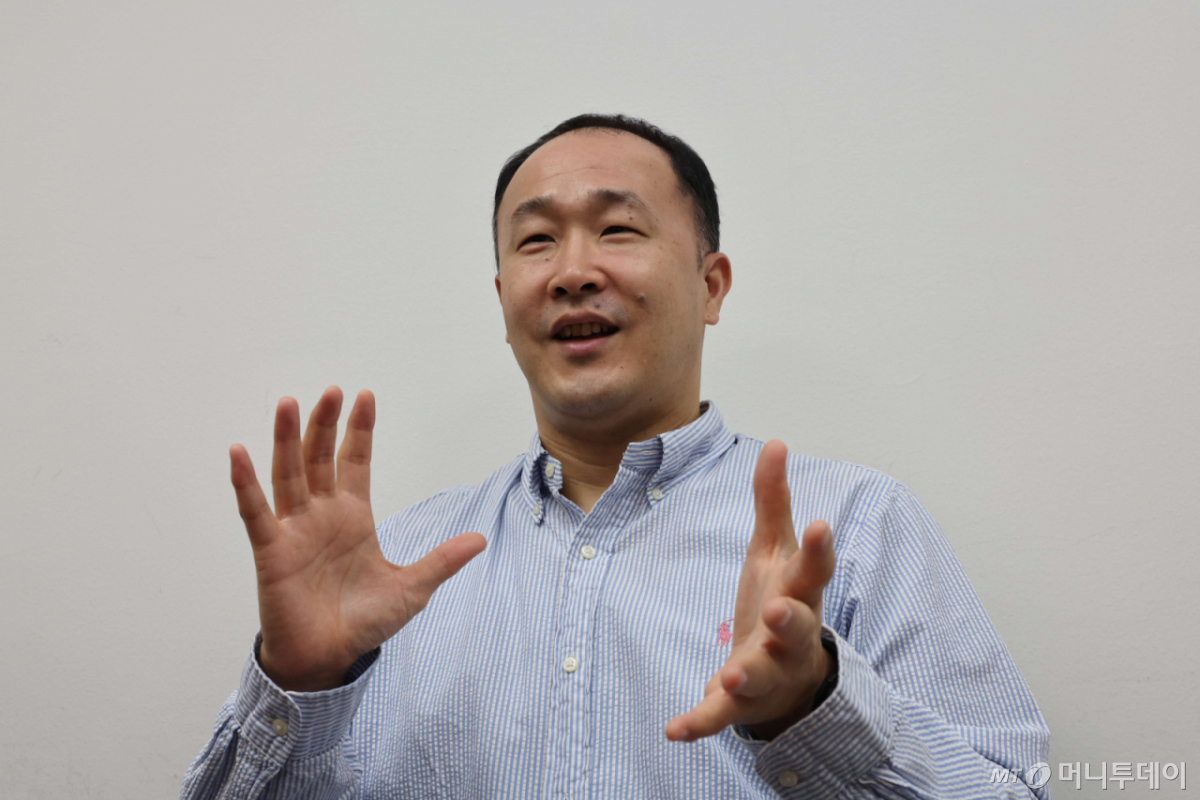
"The competition in AI (artificial intelligence) semiconductors is often thought to hinge on 'who can calculate faster,' but the truly critical battleground is how efficiently electricity is supplied to the chip."
These are the words of Kim Sang-hyun, Professor in the Department of Electrical Engineering at KAIST (Korea Advanced Institute of Science and Technology). The power consumed by AI semiconductors is growing steadily. In an era where a single chip uses 1 kW-class power, a significant amount of energy is lost even in the process of delivering electricity to the chip. Professor Kim explained that 30% to 40% of total power can be lost during the power transmission process, and that losses could reach half if chip power consumption continues to increase.
While attention has been focused on increasing the calculation speed of semiconductors, energy waste occurring in the electricity delivery process has received relatively little attention. Professor Kim found solutions in semiconductor structures and gallium nitride (GaN) materials he has researched over the years.
Lowering Voltage Directly Under the Chip… Efficiency from '50% Range to Up to 95%'
To reduce power loss, the method of sending electricity must change first. Even when sending the same amount of power, if the voltage is low, more current must flow, generating heat in wires and components and wasting energy. This is also why power plants send electricity at high voltage and lower the voltage near consumption sites.
AI servers are no different. Electricity entering a server goes through several stages to be converted into a low voltage of around 1 volt that the chip can use. The problem is that devices for lowering voltage have traditionally been placed horizontally next to the chip, at a distance. The longer the distance for sending electricity to the chip after lowering the voltage, the greater the inevitable loss.
Professor Kim's team solved this problem by placing the voltage-lowering device vertically directly under the chip. Simply put, they send electricity at high voltage all the way under the chip, then lower the voltage there and supply it immediately. This principle minimizes energy loss by shortening the distance electricity travels in a low-voltage state.
The material playing a key role in this process is 'gallium nitride' (GaN). Lowering voltage requires switches that rapidly turn electricity on and off, but the higher the resistance, the more electricity converts to heat, causing energy loss. Professor Kim explained that gallium nitride is advantageous for reducing power loss by lowering resistance compared to conventional silicon.
Professor Kim's team announced that applying this technology can raise the efficiency of delivering power to the chip from the existing 50% range to 85%–95%. Professor Kim stated, "The more power a single chip consumes, the more power can be saved."
Consecutive Attention at IEDM and VLSI… "Building the Yangsan Ecosystem Is Key"
The research achievements of Professor Kim's team have been selected multiple times for major international conferences in the semiconductor device field, including the IEDM and VLSI Symposium. This signifies that the originality and technical potential of the research have been recognized by the international academic community.
Professor Kim said, "Until one or two years ago, there were hardly any places conducting similar research, but recently related research is rapidly increasing in China, which has strong gallium nitride technology capabilities," adding, "Among companies, Intel, which has developed CPUs (Central Processing Units) for servers for a long time, is moving the most actively."
The biggest challenge to be solved for commercialization is mass production. Currently, the semiconductor chip responsible for computation and the device that regulates voltage must be manufactured using different processes and then combined. This is because the chip must be produced with existing silicon processes, while the voltage regulation device must be produced with gallium nitride processes. It also requires further optimization of how to connect the two components and where to place the parts necessary for stable power supply.
In particular, a stumbling block is that foundries (semiconductor contract manufacturing companies) do not yet sufficiently support the processes required for this technology. Professor Kim stated, "The short-term goal is to first prove performance in university laboratories to provide direction so that foundries can embark on developing related processes," adding, "We also plan to conduct follow-up research to verify actual effects across the entire circuit and system."
Commercialization will initially be pursued through technology transfer. This is based on the judgment that if companies interested in the technology take over the research achievements and continue development, commercialization speed can be increased. If technology transfer alone cannot ensure the level of completeness desired by companies, faculty-led startup founding is also being considered. Professor Kim said, "Companies want sufficiently verified technology, but if there is a large gap between the technology secured in the laboratory and the level desired by companies, directly starting a business to further develop the technology is also an option."
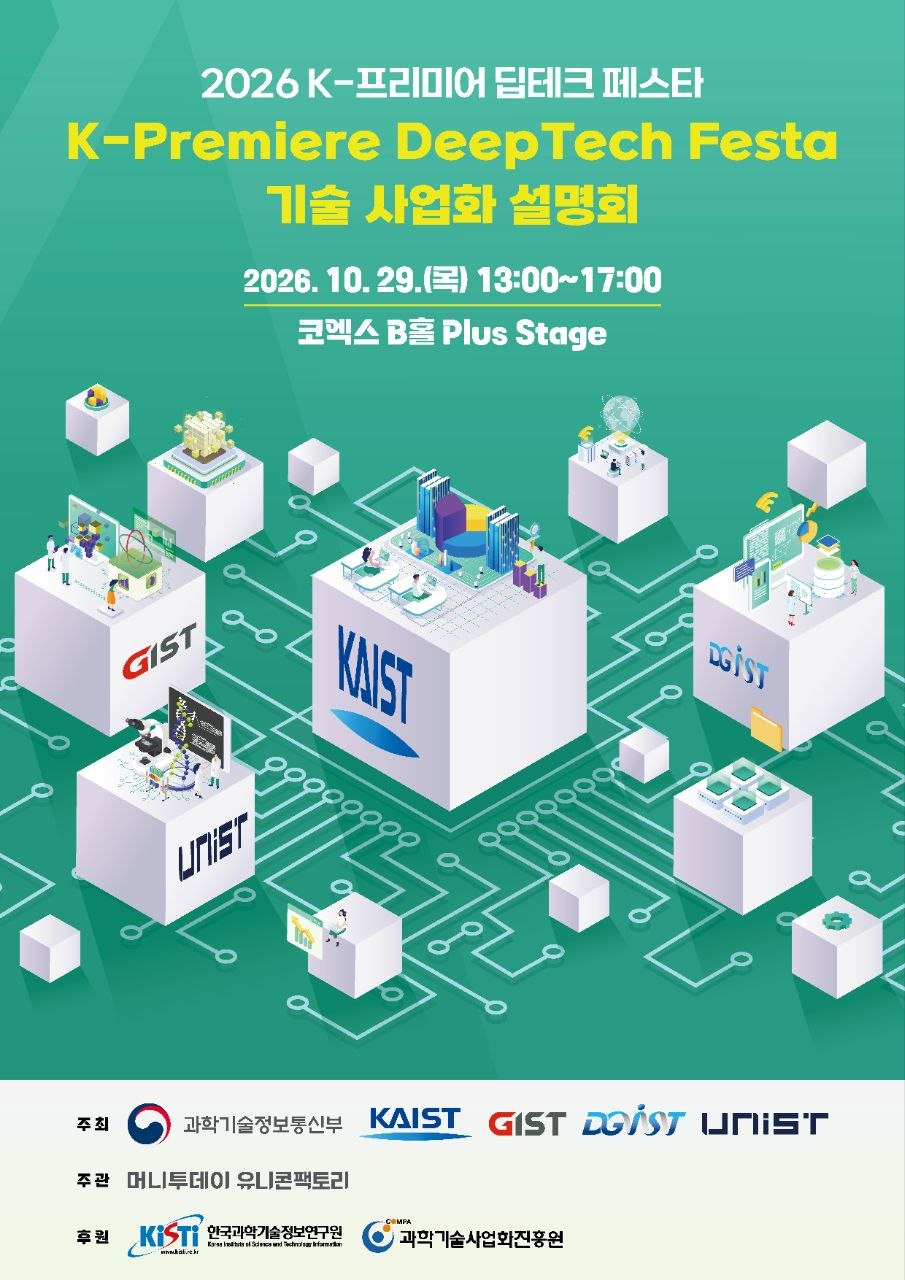
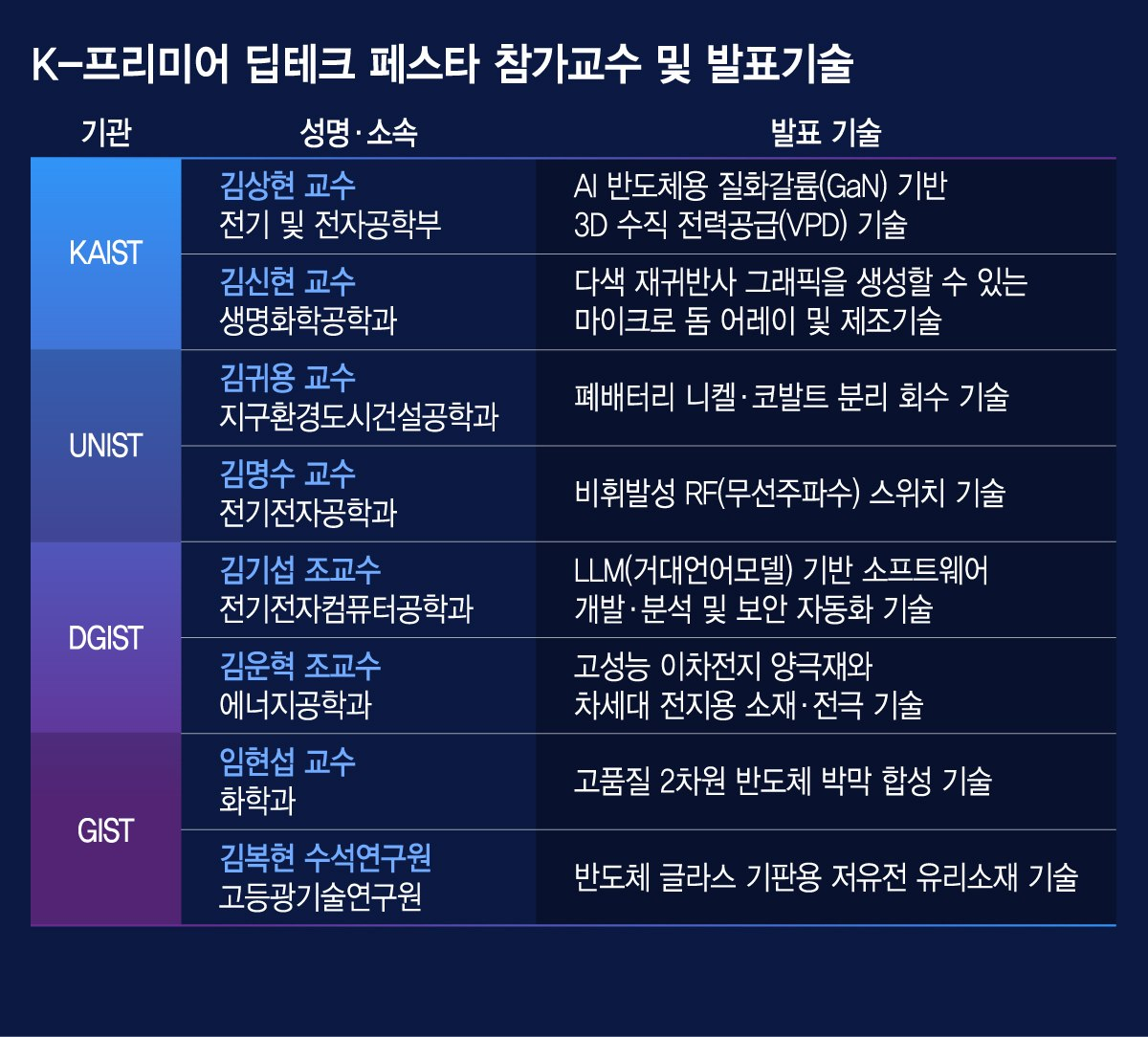
Professor Kim is scheduled to introduce this technology at the '2026 K-Premier Deep Tech Festa' to be held on the 29th in Hall B of COEX in Seoul Samsung-dong. He said, "I would like to meet chip manufacturers and packaging companies as collaborative partners." This is because placing the voltage regulation device directly under the chip requires supporting packaging technology that combines the two components into one.
Application for 'K-Premier Deep Tech Festa (Technology Transfer and Commercialization)'
[MoneyToday startup media platform Unicorn Factory]

 in FUTURE


