

[For more diverse corporate information on the startup featured in this article, please visit the ‘Data Lab’ of the Unicorn Factory big data platform .]
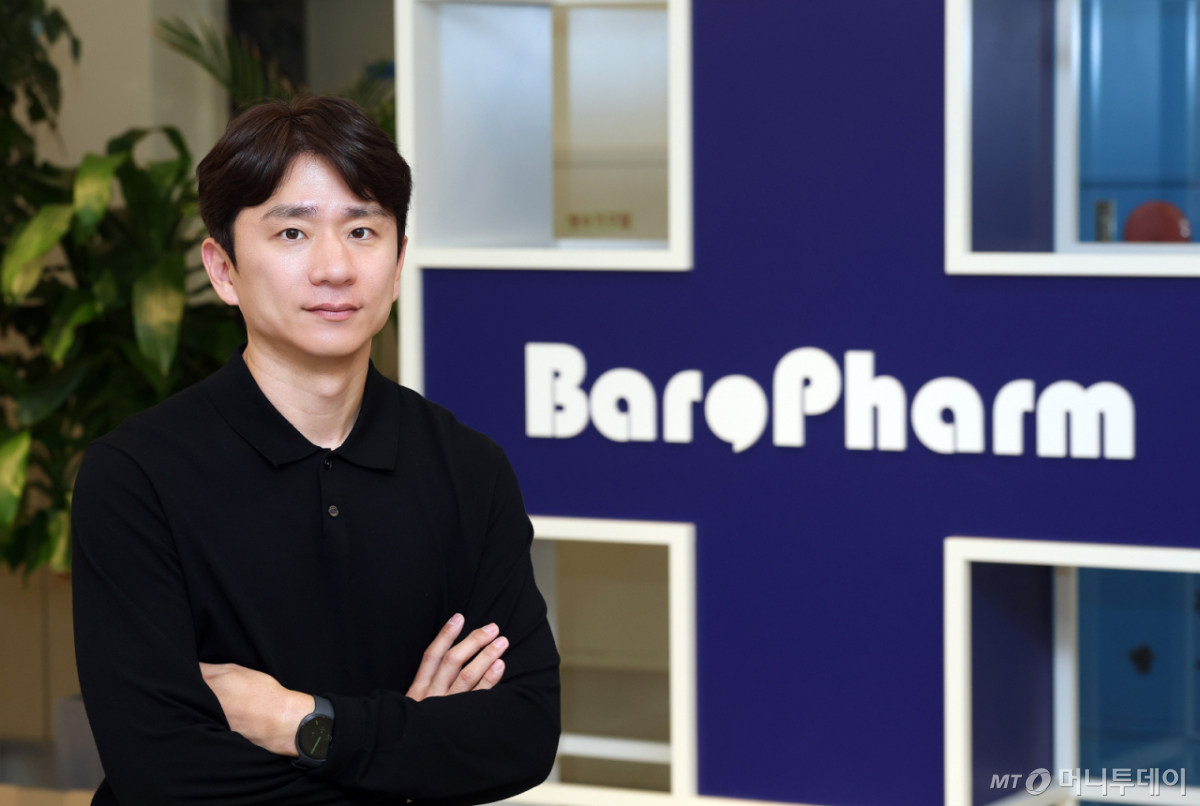
Pharmacies were notably lagging in DX (digital transformation). It was common for pharmacists to log into multiple wholesaler sites separately to search for the same medications, compare inventory and prices, and place orders. CEO Kim Seul-gi of Baropharm, who had been operating a pharmacy, thought, “It would be great if pharmacy orders could be managed in one place, just like managing multiple financial accounts in one spot with an open banking app,” amid her fatigue with such tasks.
This led to the creation of the integrated pharmacy platform ‘Baropharm.’ Launched in 2021 as a business-to-business (B2B) platform connecting pharmacies and pharmaceutical wholesalers, it enabled orders that previously took an average of over 30 minutes to be completed with a single search. On top of this, the company built its business by adding external product distribution and private labels. It is scheduled to enter KOSDAQ next month through an IPO for unprofitable companies, commonly known as the ‘Tesla criteria.’
Pharmacists’ ‘Essential Site,’ Cumulative Transaction Volume of ‘7.2 Trillion Won’ Over 5 Years
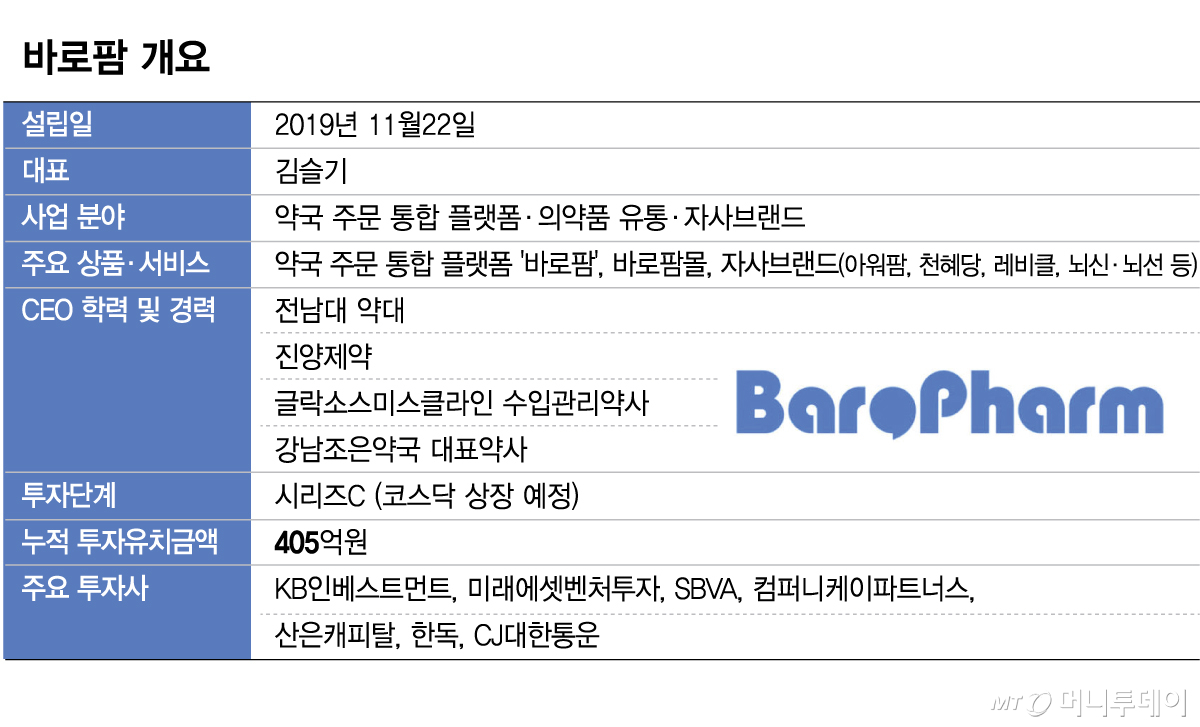
The number of pharmacies registered with Baropharm is 24,787, accounting for approximately 90% of pharmacies nationwide. It did not gather this many users solely through its ordering function from the start. Kim (CEO) said, “We hit it big with our out-of-stock product restocking notification service during the pandemic.” Previously, when medications ran out, pharmacists had to call wholesalers’ sales representatives one by one, but Baropharm incorporated this into a platform feature. By adding a pharmacist community, the company built its current membership scale.
More than 16,000 pharmacies use Baropharm every month, and about 70% of them log in daily. The average daily dwell time exceeds 18 minutes. Kim (CEO) emphasized, “Pharmacists are busy with dispensing and attending to patients as soon as they start work, so the fact that they spend nearly 20 minutes a day on the platform means Baropharm has become an essential site for pharmacy operations.”
Although Baropharm has improved pharmacists’ ‘quality of life,’ there are no separate charges. Kim (CEO) explained, “We operate our platform services for pharmacists free of charge so they can focus on their work without financial burden,” adding that the revenue structure is based on collaborations with listed companies and suppliers leveraging pharmacist traffic. Easy accessibility and the ‘free service’ aspect itself serve as a barrier to entry. On top of this solid traffic, the pharmaceutical transaction volume over five years has reached 720 billion won.
Partnerships and Brands Built on the Platform

Kim Seul-gi (CEO), who created Baropharm’s initial model inspired by open banking, soon began benchmarking commerce platforms as well. Kim (CEO) stated, “Just as various commerce platforms expanded their scope beyond brokerage to direct purchasing, we believed that Baropharm needed to lead the market by adopting a model where it directly purchases and drives pharmacy distribution.”
This led to the launch of BMS (Baropharm Marketing Service) in 2024. Under this service, Baropharm directly purchases products from brand companies and handles platform exposure, sales, and logistics to sell them to pharmacies. Revenue jumped from 11.6 billion won in 2023 to 96.7 billion won last year, driven by BMS. Partnerships have entered a turning point with the recent signing of three-year long-term contracts with major global pharmaceutical companies. As large brands enter, more pharmacies use the platform, and as the number of pharmacies grows, other brands follow, creating a virtuous cycle that gains momentum.
Following its health functional food brand ‘OurPharm’ and cosmetics brand ‘Levicl,’ Baropharm is also expanding its private labels to over-the-counter medications through CHD Pharmaceutical, which it acquired last year. Kim (CEO) stated, “Because we launch products reflecting on-site demand identified through pharmacy order data and partnerships, the failure rate is lower than for general brands,” adding, “Just as commerce platforms grew by nurturing listed brands and improving profitability with private labels, Baropharm has a structure that progresses from platform to partnerships to our own brands.”
Thanks to structural improvements beyond just the platform, Baropharm recorded its first profit in the first half of this year with revenue of 69 billion won and an operating profit of 2.2 billion won. Kim (CEO) said, “The platform construction is complete, so fixed costs will not increase further, and partnerships have passed the stage requiring personnel and logistics setup,” noting that while gross revenue continues to grow, costs have already been front-loaded. The annual target for this year is revenue of 174.6 billion won and an operating profit of 7.2 billion won. By 2028, it aims for an operating profit of 30.2 billion won.
Following Inbound Foreigners, Targeting Japanese and U.S. Markets
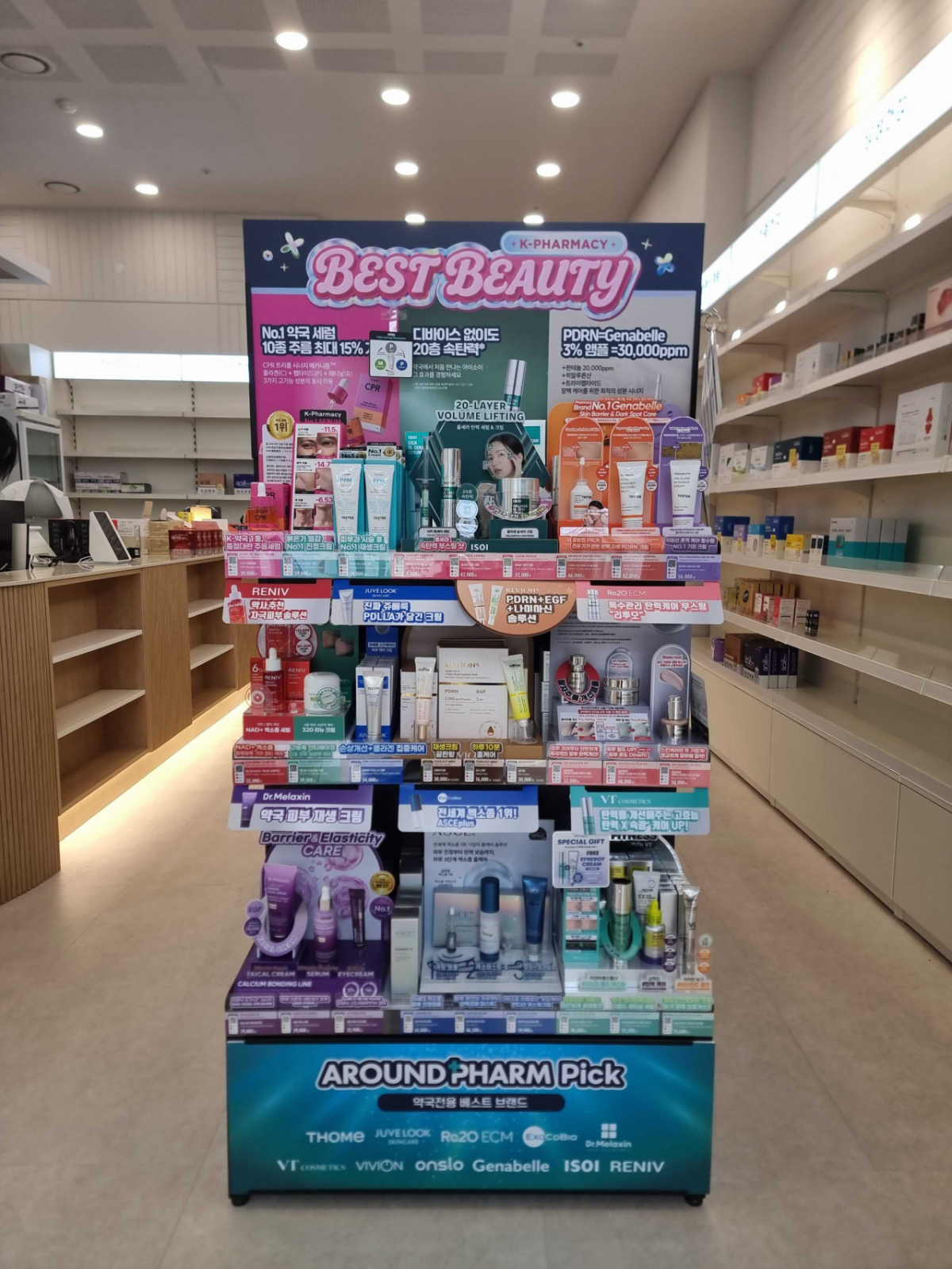
‘Pharmacy Beauty Zone,’ which Baropharm installs in each pharmacy as a shop-in-shop format, is a dedicated shelf for K-beauty. It was planned with attention to the fact that foreign tourists visiting Korea are going to pharmacies after Olive Young and Daiso. The ‘Pharmacy Beauty Zone,’ currently installed in more than 200 pharmacies, aims to expand to 1,000 locations soon. Placing beauty products, which have higher margins than pharmaceuticals, on the pharmacy’s ‘core shelf’ has also received a positive response from pharmacists.
Abroad, it is advancing with its private labels at the forefront. In mid-this month, Levicl was listed in the Shinjuku store of the Japanese drugstore chain Ainz & Tulpe (ainz&tulpe), and the company plans to expand to 80 locations this year. Listings in more than 250 stores of Matsumoto Kiyoshi, Japan’s largest drugstore chain, have also been confirmed, with plans to increase to over 500 locations in the future. This is due to recognition of Baropharm’s position as a ‘K-pharmacy platform’ behind Levicl’s brand power.
It is also starting its North American offensive through Amazon. Product sales will begin in December, followed by the opening of a ‘K-Pharmacy Pavilion’ to introduce pharmaceuticals and K-beauty products that sell well in pharmacies among Baropharm brands and listed company products.
“Listing Is Just a Process” — Offering Funds for ‘Factory and AI’
Despite the recently sluggish IPO market atmosphere, Baropharm is pushing forward with its KOSDAQ listing in mid-next month. Kim (CEO) stated, “Baropharm’s biggest goal has always been to become a company that generates significant operating profit and grows further; listing is just a process we go through,” adding, “If we were looking only at investment recovery for the listing, we would have delayed the timing, but we are following all processes in the standard way.”
Kim (CEO) said, “To continue and expand long-term partnerships with global pharmaceutical companies, I felt it was necessary to gain recognition through the mechanism of a KOSDAQ listing,” predicting that as consumer-facing services and private label products increase, the title of a listed company will also help build customer trust.
Baropharm’s desired offering price is 16,400 to 20,200 won per share, with an expected market capitalization of 195.9 billion to 241.3 billion won. Kim (CEO) explained, “We set the offering price in a market-friendly manner so that investors can share in Baropharm’s growth after the listing.” According to Baropharm’s securities registration statement, the corporate valuation (post-money) at the time of its last investment was approximately 180 billion won. This is not significantly different from the lower end of the current desired offering price range.
Baropharm will raise 29.2 billion to 36 billion won through this offering. Of this, 14 billion won will be used for production facilities. The company plans to reduce its brand cost ratio to the 40th% range by 2028 through expanded in-house production. The remainder will be invested in AI (artificial intelligence) and overseas brand expansion. In addition to prescription-based order automation features, it is developing an AI agent exclusively for pharmacists.
Baropharm is expanding its customer base beyond pharmacists to doctors and consumers. It opened ‘AroundPharm’ for consumers two years ago and recently launched ‘BaroMD’ for hospitals and clinics. Kim (CEO) emphasized, “In three years, Baropharm will have grown into an AX healthcare platform encompassing pharmacists, doctors, and general consumers.”
[MoneyToday startup media platform ‘Unicorn Factory’]

 in FUTURE


