

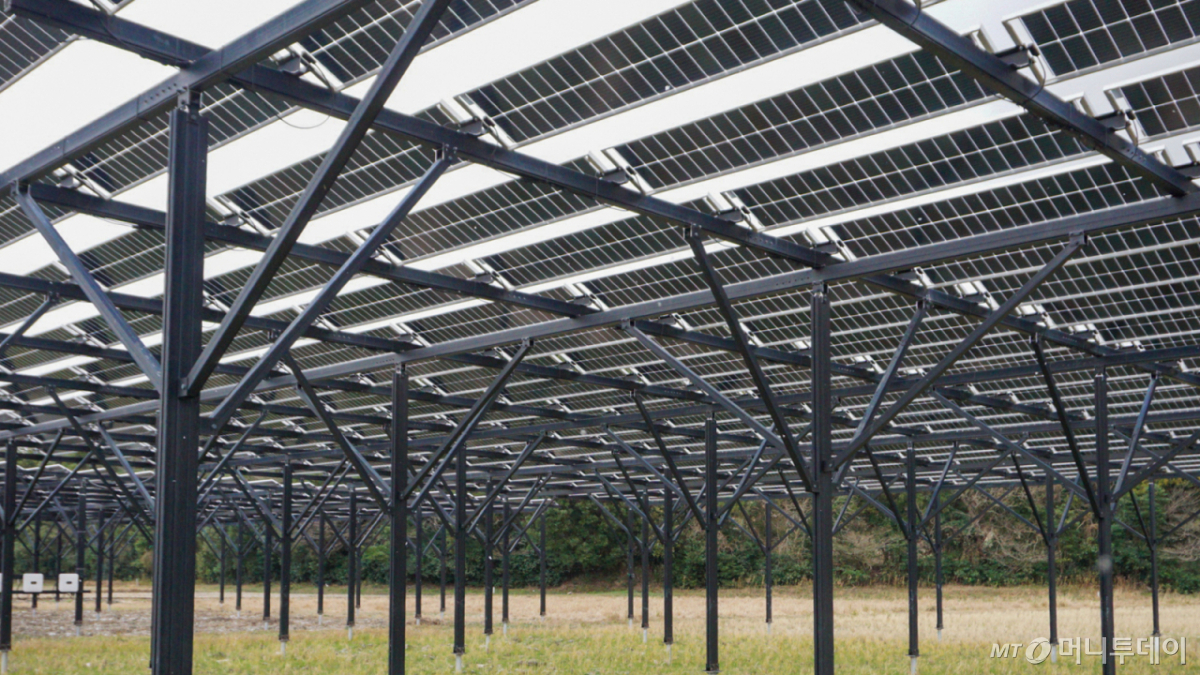
"There are too many abandoned farmlands due to rural aging. Farming-type solar power can serve as a mechanism to ensure continued management of agricultural land."
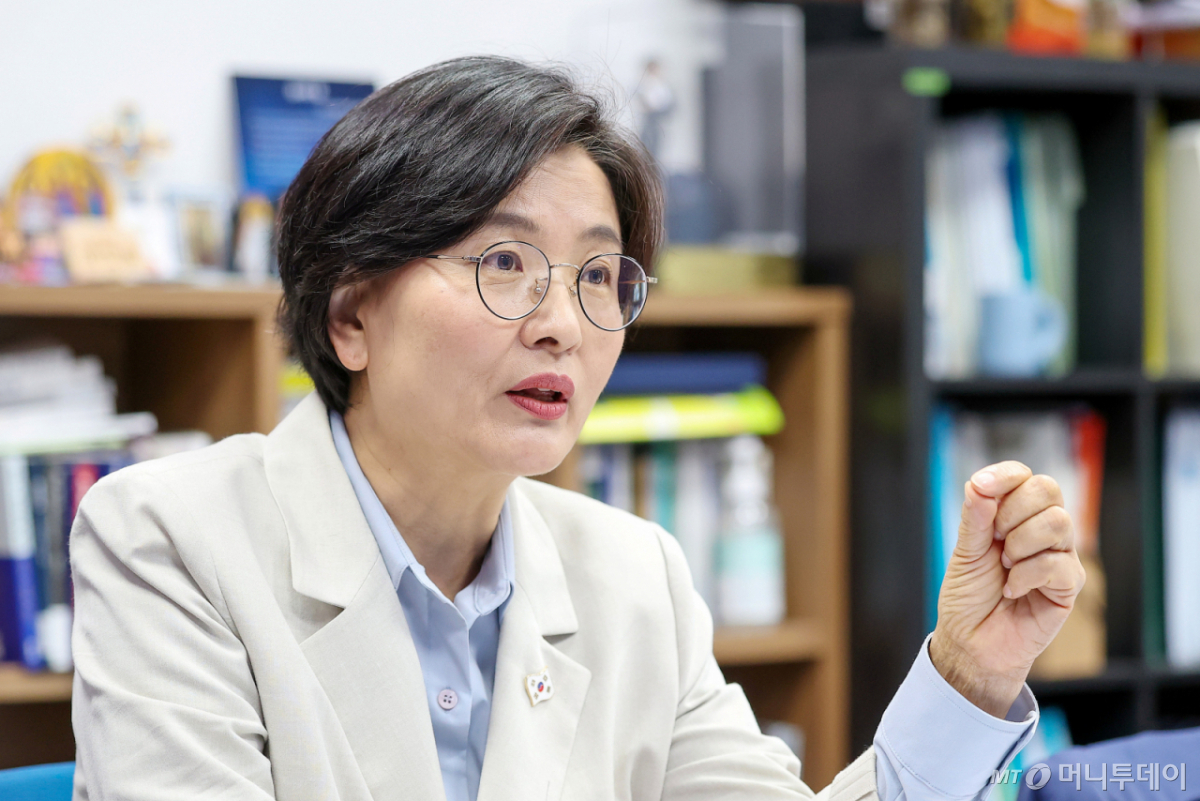
In an interview with MoneyToday, Democratic Party of Korea lawmaker Lim Mi-ae, who has lived and farmed in Uiseong County, Gyeongbuk Province for over 30 years and witnessed the situation firsthand, stated, "Farming-type solar power is not about abandoning agricultural land; rather, it is a powerful incentive to manage farmland even better."
"Instead of letting farmland go unused, we must motivate management through solar power"
The background behind Lim (Rep.)'s emphasis on the necessity of farming-type solar power lies in the reality of 'rural aging.' Currently, due to a shortage of labor, abandoned farmlands where only weeds grow unchecked are rapidly increasing.
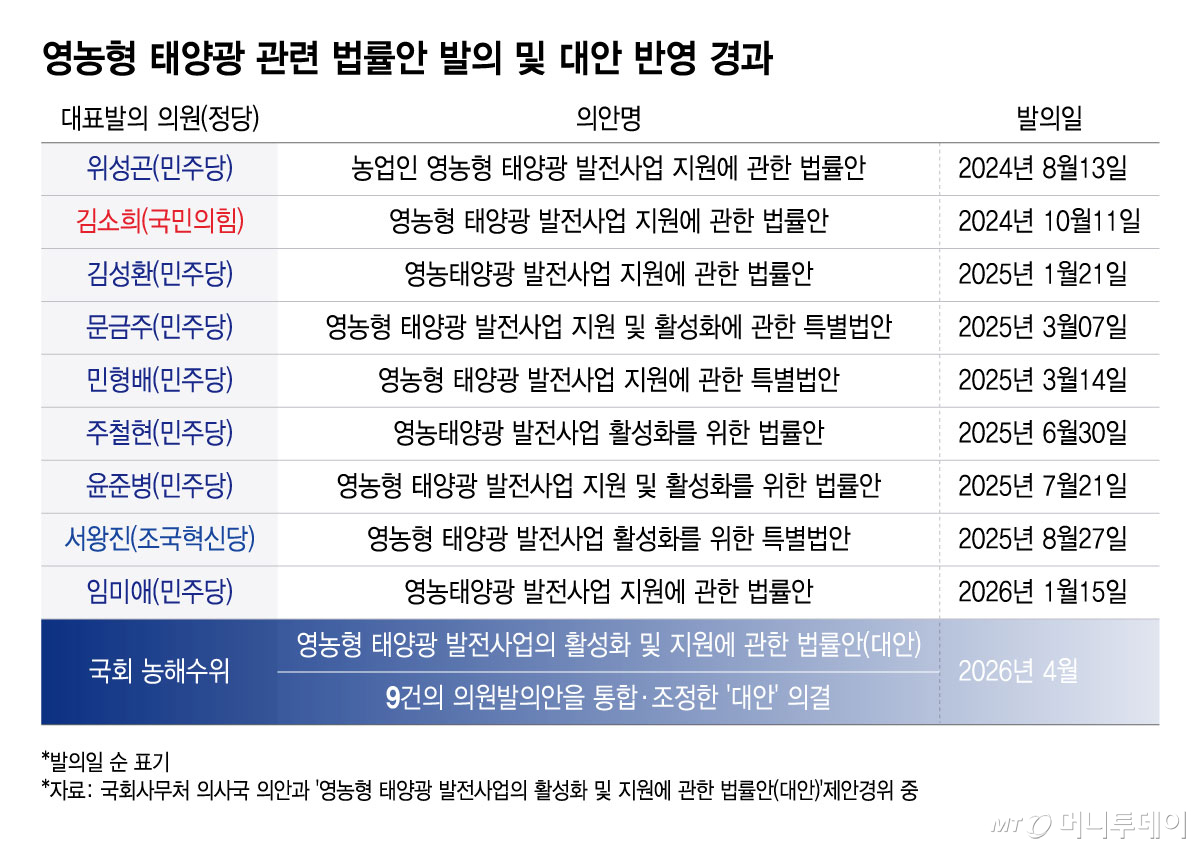
Discussions on legislating farming-type solar power have been ongoing since the 21st National Assembly but had stalled for years due to concerns over damage to agricultural land. However, growing urgency within rural communities—stemming from the need to maintain industrial competitiveness without expanding renewable energy and the urgent need to stabilize farm household incomes—led to the bill's passage in the 22nd National Assembly.
Lim (Rep.) explained, "While electricity production is important, if agricultural land loses its function as farmland, it would contradict the purpose of the law. Paradoxically, if solar power revenue is stably guaranteed, farmers will have no choice but to continuously manage their farmland and continue farming activities to maintain that income." He further noted that clearly designating the Ministry of Agriculture, Food and Rural Affairs as the management authority in this bill is also a measure to prevent speculation and preserve the essence of 'farming-type solar power.'
"Rural areas will become energy supply bases for companies"
In particular, Lim (Rep.) highly values the efficiency of utilizing agricultural promotion zones (formerly absolute farmland). Since the government has already invested massive budgets to complete land consolidation, these areas are ideal locations for installing solar power facilities. Lim (Rep.) believes that if the state systematically manages these areas through zoning designations instead of allowing indiscriminate development, it will be possible to catch two birds with one stone: preserving agricultural land and securing energy.
His conviction is that this bill connects not only to farm household incomes but also to national industrial competitiveness. From the perspective that our farmlands can become key supply sources to meet the 100th% renewable energy requirement (RE100) demanded by global companies, he sees significant potential.
Lim (Rep.) stated, "Although South Korea's share of renewable energy is very low, if we establish farming-type solar power complexes in the vast fields near the Gumi Industrial Complex, we can fully meet the electricity demand of major tenant companies." He added, "Since baseload power from nuclear energy already exists, the intermittency of solar power can also be sufficiently overcome," and confidently concluded, "Rural areas will become energy supply bases for companies."
Need to expand effective 'farmhouse-type' adoption beyond artificial systems
However, regarding the method of project implementation, he suggested that the government must more carefully reflect on-the-ground voices. This means prioritizing the creation of practical structures where individual farmers can immediately benefit, rather than establishing artificial support organizations or complex business models.
Lim (Rep.) pointed out that the current solar power capacity for self-generation is limited to 3 kilowatts (kW), emphasizing that raising this limit significantly to around 20 kW in rural areas would be more realistic. He also stressed that, beyond directly installing solar panels on farmland, roofs of agricultural auxiliary buildings such as barns, warehouses, and drying facilities—abundant throughout rural areas—should be actively included as sites for farming-type solar power.
Lim (Rep.) said, "In areas with shared land and village leaders, communities can join the 'Sunlight Income Village' model, but there are also regions lacking such conditions." He concluded, "Widely promoting 'farmhouse-type solar power' that utilizes roofs of auxiliary buildings scattered across rural areas is the most realistic and efficient method."

 in INDUSTRY


