

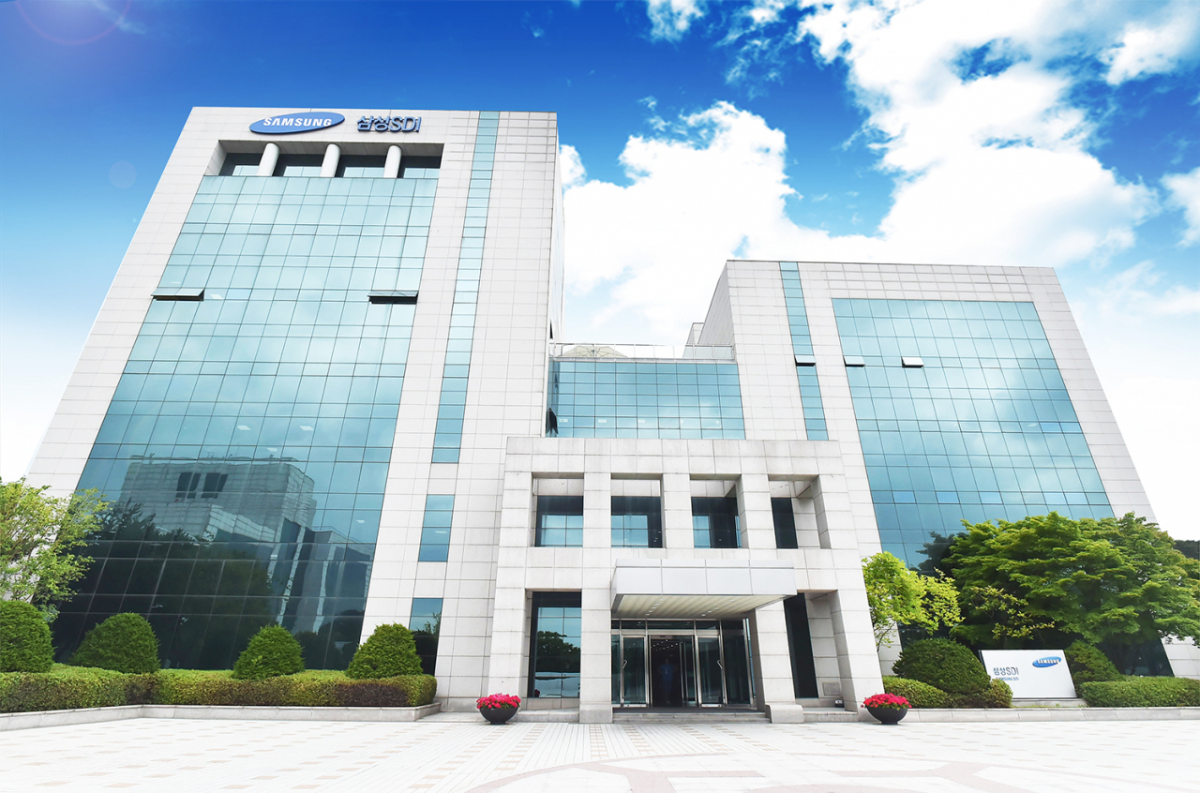
Samsung SDI is considering securing additional production capacity to respond to expanding orders for energy storage systems (ESS) in the United States. Even with the current order volume secured, the scale is sufficient to absorb a significant portion of production capacity through 2029, and as demand for safe prismatic lithium iron phosphate (LFP) products rises due to compliance with non-PFE supply chain requirements, orders are increasing rapidly.
On the 30th, Jo Yong-hee, Executive Vice President and head of Samsung SDI's ESS business team, stated during the second-quarter earnings conference call that "we are also considering securing additional production capacity to respond to the expanding orders in the U.S. ESS market." He added, "Even with the current order volume secured, we expect it will cover a significant portion of our production capacity through 2029. When factoring in high-probability projects expected in the second half of this year, we anticipate exceeding existing production capacity starting from 2028."
Samsung SDI plans to expand the local production capacity of its joint venture 'Starplus Energy' (SPE) factory to approximately 30 GWh annually. Since the fourth quarter of last year, part of the SPE Indiana plant's production line has already been converted and is operating for ternary (NCA)-based ESS batteries. For LFP-based ESS systems, SPE is preparing to convert its lines and plans to begin operations in the fourth quarter of this year.
Executive Vice President Jo stated, "Currently, the prismatic LFP production line for ESS in the United States is undergoing quality verification at Yangsan. As originally planned, we will start cell production at Yangsan in October and commence supply in the form of Samsung Battery Box (SBB) 2.0 solutions by year-end." He further added, "We have secured necessary LFP cathode material volumes through diverse partnerships centered on domestic and U.S. companies, and established a supply chain meeting non-PFE standards by localizing key components."
He continued, "Looking at the U.S. power market, the importance of ESS in the United States is gradually increasing further. Therefore, any impact from slowing investments in AI data centers on our ESS business will be limited." He noted, "There is growing preference for safe prismatic LFP products that meet non-PFE supply chain standards. Moving forward, we will continue to secure growth potential by strengthening product technology and expanding supply capabilities to better respond to market demand."
Additionally, Samsung SDI forecasts that battery sales for uninterruptible power supplies (UPS) and battery backup units (BBU), driven by the expansion of AI data centers, will each grow by more than 70% compared to the previous year. Currently, Samsung SDI holds a market share of approximately 40–50% in both the UPS and BBU battery markets, based on high-performance capabilities, safety, and long-term supply track records. Both markets require advanced technology and proven supply history, resulting in high entry barriers and higher profitability compared to other product categories.
Furthermore, Samsung SDI has also announced additional orders for electric vehicle (EV) batteries expected within this year. Recently, as major automakers prepare next-generation EV platforms, there is increasing preference for prismatic batteries that offer structural stability, larger sizes, higher capacities, and compatibility with cell-to-pack technology. In Europe, demand for locally produced products is surging, expanding order opportunities.
Samsung SDI Executive Vice President Jo Han-jae stated, "EV sales are growing rapidly due to the resumption of EV subsidies in major European countries, sustained high oil prices, and the launch of new platforms by automakers." He added, "Having already established a key component supply chain based on our production base in Hungary is a strong advantage. We are currently negotiating new projects with numerous European automakers. You can expect additional order achievements."
Regarding next-generation batteries, all-solid-state batteries are being prepared as originally planned, targeting Yangsan production in the second half of 2027. The first commercialization project will involve supplying samples for humanoid robots in the second half of this year. Following this, Samsung SDI plans to fully commence Yangsan preparations through product verification with customers. Humanoid robots are expanding from industrial to household use due to advancements in AI technology, and battery demand is projected to more than double annually until 2030.
Executive Vice President Jo Han stated, "We are already supplying high-output cylindrical batteries to numerous customers. With the recent expansion of Yangsan plans by major global companies, we are negotiating multiple projects based on cylindrical and all-solid-state battery technologies." He continued, "In the EV sector, we are currently conducting development collaborations with several customers regarding cell size enlargement. Next year, we will first secure Yangsan capabilities for humanoid robots and then expand our business to various applications including electric vehicles based on that foundation."
Vice President Jo Han stated, "We are already supplying high-output cylindrical batteries to numerous customers, and with the recent expansion of Yangsan plans by major global companies, we are currently negotiating multiple projects based on our cylindrical and all-solid-state battery technologies." He added, "In the electric vehicle sector, we are currently conducting development cooperation with several customers regarding cell large-scale production. Next year, we will first secure Yangsan capabilities for humanoid robots and then expand our business to various applications, including electric vehicles, based on those capabilities."

 in INDUSTRY
