

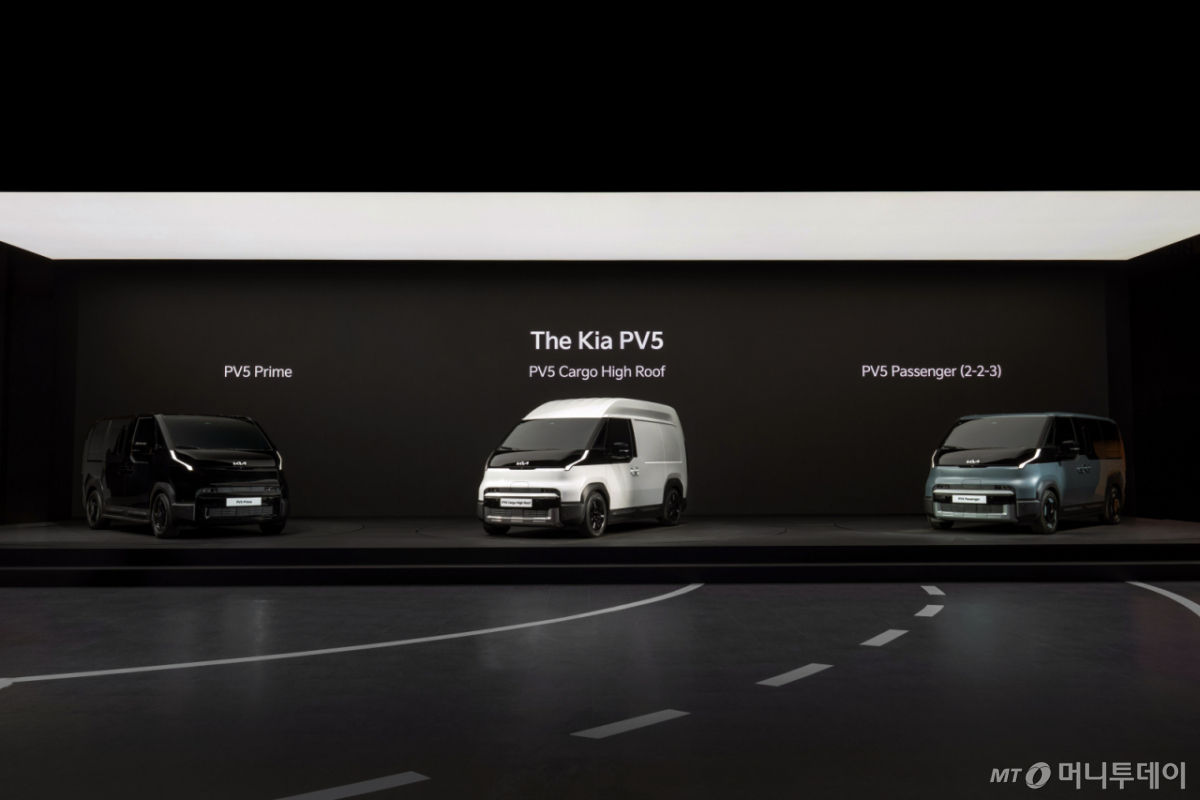
Kia’s commercial vehicle strategy is being proven by results. The first PBV (purpose-built vehicle) PV5 sold nearly 30,000 units in the first half of this year. Kia plans to expand its electric PBV lineup to include larger models in line with the shift toward electrification, so sales are expected to rise further.
According to industry sources on the 30th, global PV5 sales for the first half of this year (January–June) totaled 29,293 units. After starting domestic deliveries in August last year and selling 5,272 units in the second half alone, first-half sales this year increased to 5.6 times that figure. Since February, monthly sales have remained around 5,000 units. By market, first-half sales were 15,000 units in Korea and 14,013 units in Europe, making the European market a key sales destination on par with the domestic one.
Product competitiveness has also been recognized. In November last year, the PV5 was selected as "2026 International Van of the Year" (IVOTY) at Lyon Solutrans in France. This marks the first time a Korean brand has won an award that had been monopolized by European brands for 34 years. Previously, the cargo model set a Guinness World Record for the longest driving distance of an electric light commercial vehicle (eLCV), traveling 693.38 km while carrying its maximum payload of 665 kg.
PBVs are vehicles designed for specific purposes such as logistics delivery or facility operations, with companies and institutional investors as their main customers. Beyond selling the vehicle, operators can bundle ongoing operation, maintenance, and management services, creating a revenue structure different from traditional complete vehicle sales. This lays the foundation to expand from vehicle sales into mobility operations businesses. Industry analysts note that while the passenger car market has entered a mature phase, corporate mobility still holds significant growth potential.
Kia is continuing this trend by expanding its lineup. Starting with the PV5, Kia plans to sequentially launch the PV7 in 2027 and the PV9 in 2029, aiming to sell 250,000 PBVs globally by 2030. Of this target, more than half—133,000 units—are allocated to Europe, with 73,000 for Korea and 45,000 for other regions.
As electric PBVs gain traction, Kia’s electrification results are no longer reliant solely on passenger cars. In the first half of this year, EV5 sales reached 34,483 units, 5.5 times the 6,231 units sold in the same period last year; EV4 sales jumped from 3,281 to 23,820 units, more than sevenfold; and the Europe-focused EV2 added 8,673 new units to the results. With PV5 included, Kia’s global electric vehicle sales for the first half totaled 196,443 units, a 71.7% increase from 114,426 units in the same period last year. The share of total sales rose from 7.4% to 12.1%.
An industry official stated, "By increasing sales of Kia’s electric passenger cars and the PBV model PV5, we are solidifying our position as a brand leading the electrification era." They added, "Although competition is intensifying due to aggressive low-price tactics from Chinese automakers, we are proactively responding to electrification demand through lineup expansion."

 in INDUSTRY
