

Dementia has long been perceived as a disease that erodes memory and ultimately leads to death, but it is now regarded as a chronic condition requiring lifelong management. The problem is that no matter how effective dementia medications are, they become useless if the patient forgets to take them in the first place. We spoke with Jung Young-hee, Shin Gyeong-gwa (Prof.) at Hallym University Sacred Heart Hospital, about how to manage dementia.

Q. Since there is no cure for dementia, how is it treated?
"Unfortunately, current treatments for dementia only slow the progression of the disease; they do not provide a cure. However, because the disease progresses over a long period, outcomes vary significantly depending on each patient's management approach. It is important to detect dementia early and promptly begin both pharmacological treatment and non-pharmacological management. Clinical outcomes differ between patients who manage their lifestyle habits based on the time of diagnosis and receive consistent treatment, and those who do not. Existing dementia medications are primarily focused on symptom control. Cholinesterase inhibitors (such as donepezil, galantamine, and rivastigmine) work by inhibiting the breakdown of acetylcholine, a neurotransmitter associated with memory, thereby maintaining its concentration. NMDA receptor antagonists are also used for the purpose of symptom control. Recently, immunotherapies that remove amyloid, a substance implicated in the cause of Alzheimer's disease, have emerged. These disease-modifying treatments aim to influence the course of the disease beyond merely controlling symptoms."
Q. It is said that dementia patients find it difficult to maintain medication adherence.
"Approximately 40% of dementia patients who have started treatment fail to properly adhere to their medication schedule over a one-year period. This means they do not maintain sufficient medication adherence. In clinical practice, many dementia patients are elderly individuals living alone, with no caregiver such as a spouse nearby to help manage their medications. Even when a spouse does assist with medication, the spouse is often of advanced age themselves. This makes regular medication intake difficult. Dementia patients have impaired "insight into illness," meaning they lack awareness that they are sick. They may forget that they need to take their medication or whether they have already taken it. Furthermore, even after taking dementia medication, it is difficult for patients and caregivers to feel an immediate effect, unlike with antipyretics or analgesics. This makes it challenging to explain and persuade them of the necessity of consistent pharmacological treatment."
Q. What changes occur if a patient stops taking dementia medication?
"While there are individual differences among patients, stopping dementia medication can reduce the effect of slowing cognitive decline, and behavioral and psychological symptoms such as delusions may reappear or worsen. This is why it is important to take the medication consistently from the early stages, even if treatment effects are not felt immediately. In addition to oral medications, patch forms are available, but they must be replaced every 24 hours, which can be cumbersome. Patients or elderly caregivers may forget or become confused about whether a patch has been changed. There is also a method of visiting the hospital regularly for injections. We recommend continuing medication even in patients with late-stage dementia if medical professionals determine that there are benefits, such as controlling behavioral and psychological symptoms. However, oral medications may need to be discontinued if the patient is bedridden or experiences difficulty swallowing (dysphagia). Decisions are made by comprehensively considering the patient's condition and their ability to take medication."
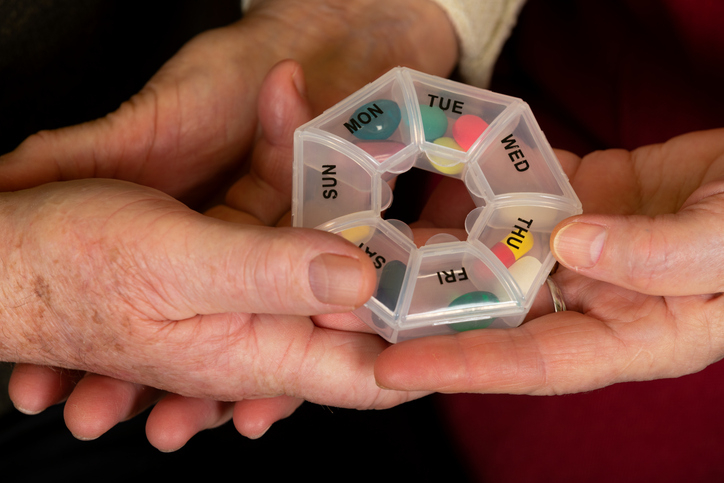
Q. Are there ways to help dementia patients remember to take their medication properly?
"Medical professionals try to prescribe oral medications that only need to be taken once a day whenever possible. This is because the more times per day a medication must be taken, the harder it becomes to manage. Patients or caregivers should establish consistent habits related to medication intake. For example, they can mark "whether taken today" on a calendar or leave the blister pack of the medication taken that day on a desk. If a dementia patient finds it difficult to manage such medication patterns independently, they can seek assistance through linkage with the long-term care system. When using a day care center, one can consult with the center staff to ensure medication is managed there, and caregivers can take over management on days when the patient does not attend the center. It is most important to actively connect patients with existing support systems such as home care services."
Q. What improvements are needed to manage medication adherence for dementia patients?
"Dementia has not yet been conquered. Although there are now diverse dementia medications, it would be desirable to have a wider variety of formulations that offer longer-lasting drug effects and are easier to manage. It is necessary to diversify social support so that even early-stage dementia patients can consistently take their medication. In addition to medical prescriptions and education for patients and caregivers, linkage with care systems is required. Following existing long-term care systems and support programs for the elderly, it would be beneficial if government support were diversified to ensure that early-stage patients can consistently take important medications. Efforts to improve access to testing in order to increase the early detection rate of dementia, along with the institutional introduction of easy-to-manage formulations, are also necessary."

 in THEBIO

