

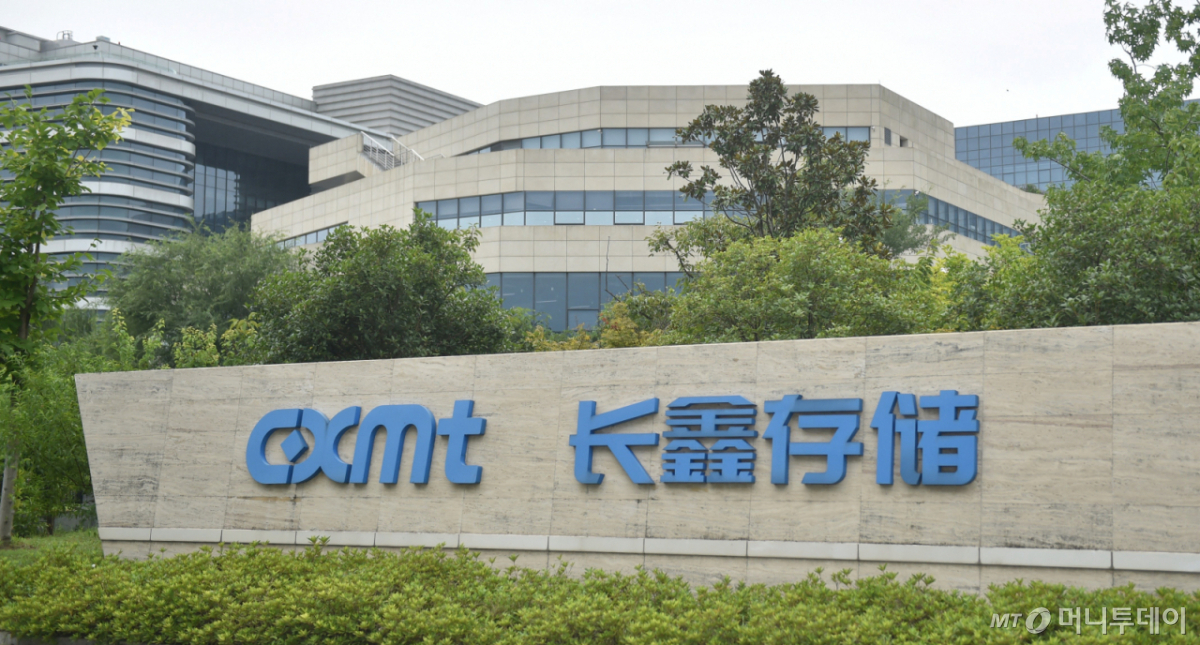
As China's disruptive pursuit of the semiconductor industry, which determines national survival in the age of artificial intelligence (AI), has fully begun, a war unlike any seen before has started. Amid renewed global attention on "Red Tech" (China's state-led industrial technology system) following recent shocks such as CXMT's listing, the semiconductor industry is focusing on Chinese companies' unconventional approaches to technology development that overturn established norms.
CXMT has consistently ignored conventional wisdom that next-generation models should be developed based on profits from previous generations. In the case of DRAM, even if DDR (Double Data Rate) 4 generates revenue, CXMT shifts its focus to DDR5 for catching up and is already preparing LPDDR6 Yangsan despite weakening competitiveness in LPDDR5X (low-power DRAM). Essentially, it is abandoning profits while simultaneously developing multiple generations.
The background lies in strong support from the Chinese government. Central and local governments, state-owned financial institutions, and industrial funds collectively back the effort, sharing the costs and risks of technological catch-up to shorten timelines. The government provides support not only through direct subsidies but also via various means such as equity investments and industrial policies.
Notably, CXMT secured demand by connecting with major Chinese tech companies like Tencent and ByteDance as customers, fulfilling an initial market facilitator role. It is reported that a policy providing cash subsidies for a certain percentage when these companies adopt domestically produced chips with inferior performance has proven effective.
This explains how CXMT could execute over 185.2 billion yuan (approximately 39.25 trillion won) in R&D and facility investments despite reporting net losses of 21.13 billion yuan (approximately 4.48 trillion won) between 2023 and 2025. As a result, just 10 years after its establishment, CXMT began generating profits during the AI supercycle and secured a position in the world's top four with a market share of 7% (as of Q2 this year).
The semiconductor industry's plea that "we are fighting against China's Communist Party" is not an exaggeration. Although our technological level still does not match our competitors, the gap could narrow at any time. This is why voices both inside and outside the industry are growing louder, urging unprecedented challenges to be met with extraordinary responses. The 52-hour workweek regulation is a prime example. Critics argue that viewing this solely from the perspective of deteriorating working conditions ignores the will of industrial workers who voluntarily want to work harder and share greater results; imposing such restrictions is akin to shackling ourselves.
Professor Hanyang University, author of the white paper, stated, "Other countries perceive this as a 'war' and rush in, but our country is too complacent." He added, "We have armies capable of winning—Samsung Electronics and SK Hynix—so we must be allowed to act as we wish."

 in INDUSTRY
