

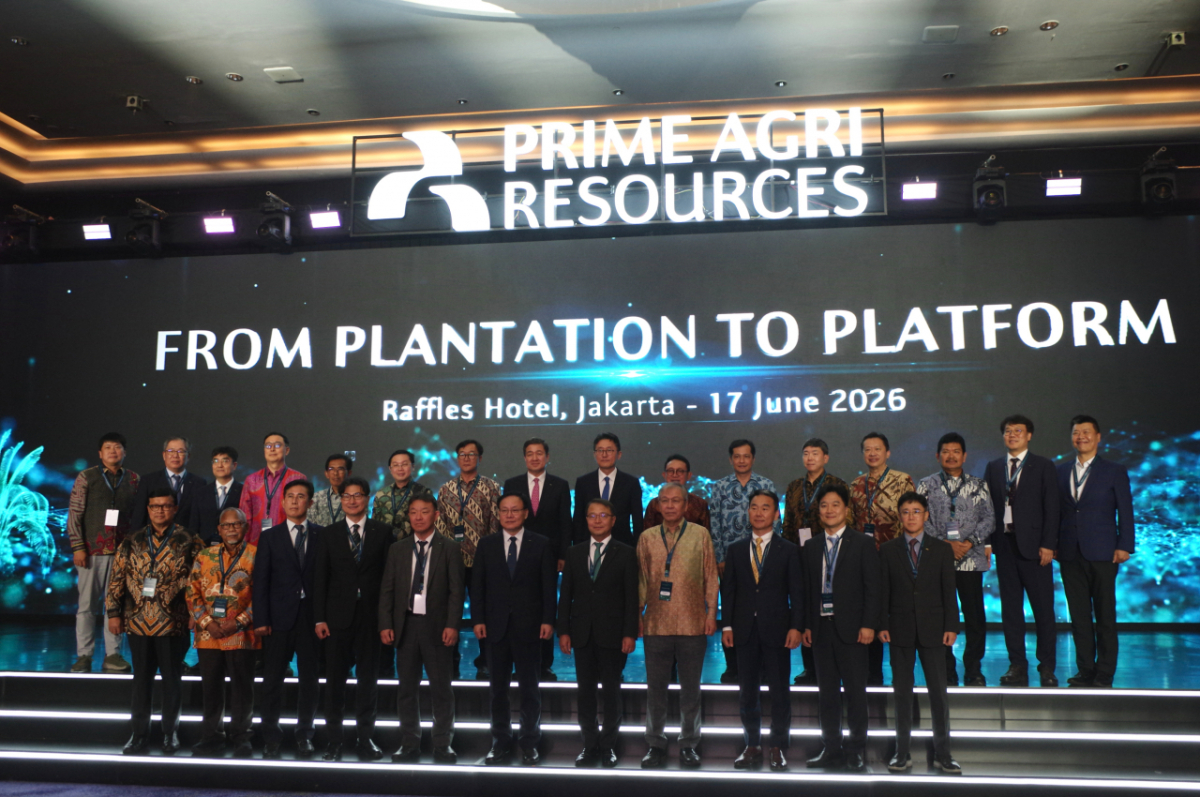
Domestic trading companies are drawing attention for their food businesses due to ongoing global supply chain instability and rising palm oil sales prices. The sector is also being evaluated as a "core business" because it can generate higher profits compared to other divisions.
According to industry sources on the 23rd, POSCO International's consolidated results from its Indonesian palm business subsidiary in the second quarter showed sales of 234.1 billion won and operating profit of 76.8 billion won. Sales increased by 145% year-on-year, while operating profit rose by 92%. Last November, POSCO International expanded its production base by acquiring the Indonesian palm company Sampurna Agro for 1.3 trillion won. Its refining capacity is approximately 500,000 tons annually, accounting for more than 80% of South Korea's palm oil imports. The company is also accelerating efforts to secure palm oil customers not only in Indonesia but also in China and other countries.
POSCO International is also investing in its grain business, which involves sourcing, storing, and transporting corn, wheat, and soybeans at their origins. Since fully entering the food business in 2015, it built a grain terminal at the port of Mykolaiv, Ukraine, in 2019. As of last year, the volume of grains handled reached approximately 6 million tons. The company has partnered with U.S. grain firm Bartlett to expand trade to an annual scale of 4 million tons by next year. It has also expanded its customer base to include Asia and the Middle East.
LX International also saw sales rise from its palm farms in Indonesia during the second quarter this year, driving improvements in the company's overall performance. Since entering the palm farm business in 2009, it has established farms covering approximately 24,000 hectares (ha) in Indonesia. Due to events such as the Hormuz incident, global palm oil prices are believed to have risen by more than 100% compared to the same period last year.
Hyundai Corporation, a general trading company under the Hyundai Group, is achieving results in its mango business centered on Cambodia. In 2014, it established a 260-hectare mango farm near Phnom Penh, the capital of Cambodia, and gradually built out the entire distribution process required for exports. The company officially launched its mango export business in 2023, exporting approximately 314 tons last year and aiming for 550 tons this year. Cambodian mangoes have larger flesh and higher sweetness compared to those from the Philippines and Thailand, but their thin skins make them prone to damage during transport, increasing logistical challenges. Hyundai Corporation has continued to increase exports by overcoming these logistics hurdles.
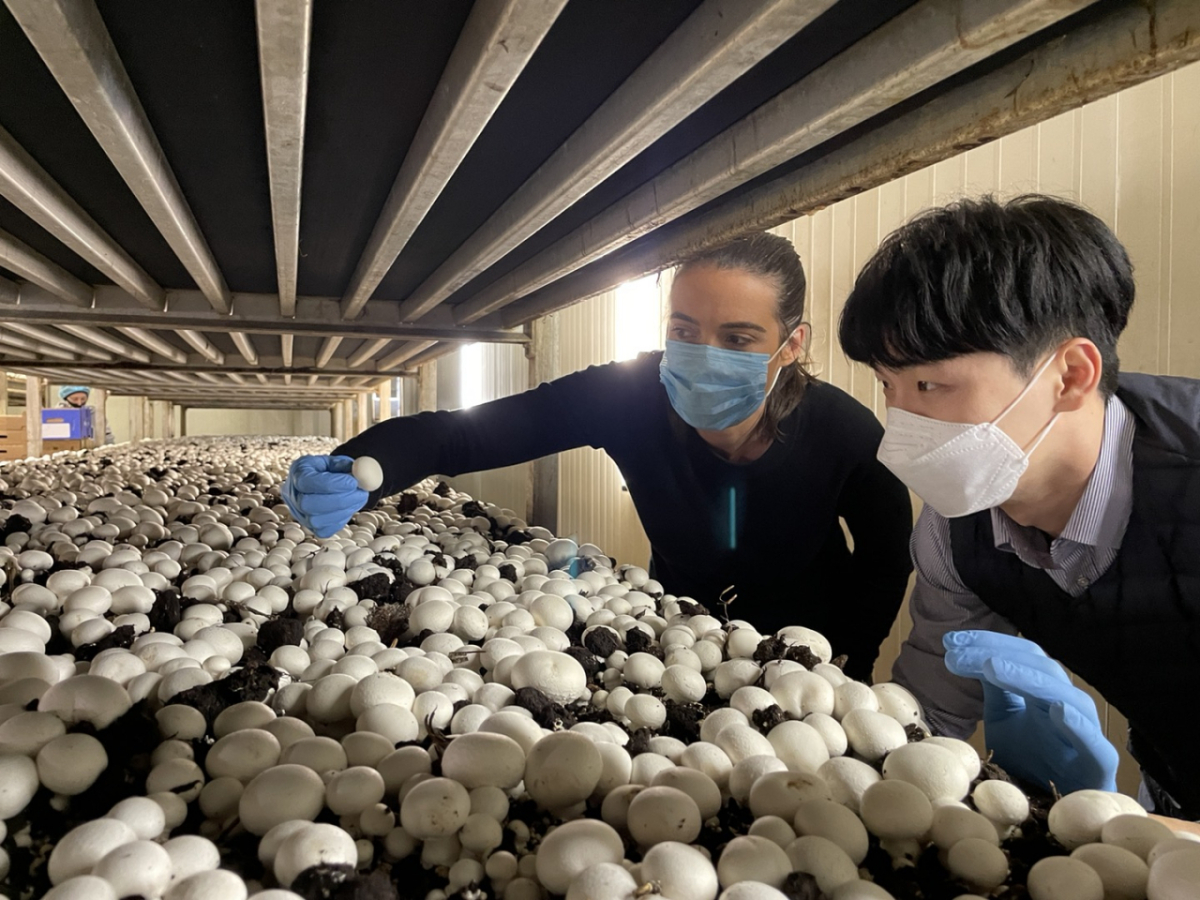
The mushroom business, which produces and sells Eastern mushrooms in the United Kingdom and Australia, has also become a "profit-making business." Sales have grown steadily: approximately 17.7 billion won in 2023, 20.7 billion won in 2024, and 22.9 billion won last year. Additionally, it is collaborating with South Korea's postbiotic specialist company "Verum" to export postbiotic raw materials and products to Europe and the United States.
GS Global, a general trading company under GS Group, has recently launched an expansion of its seaweed business, one of the representative export items of K-food. It signed a memorandum of understanding (MOU) with "Wando Mulsan English Cooperative," a specialized seaweed production company, and "Highland Food Group," a meat import and distribution company, to expand domestic and international sales and cooperate on exports of seaweed products. The three companies plan to collaborate throughout the entire process, including production, domestic and international distribution, and strengthening brand competitiveness for seaweed products. Previously, GS Global began its food business in earnest with a strategic equity investment in a chicken processing company in 2024. This year, it established a new food business team and is exploring exports of seaweed products and new items such as green tea.
An industry official stated, "As global market uncertainty continues, we are working to reduce reliance on specific businesses," adding, "We are pursuing the discovery of new growth drivers through portfolio diversification."

 in INDUSTRY

