

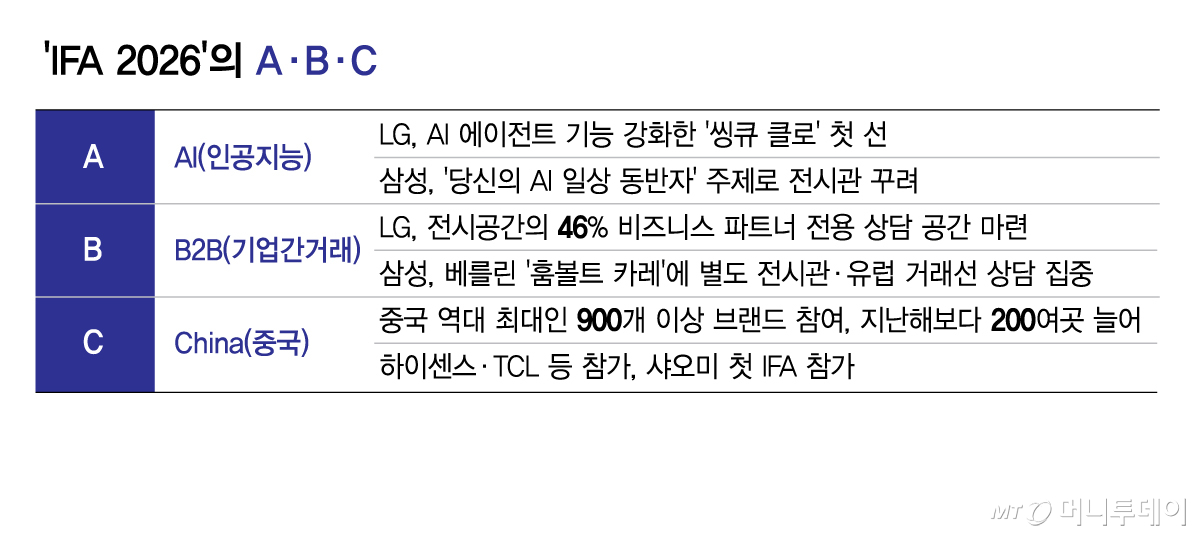
AI (Artificial Intelligence)·B2B (Business-to-Business)·China
These are the three keywords that permeate Europe's largest home appliance and IT exhibition, IFA 2026. AI is evolving from waiting for user commands to understanding daily life and taking initiative, while exhibition halls are transforming into "business stages" where companies meet B2B customers. The offensive by Chinese companies, approaching half of all participating enterprises, is also intensifying.
IFA, celebrating its 102nd anniversary, opens on the 4th (local time) in Berlin, Germany. This year's theme is "The Future Is Now," with over 1,900 brands from 49 countries worldwide participating. Organizers expect more than 220,000 visitors from over 140 countries to visit the exhibition.
A, AI... Home appliances that once waited for commands now take initiative
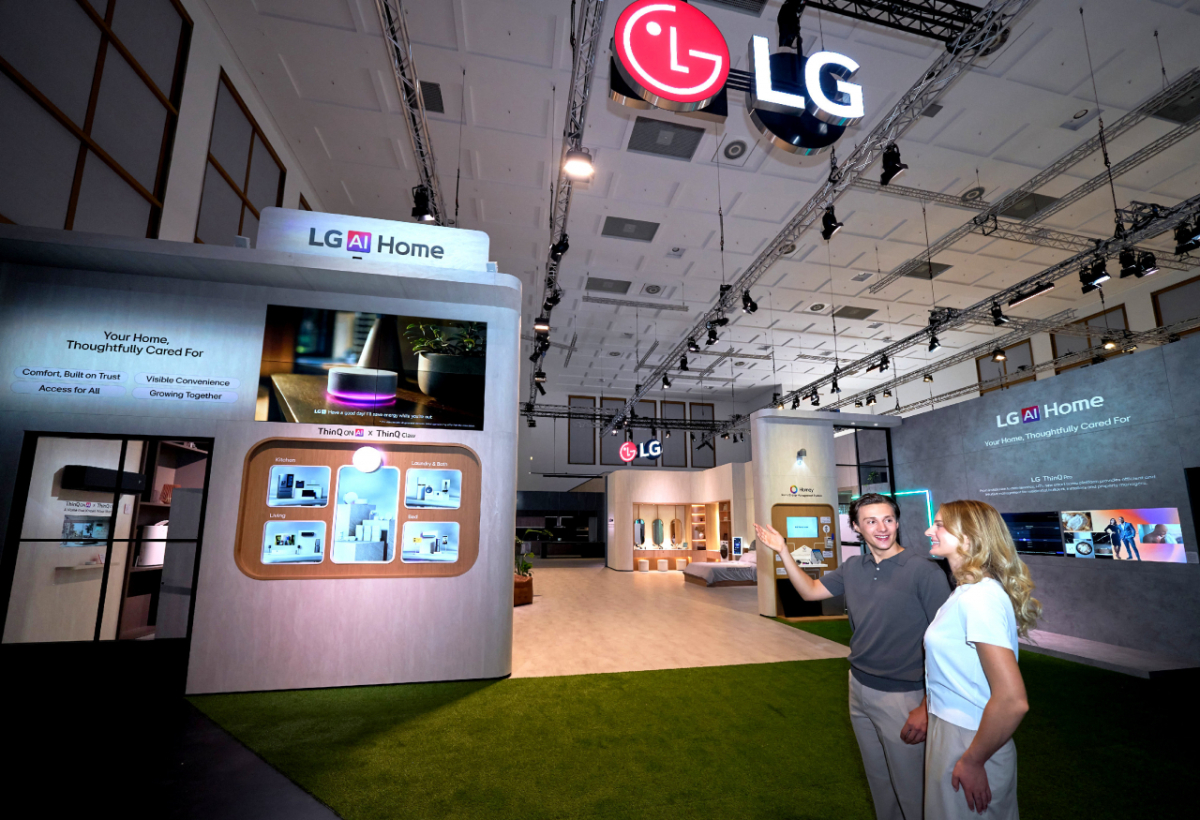
LG Electronics will showcase about 150 key products under the theme "Innovation Tailored to You" in an exhibition space of approximately 3,745 square meters. The center of the exhibition is next-generation AI Home. It connects home spaces, appliances, and services into one through the AI Home hub "LG ThinQ On" and the AI Home platform "LG ThinQ."
Notably, LG Electronics will debut its first AI agent "ThinQ Claw," which identifies user situations and proactively proposes and executes necessary functions. Mounted on ThinQ On, it converses with users and integrates with external services such as web searches and calendars.
This marks an evolution from AI that simply executed commands like "Turn off the TV" to one that asks first, "Are you going on a trip? Shall I turn off the TV?" For instance, if the user's calendar shows a travel schedule, it suggests turning off lights and the TV to save energy and disabling automation features.
LG Electronics will also utilize Homey, the smart home platform acquired in 2024 by AtHome. It will showcase a Home Energy Management System (HEMS) that connects AI appliances, heating/ventilation/air conditioning (HVAC), solar power, and energy storage systems (ESS) to manage the entire home's energy flow.
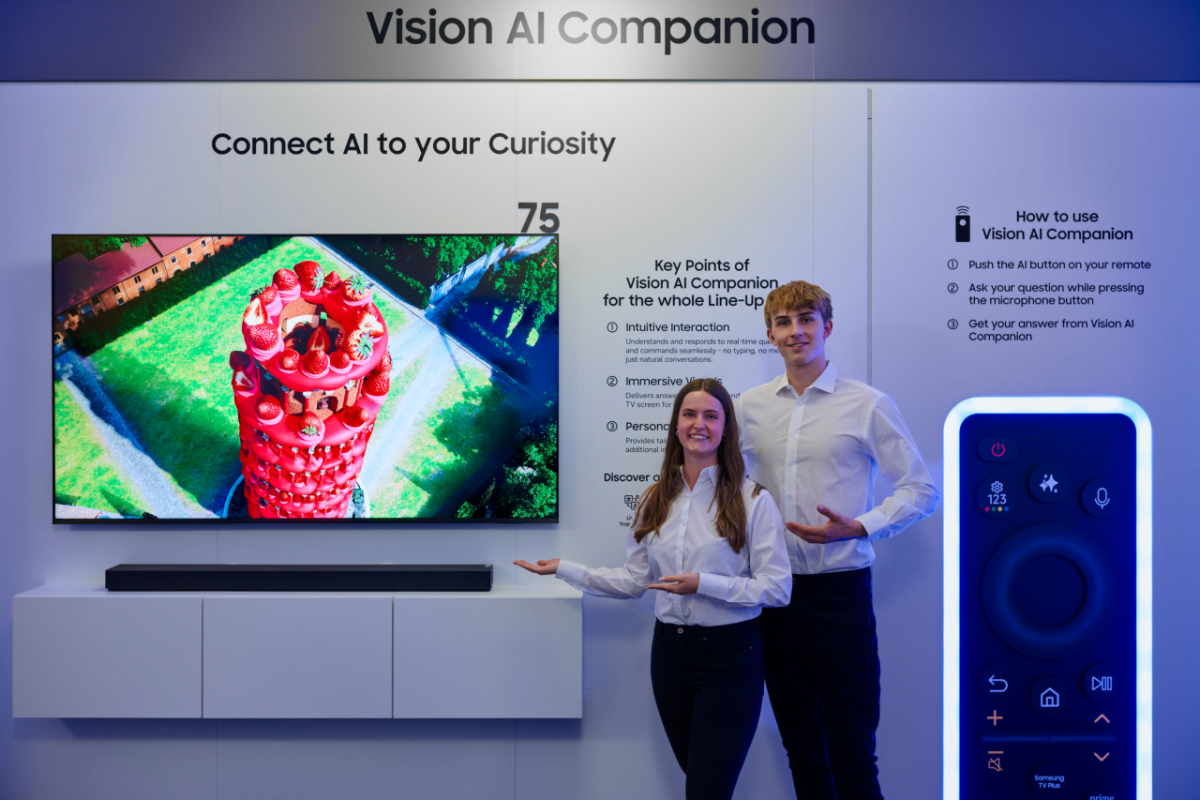
Samsung Electronics also presents "AI Living." Moving beyond connecting appliances and smart devices under the theme "Your AI Daily Companion," it showcases experiences where AI understands individual lifestyles and needs to support all aspects of daily life, including leisure and health management.
The 2026 model TVs will apply "Vision AI Companion," which provides personalized content and context-specific information based on conversational AI. The Bespoke AI Family Hub refrigerator recognizes food ingredients via camera and recommends recipes. Benjamin Brown, Samsung Electronics' Global Chief Marketing Officer (CMO) for Europe, stated, "AI must provide meaningful benefits that people can directly see and feel in their daily lives."
B. B2B... From an exhibition of "showing off" to an exhibition of "doing business"
This year, a change as prominent as AI at IFA is B2B. Companies are shifting focus from showcasing new products to unspecified audiences to concentrating their exhibition capabilities on creating actual business opportunities in Europe. IFA itself also plans to expand its role into a "deal-making platform" where brands, distributors, and consumers gather in one place to conduct actual transactions.
LG Electronics will dedicate 46% of its total exhibition space to consultation areas exclusively for business partners, the largest scale ever. This means nearly half of the exhibition space is allocated for meeting European distributors and B2B customers.
AI Home also expands into B2B. Through the B2B integrated management solution "LG ThinQ Pro," it integrates and manages appliances, HVAC, and energy facilities in buildings and offices. HEMS based on Homey is also planned to be utilized as a B2B solution targeting multi-family housing construction companies in Europe in the future. The first unveiling of new built-in appliance products aimed at European living environments also aligns with its B2B strategy.
Samsung Electronics has completely changed its exhibition venue. For the first time since its initial participation in IFA in 1991, it has moved away from the main exhibition hall, Messe Berlin, to establish a separate space at "Humboldt Carré" in the city center. This is to focus more on exchanges with major European distribution partners, B2B customers, and media. In the exhibition space, it emphasized built-in appliances aimed at the European market.
Instead, it will operate the "Samsung Creator Hub" at Messe Berlin. This is a "two-track" strategy: meeting business partners and B2B customers in the city center while expanding consumer touchpoints through creators at the main exhibition hall.
C, China... 900 Chinese companies gather; Xiaomi participates for the first time
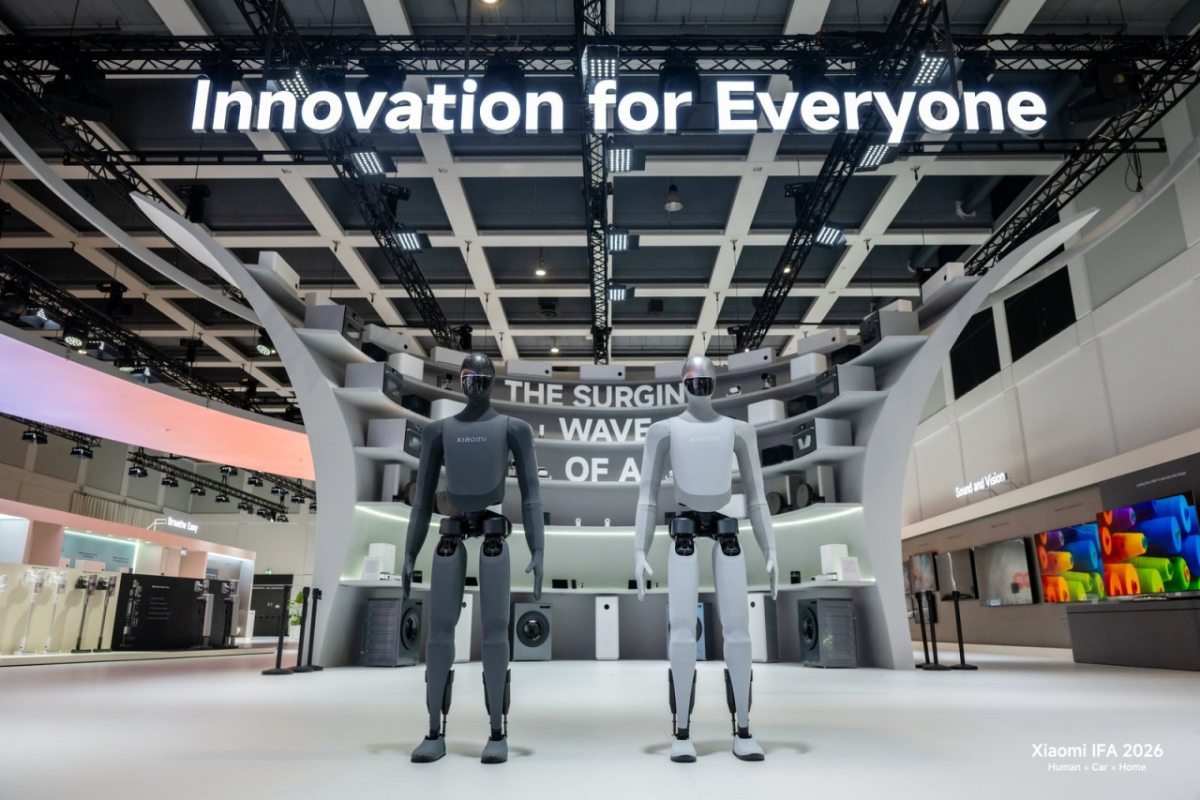
The presence of Chinese companies is growing even stronger. Over 900 Chinese companies are participating in this year's IFA, approaching half of all participating enterprises. They are expanding their frontlines beyond simple "volume offensives" to AI and premium home appliances. Notably, the offensive by Chinese humanoid robots is prominent.
Hisense and TCL are leading with large TVs and smart home technologies, while Roborock, Ecovacs, Dreame, and others are unveiling new robot vacuum products. Recently, Samsung Electronics and LG Electronics have also released new robot vacuums, making competition between Korean and Chinese companies even fiercer. Additionally, numerous robotics companies such as Unitree, Agibot, Deep Robotics, and Engine AI are participating in large numbers.
Xiaomi is opening its exhibition booth at IFA for the first time this year. In an exhibition space of over 3,300 square meters, it will showcase about 380 types of products ranging from personal devices like smartphones to smart homes and smart mobility. This is the largest exhibition booth Xiaomi has ever prepared overseas. It will also demonstrate the humanoid robot "CyberOne."
China's pursuit is also the background for Samsung Electronics and LG Electronics to hasten differentiation through AI experiences, B2B strategies, and high-efficiency premium products. German home appliance companies such as Miele, Siemens, and Bosch are also launching new products to defend their domestic market. Raif Lindner, CEO of IFA Management, stated in June that while "Samsung Electronics and LG Electronics are the world's top innovation companies," the innovations shown by Chinese companies like Xiaomi are "no less impressive."

 in INDUSTRY


