

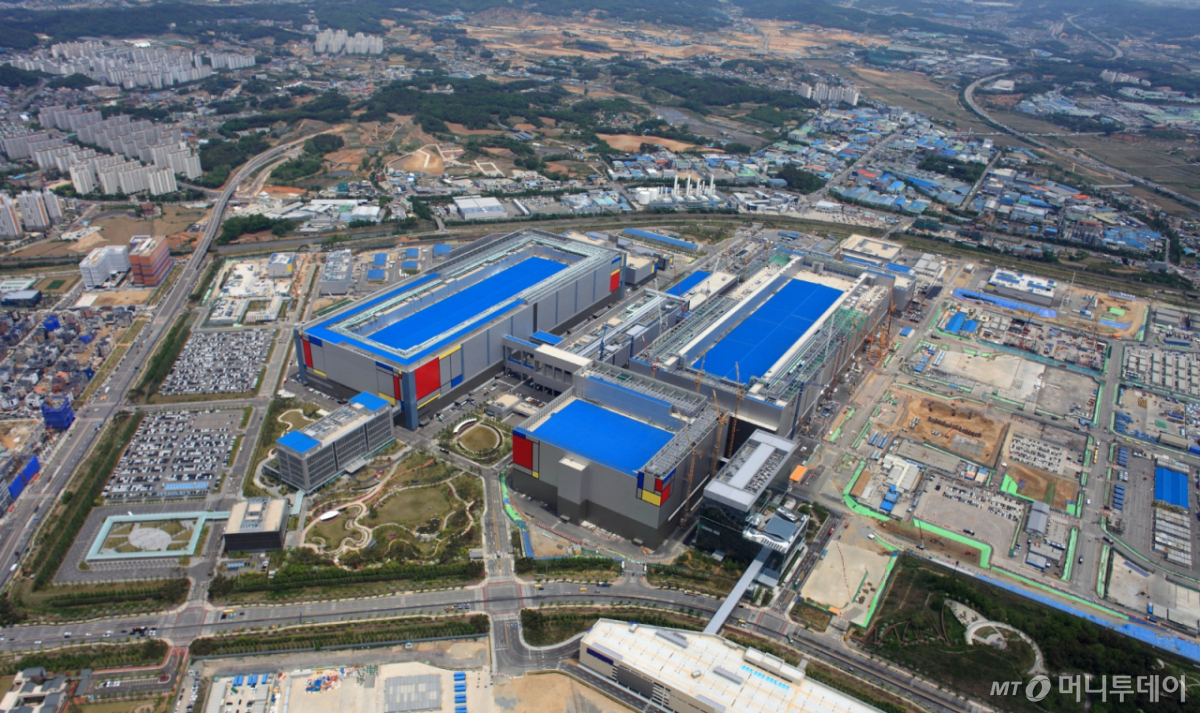
In semiconductor factories, not a single drop of water is wasted. Samsung Electronics collects and purifies condensation formed in air conditioning systems before reusing it in cooling towers. SK Hynix treats wastewater generated during semiconductor manufacturing processes and supplies it to air pollution control facilities for greenhouse gas reduction. The concept is that even once-used water can be cleaned and serve its purpose again within the factory.
The competitiveness of the semiconductor industry depends not only on fine process technology and production capacity but also on how stably core infrastructure such as water and electricity can be secured. In particular, water is an indispensable resource for semiconductor production. Semiconductor factories use ultra-pure water (UPW·Ultra Pure Water) with impurities removed to a much stricter standard than general purified water.
Ultra-pure water is used to wash away fine particles and impurities from wafer surfaces. Its applications range widely, from cleaning before and after key processes such as etching and deposition to removing chemical residue. Even a single tiny impurity can lead to semiconductor defects and yield deterioration. As processes become more advanced, circuits grow finer and structures more complex, making the stable supply of clean water increasingly important.
In fact, the amount of water used by semiconductor factories is substantial. Last year, Samsung Electronics' Semiconductor (DS) division and SK Hynix's global facilities drew 179.01 million tons and 117.02 million tons respectively, totaling 296.03 million tons. Focusing on domestic operations, Samsung Electronics' five sites in Giheung, Hwaseong, Pyeongtaek, Cheonan, and Onyang used 153.24 million tons, while SK Hynix's domestic facilities consumed 83.5 million tons.
As semiconductor production capacity expands, the required water volume inevitably increases. The approach chosen by domestic semiconductor companies is to reuse each unit of secured water as many times as possible. Water used in factories is recovered, and even water that was previously discarded is now being retrieved for reuse.
Last year, Samsung Electronics and SK Hynix recycled approximately 168.52 million tons of water at their domestic semiconductor facilities, averaging about 460,000 tons per day. Considering that the average daily water consumption per person in Korea is about 306 liters (based on 2024 figures), this equates to recycling enough water for approximately 1.5 million people to use in a single day every day.
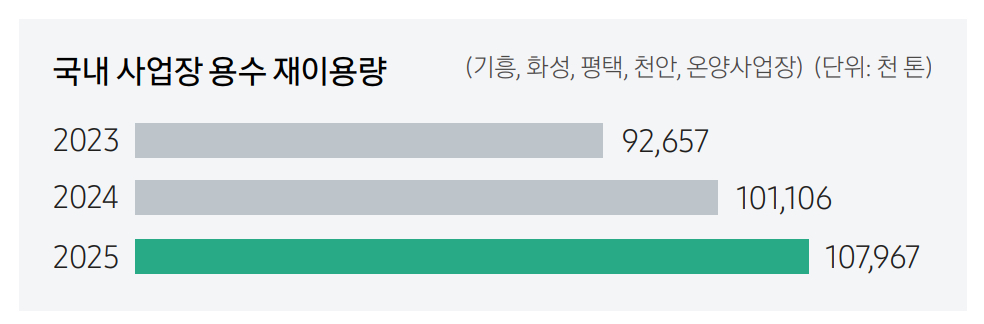
Samsung Electronics recycled 179.07 million tons of water at its Giheung, Hwaseong, Pyeongtaek, Cheonan, and Onyang facilities last year. This represents an increase of approximately 16.5% from 92.66 million tons in 2023 over two years.
A representative example is the condensation generated by air conditioning systems. Samsung Electronics collects water formed on external chillers used to control temperatures in cleanrooms, improves its water quality, and utilizes it as makeup water for cooling towers. This was previously discarded as wastewater.
Water generated during semiconductor processes is also reused. Wastewater produced during manufacturing is treated and recycled for process cleaning or utility purposes, while efforts are underway to expand the scope of reuse by identifying water that was previously discarded per process. Simultaneously, equipment operations are optimized to reduce the initial volume of water required.
Through these activities, Samsung Electronics saved 21.87 million tons of water at its domestic facilities last year, averaging about 60,000 tons per day. The amount saved increased by 30.5% within one year.
Samsung Electronics is promoting projects to reuse sewage treatment water in Suwon, Hwaseong, and Osan. Treated sewage is further purified and supplied to its Giheung, Hwaseong, and Pyeongtaek facilities. Samsung Electronics plans to fully introduce recycled sewage water starting in 2030, reducing the total water intake across its five domestic sites to 2021 levels.
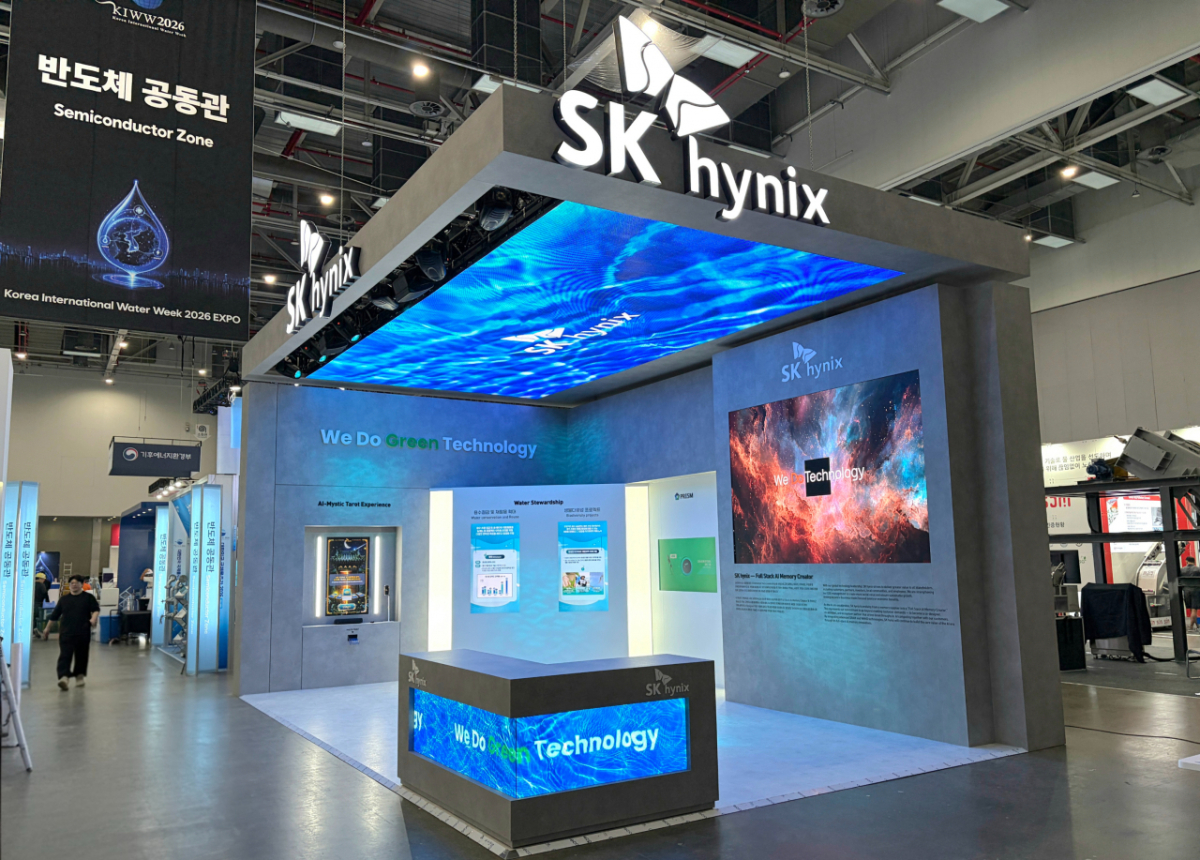
SK Hynix is also actively seeking a 'second use' for water. Last year, it recycled 60.55 million tons of water at its domestic facilities, an increase of approximately 30% from 46.46 million tons in 2023.
A representative site is the wastewater reuse facility at SK Hynix's Icheon plant. Wastewater generated during semiconductor manufacturing processes is purified through multiple stages and then supplied again to air pollution control facilities such as scrubbers. The facility alone has a daily processing capacity of 94,400 tons.
SK Hynix is also reducing the water consumption of the scrubbers themselves. Scrubbers are devices that treat hazardous gases generated during semiconductor manufacturing. SK Hynix has reduced the required water volume by improving the internal structure of scrubbers, water spray methods, and supply routes. It is also optimizing operating conditions for factory utility facilities such as cooling towers.
The Cheongju plant was the first in Korea's domestic semiconductor industry to introduce recycled sewage treatment water from external sources in 2023. Last year, it received approximately 10.8 million tons of recycled sewage water and utilized it as facility water.
Results are already emerging. The cumulative amount of water saved by SK Hynix from 2021 to last year reached 303.37 million tons, surpassing the original target of 264 million tons. The company aims to save a cumulative total of 600 million tons by 2030.
Overseas semiconductor companies face similar situations. Taiwan's TSMC, the world's largest foundry operator, is expanding its use of recycled water and diversifying sources through seawater desalination, among others. Competition in the semiconductor industry is expanding beyond process technology and production capacity to include securing core infrastructure such as water and electricity stably.

 in INDUSTRY


