

Separate from the controversy over whether military service exemptions in the sports sector constitute a privilege, there is strong demand within the industrial sector to expand the related system. It is pointed out that a forward-looking perspective different from the past is needed, as securing specialized personnel in advanced industries such as semiconductors directly translates into national competitiveness.
According to business circles on the 6th, large corporations and mid-sized and small and medium-sized enterprises (SMEs) are all strongly in favor of expanding military service exemption systems, including professional research personnel and industrial functional personnel.
First, large corporations take the position that the professional research personnel system, which allows master’s and doctoral-level personnel to substitute for military service at corporate research institutions, should be applied regardless of company size, at least in the national advanced strategic industry field (semiconductors, secondary batteries, robots, etc.).
Currently, large corporations are excluded from the target group. Due to amendments to relevant laws and regulations such as the Military Service Act, the Military Manpower Administration has halted new personnel allocations to large corporations since 2013. Since 2021, it has also been prohibited for personnel who served a certain period at small and mid-sized companies to transfer to large corporations.
In reality, research institutes affiliated with small and mid-sized companies are often structured primarily around practical and on-site support. According to the Korea Industrial Technology Promotion Association, as of the end of March this year, among 194,536 research personnel at SME-affiliated research institutes in South Korea, only 5.7% hold doctoral degrees, while among 63,862 personnel at mid-sized companies, only 4.6% do. The size of SME research institutes is also such that those with 2 to 4 people account for 62.8%. This means that many research institutes are staffed primarily by practical personnel with bachelor’s degrees and above, taking on auxiliary roles such as process improvement.
Given these circumstances, large corporations in the national advanced strategic industry sector, which possess substantial capital investment and research infrastructure, find it difficult to secure top-tier research talent, and the STEM talents themselves—who are the primary stakeholders—have little need to utilize the military service exemption system.
A business circle official stated, “Fields such as semiconductors and secondary batteries, which are national strategic technologies, are the front lines of fierce global competition for technological hegemony, and ultimately a battle to secure core R&D (research and development) talent,” adding, “The system must be amended to dismantle outdated regulatory barriers based on company size, allowing professional research personnel to be utilized regardless of scale in the advanced strategic industry sector.”
In particular, it is argued that the practical benefit of institutional improvement lies not so much in the length of service itself, but in ensuring that top-tier research talent continues to remain in South Korea’s industries after their service. An official from the Federation of Korean Industries said, “For master’s and doctoral talents from overseas universities, there is also a problem where they do not stay in South Korea after serving at domestic small and mid-sized companies, but instead seek employment with competing countries abroad or delay fulfilling their military service obligations to join foreign companies, thereby exacerbating talent outflow.”
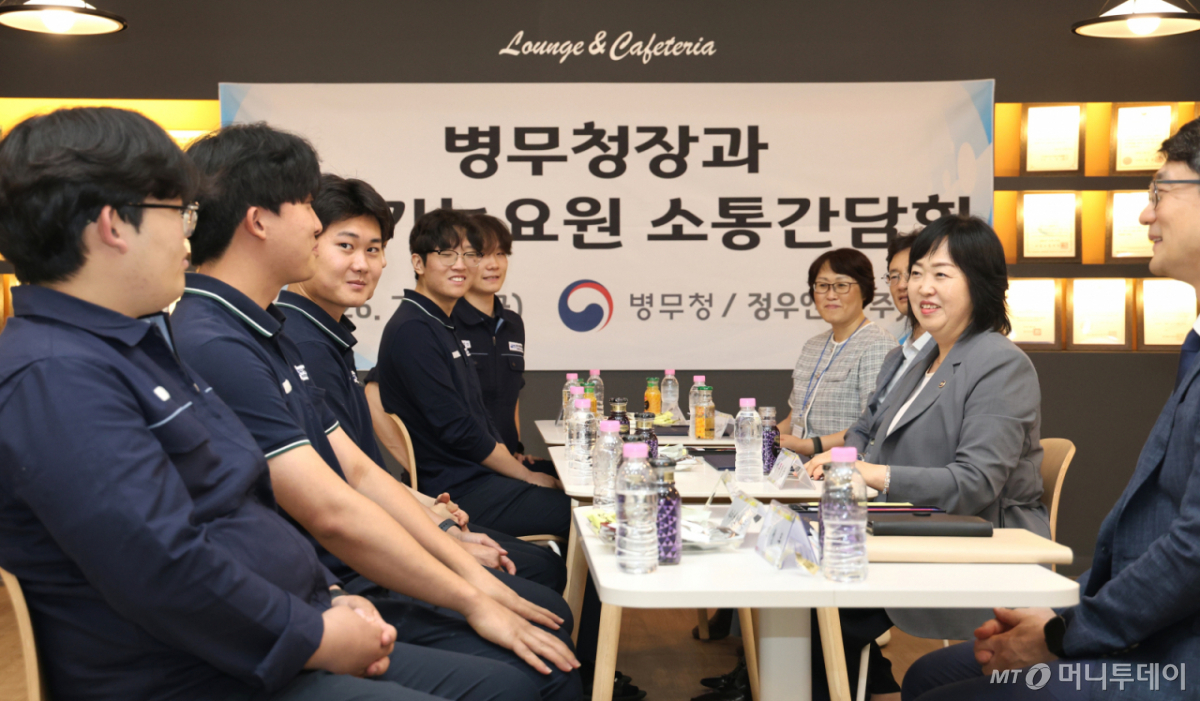
Meanwhile, mid-sized and SMEs have requested an increase in the allocation of industrial functional personnel, who are utilized as on-site personnel such as graduates from Meister High Schools. This is because military service exemptions provide practical assistance to business operations for industries that have long complained of chronic labor shortages.
A survey conducted by the Korea Federation of SMEs titled “SME Opinions on the Reduction of the Alternative Military Service System” targeting 303 SMEs currently utilizing the system found that 83.8% wanted to “expand or maintain” the operation of industrial functional personnel, and 52.4% responded that “personnel will become insufficient” regarding the impact that reduction or abolition would have on corporate staffing conditions.
An official from a small battery manufacturer said, “Companies with production bases in regional areas face relatively greater difficulties in securing the necessary personnel,” adding, “While the industrial functional personnel system is clearly helpful for securing labor, the number of personnel allocated to each company is not large, so there are limits to resolving the labor shortage with the current scale.”

 in INDUSTRY
