

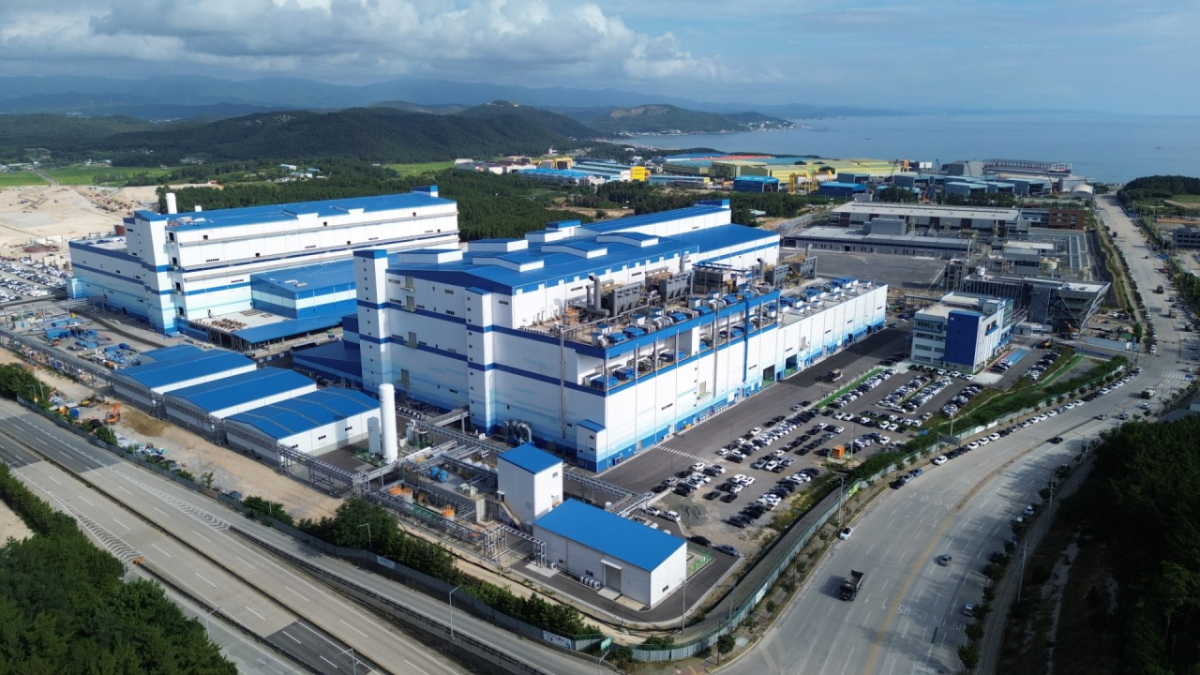
Samsung SDI and POSCO Future M had reached an agreement last August to supply 190,000 tons of lithium iron phosphate (LFP) cathode material from 2027 through 2032. The industry estimated the contract could be worth approximately 3 trillion won.
About two months later, POSCO Future M announced on the 6th that it had finalized a contract to supply Samsung SDI with LFP cathode material valued at approximately 6 trillion won. While the two companies did not specify the exact volume, the supply of LFP cathode material is understood to have more than doubled when considering the monetary value.
The contract is seen as reflecting the growing prominence of LFP batteries for mid-to-low-priced electric vehicles and energy storage systems (ESS). Compared with ternary batteries such as nickel cobalt manganese (NCM) and nickel cobalt aluminum (NCA), LFP batteries offer lower output but are strong in price competitiveness, long lifespan, and stability. With rising power demand driven by recent expansions of data centers for artificial intelligence (AI) applications, the trend is toward expanding demand for ESS-grade LFP batteries to ensure stable power supply. In the electric vehicle market as well, adoption of LFP batteries is increasing, particularly among entry-level models.
Companies are focusing on securing cathode and anode materials for batteries that meet the U.S. Non-PFE (Prohibited Foreign Entity) requirements to enhance the stability of the materials supply chain. For automakers and battery companies in the United States to smoothly receive subsidies such as the Advanced Manufacturing Production Tax Credit (AMPC), they must reduce their reliance on materials from certain countries. In South Korea, securing “Made in Korea” battery materials is becoming increasingly important as companies aim to target the third “ESS Central Contract Market,” which has been announced at a scale of 1,180 megawatts (MW). This is because the ability to secure domestic materials can determine competitiveness just as much as price competitiveness.
POSCO Future M plans to increase plant utilization rates based on the finalized supply volume and to further detail its future equipment expansion and raw material procurement plans. Having secured a stable order book, the company expects improved investment efficiency and greater business predictability. It is also accelerating efforts to expand anode production capacity. The company is pushing forward with the construction of a new artificial graphite anode plant in Vietnam, investing approximately 357 billion won. A spherical graphite processing plant, which produces an intermediate raw material for natural graphite anodes, under construction at the Saemangeum National Industrial Complex in North Jeolla Province is scheduled to begin trial operations in early 2027.
For POSCO Future M, this provides further momentum for business expansion. Earlier on the 22nd of last month, it signed an LFP cathode material supply contract with SK On worth 1 trillion 74.2 billion won, covering the period from 2027 to 2029. This marked the first instance of supplying cathode material to SK On. POSCO Future M has now become a materials supplier providing both cathode and anode materials to all three major Korean battery makers (LG Energy Solution, Samsung SDI, and SK On).
In addition, the cathode material alliance with Samsung SDI is being further strengthened. Through this contract, the two companies amended the supply agreement originally signed between POSCO Future M and Samsung SDI in 2023, expanding the product scope from existing NCA to include LFP cathode material. They also agreed to broaden future cooperation to lithium manganese oxide (LMO) cathode material and artificial graphite anode material. A POSCO Future M official explained, “As a comprehensive agreement that consolidates individual contracts for key supply products into one, it will serve as a foundation for more systematically managing product-specific contracts going forward,” adding, “It is expected to be a turning point in solidifying the strategic partnership between the two companies.”
POSCO Future M has built a materials portfolio that uniquely allows it to supply a wide range of cathode materials—including ternary, LFP, and LMP—as well as both natural and artificial graphite anode materials within South Korea. Based on this, it is continuing negotiations with major battery and automaker clients regarding the supply of cathode and anode materials. The company is also leveraging the POSCO Group’s raw material supply chain. POSCO Future M plans to produce and supply LFP cathode material with enhanced cost competitiveness and quality by utilizing lithium produced from salt lakes in Argentina. Its goal is to continuously strengthen the competitiveness of its cathode and anode businesses based on the POSCO Group’s value chain, including lithium salt lakes and graphite mines, thereby further solidifying its position as a core strategic resources company within the group.

 in INDUSTRY
