

LG Energy Solution recorded its highest quarterly revenue to date. The improvement in performance was driven by the expansion of production and shipments for energy storage systems (ESS) in North America, while the electric vehicle (EV) battery business also showed signs of recovery centered on Europe. For the fourth quarter, securing new orders for ESS batteries in North America is seen as a key variable that will sustain the growth trend in performance.
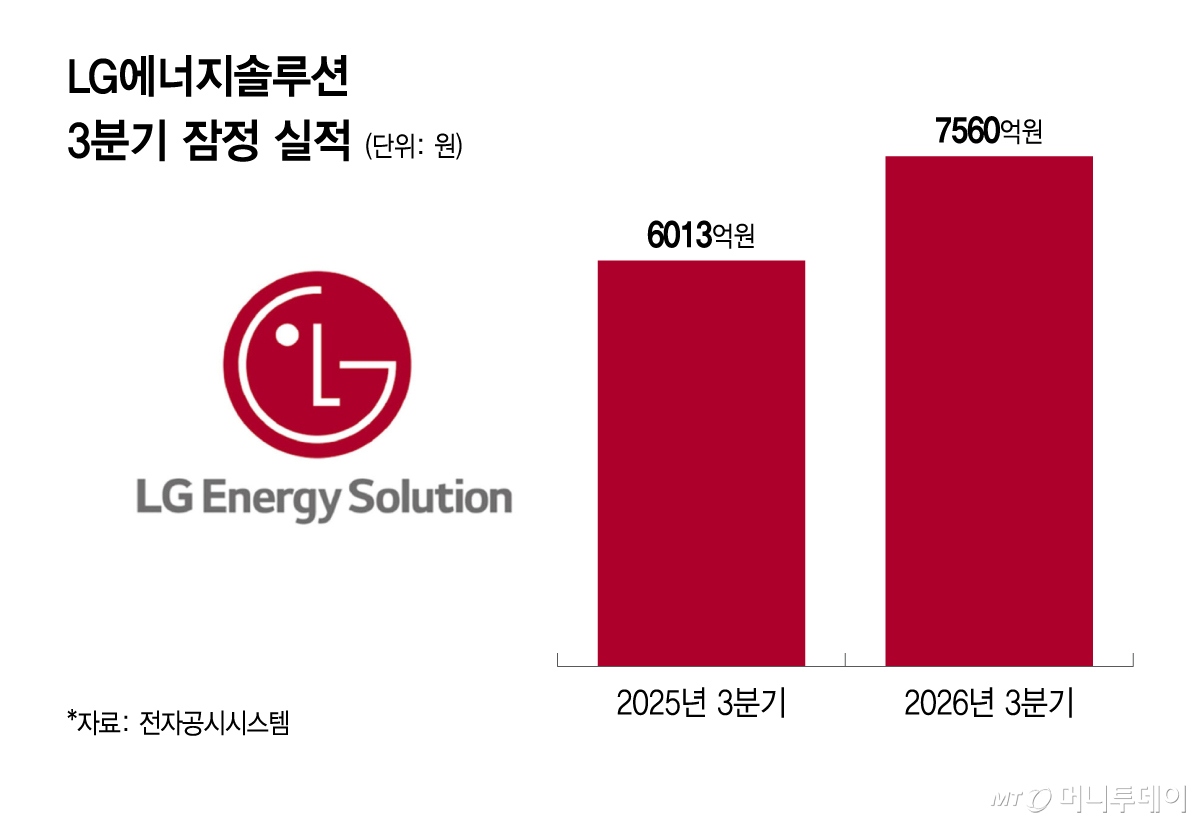
LG Energy Solution disclosed on the 8th that its revenue for the third quarter of this year reached 964.34 billion won, a 59% increase from the same period last year. This marks the highest quarterly revenue since the company's founding. Operating profit was 756 billion won, up 25.7% year-on-year. The Advanced Manufacturing Production Tax Credit (AMPC) under the U.S. Inflation Reduction Act (IRA) amounted to 416.9 billion won. Excluding this, revenue stood at 922.65 billion won and operating profit at 339.1 billion won.
The growth of the North American ESS business played a significant role in this performance improvement. Revenue increased due to the expansion of ESS production capacity and higher shipment volumes in the North American region, while profitability also improved as fixed cost burdens decreased with rising production volumes.
Performance improvement factors continued in the EV battery business as well. Sales of mid-nickel batteries increased in Europe, and in North America, following the resumption of operations at its joint venture with GM, the company's joint venture with Hyundai Motor also began operations. Improved utilization rates due to increased shipments of pouch-type batteries for mid-to-low-priced EVs in Europe, along with compensation received from some automakers, contributed to the increase in operating profit.
LG Energy Solution expects the growth trend centered on ESS to continue in the second half of the year as well. In particular, the North American region is seeing continued growth in the ESS market due to increased power demand driven by investments in power grids and the expansion of artificial intelligence (AI) data centers. In North America, LG Energy Solution has established "five major ESS integrated manufacturing hubs" at its Michigan Holland and L-H Battery Company Ohio plants, Ultium Cells Tennessee, Michigan Lansing, and Canada's NextStar Energy Ontario plant, with plans to secure production capacity of over 50 GWh (gigawatt-hours) by the end of this year. Currently, all plants are in a state of full operation.
The industry points to new ESS orders as the key variable for fourth-quarter performance. LG Energy Solution set its target for new ESS orders this year at approximately 90 GWh (gigawatt-hours), and the industry reports that it has secured about 30 GWh through the first half of the year. Accordingly, the scale of additional orders in the second half and the expansion of the order backlog are expected to be key indicators for gauging the future growth trend of the ESS business.
In addition, LG Energy Solution plans to strengthen its offensive in the North American market not only through ESS battery supply but also by entering the system integration (SI) business. The strategy is to respond to demand driven by expanded investments in power grids and AI data centers based on proactive expansion of ESS production capacity and the acquisition of SI capabilities. An LG Energy Solution official said, "Revenue will show a continuous growth trend due to the full-scale ramp-up of North American ESS production and improvements in EV battery volumes in the second half."

 in INDUSTRY
