

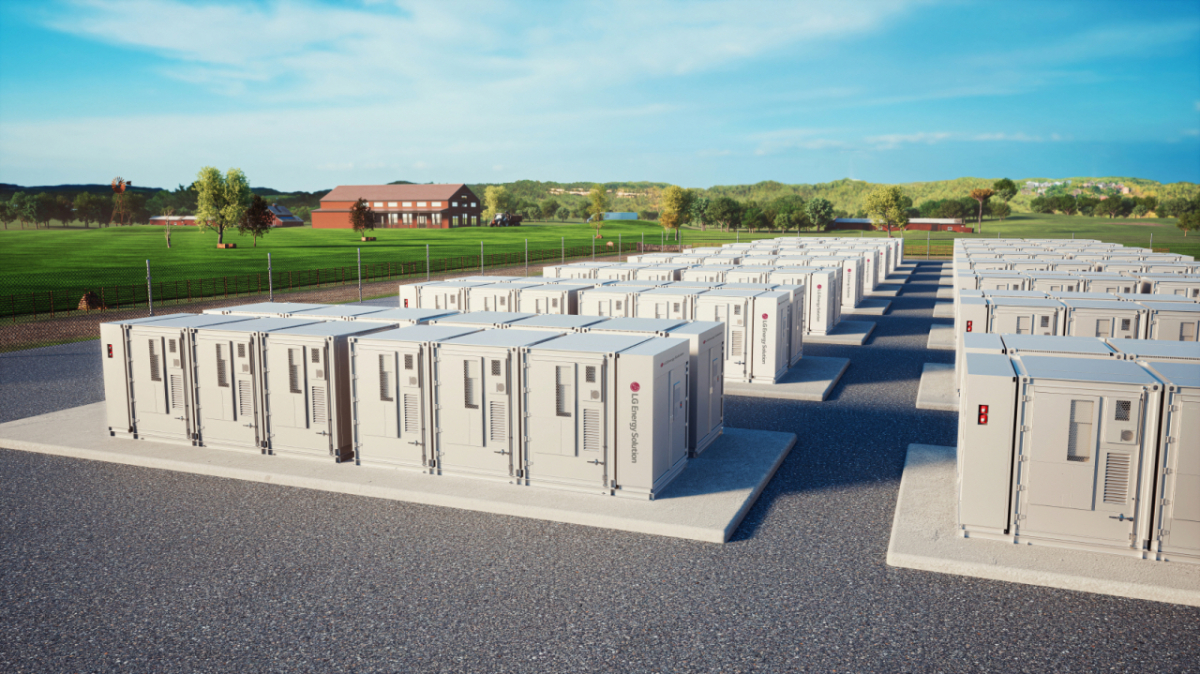
As energy storage system (ESS) installations are growing faster than expected, centered on the North American market, major domestic battery companies are also beginning to see substantial improvements in their performance. The goal is to continue stable profit generation by leveraging local production capacity and a de-China materials supply chain.
According to financial information provider FnGuide on the 18th, SamsungSDI’s consensus estimate for operating profit (average of securities firms’ forecasts) for Q3 this year was tallied at 165.4 billion won. This marks consecutive profitability for two quarters following Q2. SamsungSDI had posted an operating profit of 203.8 billion won in the previous quarter, marking a return to profitability after seven quarters since Q3 2024.
LG Energy Solution, which previously released its Q3 preliminary earnings, also showed clear signs of performance improvement. Operating profit rose 25.7% year-on-year to 765 billion won. Notably, it is expected to achieve an operating profit of 339.1 billion won even after excluding the effects of the U.S. Advanced Manufacturing Production Tax Credit (AMPC). SK On, which recorded its highest quarterly operating profit of 821.8 billion won in Q2, is observed to maintain a profitable trend in Q3 despite a decrease in the scale of profits.
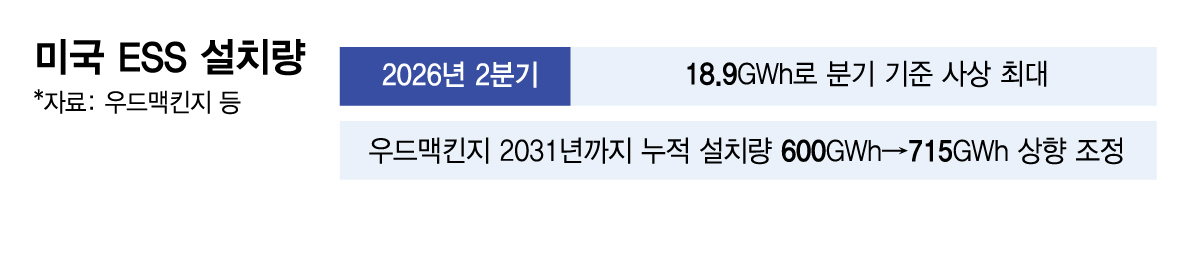
Industry analysts point out that the U.S. ESS market is growing faster than initially anticipated. In fact, new installations reached an all-time quarterly high of 18.9GWh (gigawatt-hours) in Q2 last quarter and are expected to surpass this figure in Q3 as well. Global market research firm Wood Mackenzie recently raised its forecast for cumulative U.S. ESS installation volume by 2031 from the previous 600GWh to 715GWh.
Amid this, moves to exclude China from the ESS supply chain are gradually strengthening. The U.S. ESS battery non-PFE (Prohibited Foreign Entity) ratio, effectively targeting China, is scheduled to rise from 55% this year to 75% in 2030. Over the same period, the non-PFE ratio for battery components will increase from 60% to 85%. If the proportion of PFEs in components and materials exceeds the benchmark, tax credit benefits are restricted.
Last year, among batteries imported into the U.S. other than those for electric vehicles (EVs), Chinese-made products accounted for 63.5%. Korean-made products accounted for 11.4%, and Japanese-made products for 9.7%. An industry official explained, “Chinese companies have held an advantage by leveraging price competitiveness until now, but since this year, the atmosphere of replacing them with Korean companies and others has been fully underway.”
Following the first half of the year, domestic Battery Lisas are also rapidly expanding their North American ESS production capacity in the second half. LG Energy Solution is converting existing electric vehicle battery lines in Holland, Lansing, and other locations in the U.S., and operating new equipment to raise its local annual ESS production capacity from 22GWh last year to 73GWh next year. SamsungSDI is expected to fully launch ESS shipments through Star Plus Energy (SPE), a joint venture with Stellantis, starting from Q4 this year. SK On began construction work to convert lines for ESS use at its Georgia plant in April last month.
An industry official said, “The burden of increasing the proportion of non-PFE materials will continue to grow until 2030,” adding, “Domestic Battery Lisas are also increasing the procurement of domestic materials accordingly, making PFE regulations a new opportunity for the Korean battery supply chain.”

 in INDUSTRY

