

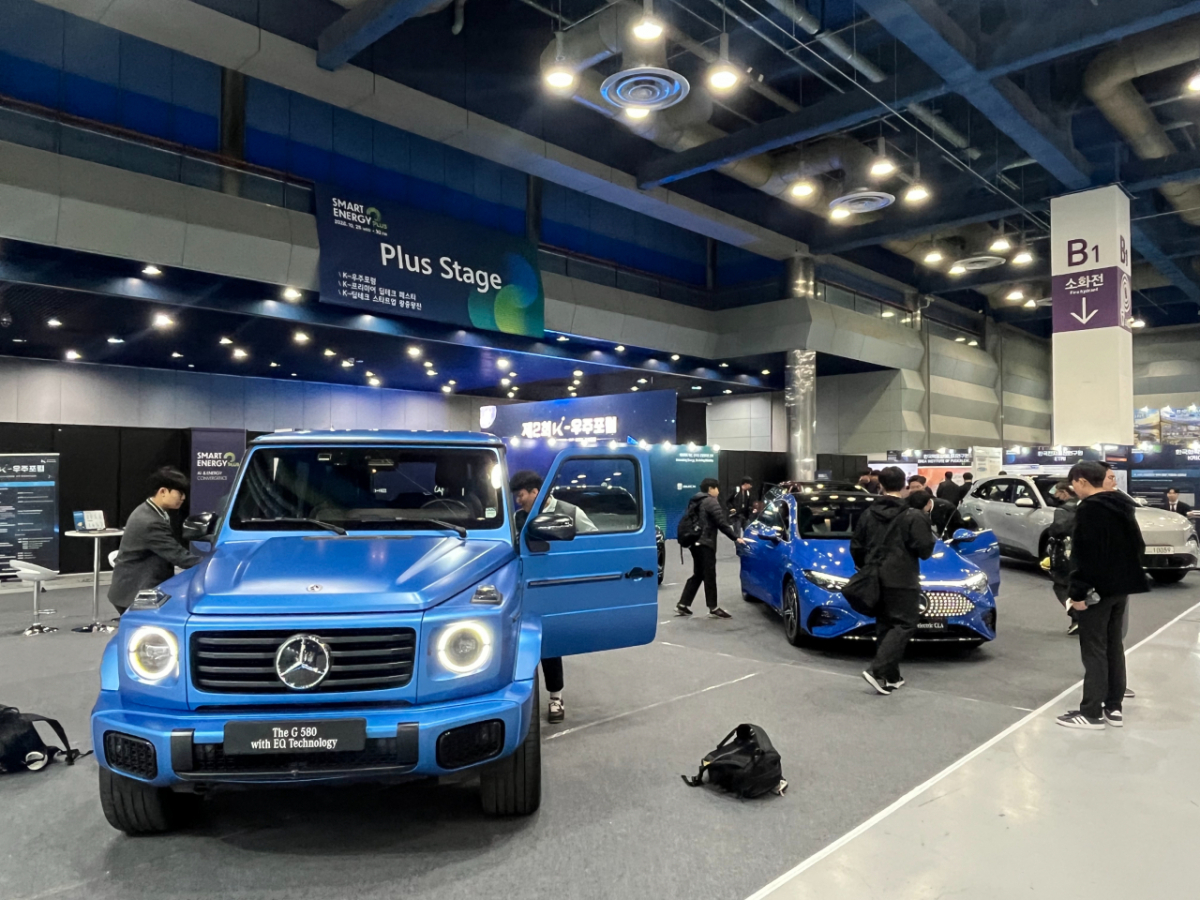
"Do G-Wagens have electric versions, too?"
At the "Smart Energy Plus (SMART ENERGY PLUS·SEP) 2026" exhibition held on the 28th in Hall B of COEX in Gangnam-gu, Seoul, a visitor's gaze lingered on a vehicle while examining Mercedes-Benz's iconic off-roader, the "G-Class (G-Wagen)." The G-Wagen, famous for its boxy body and rugged exterior, had appeared as an electric vehicle.
The exhibition floor that day drew attention with electrified vehicles showcased by domestic and international automakers. The space was filled with Mercedes-Benz's "G 580 with EQ Technology" and "The All-New Electric CLA," the "All-New ES 350e," Porsche's pure electric sports car "Taycan GTS," Hyundai Motor's hydrogen fuel cell vehicle "Nexo," and Kia's "PV5." Visitors' interest continued, as it was an opportunity to encounter in one place everything from vehicles rarely seen on everyday roads to eco-friendly cars closely tied to daily life.
At the Mercedes-Benz booth, the transformation of a traditional luxury SUV (sport utility vehicle) into an electric vehicle caught the eye. The electric G-Class is characterized by maintaining the distinctive boxy design of existing models while incorporating an electric drivetrain. The All-New Electric CLA, displayed alongside it, is a sedan aimed at the electrification era, demonstrating that Mercedes-Benz is expanding its electric vehicle lineup while preserving the identity of its existing luxury cars.
Lexus led with the 8th-generation All-New ES, recently launched in Korea. The ES is Lexus's representative premium sedan, and through this complete model change, a pure electric vehicle model was added for the first time. This expanded the options from an electrification strategy centered on existing hybrid models to include pure electric vehicles.
The "Electra E7" from U.S. automaker Buick also drew attention. The recently unveiled new car was displayed so visitors could examine it up close, gathering interest. With various imported cars appearing side by side, including Mercedes-Benz's electric G-Class and All-New Electric CLA, the Lexus ES, and Porsche's electrified models, a space was created where each brand's design and electrification strategy could be compared.
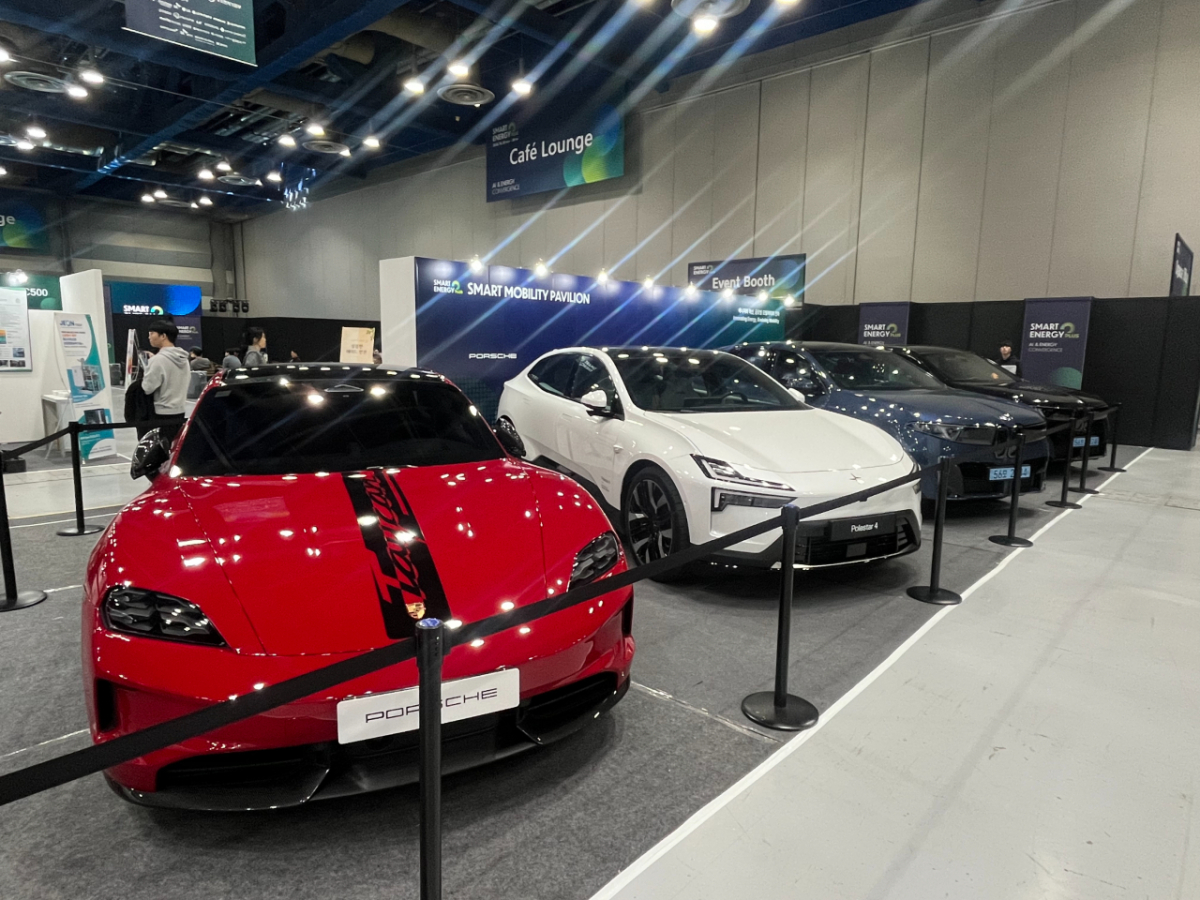
At the exhibition spaces of domestic automakers, practical electric vehicles attracted attention. Kia's purpose-built vehicle (PBV) PV5 highlighted its spacious interior and diverse utility possibilities. It is a model developed to be utilized for various purposes, from passenger transport to logistics. The Niro also welcomed visitors as an eco-friendly car aimed at everyday mobility needs.
Visitors did not stop at just looking around the vehicles' exteriors. They opened doors directly to check the interior space, or sat in the driver's seat and rear seats to assess the vehicle's size and convenience. In particular, students who visited the exhibition floor in small groups set down the bags they were carrying next to the vehicles and rushed to climb into the driver's seats. Some tried gripping the steering wheel or looked around the interior while sitting in the rear seats, while others took commemorative photos with each other in front of the vehicles, creating memories. Students' visits continued, as it was an opportunity to directly experience vehicles that are not easily accessible normally.
The eco-friendly cars appearing side by side at the exhibition floor demonstrated the scalability of automakers' electrification strategies. The range to which electrification technology is applied has broadened, from luxury off-roaders to premium sedans, high-performance sports cars, and PBVs emphasizing practicality.
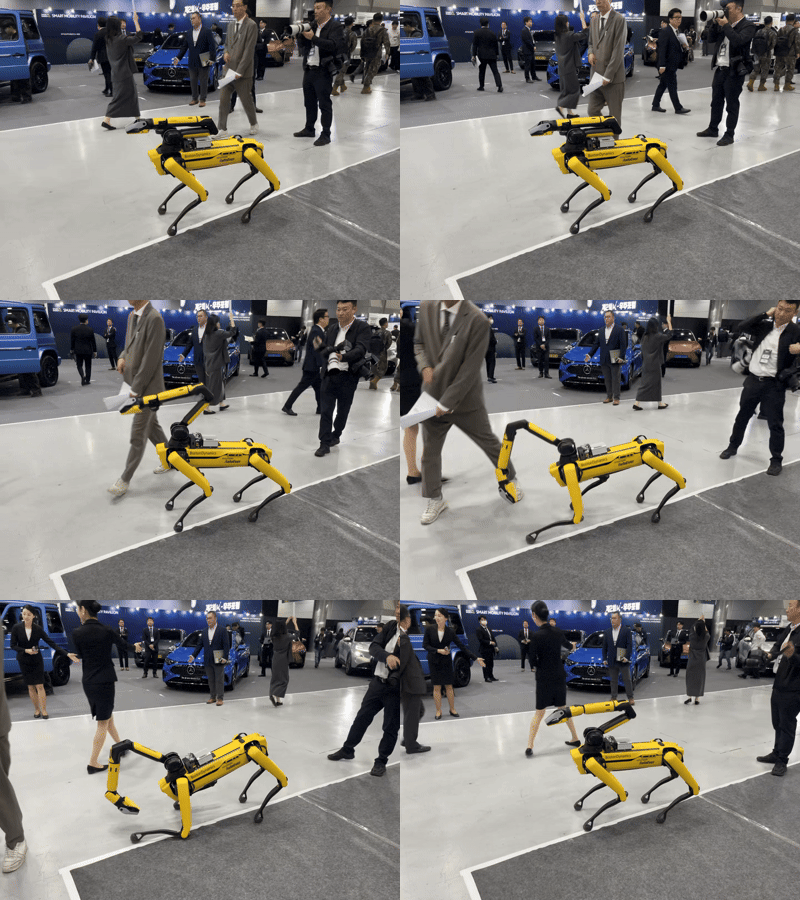
In addition to the automotive booths, visitors' eyes were drawn to a demonstration of "Spot," a quadrupedal robot that had become even more active in its movements. Spot, developed by Boston Dynamics, an affiliate of Hyundai Motor Group, illuminated a corner of the exhibition floor while freely moving its four legs.

 in INDUSTRY


