

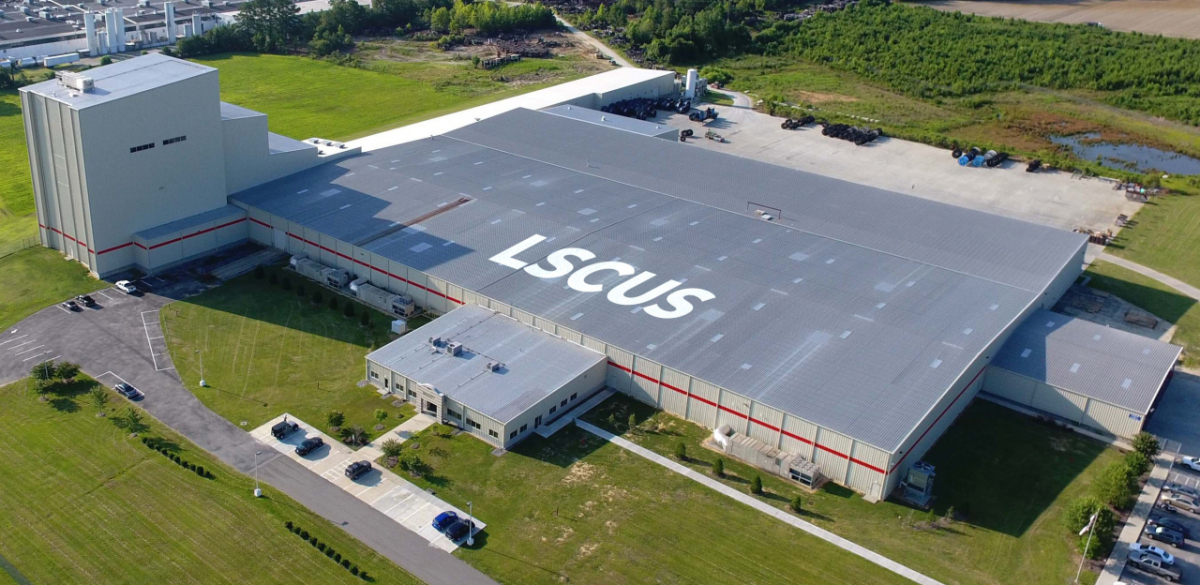
As the strengthening of U.S. product-specific tariffs and the expansion of global power infrastructure investments converge, the competitiveness of Gaon Cable, a subsidiary of LS Cable that has secured a local production base in the United States, is being highlighted.
Assessments indicate that the power industry is entering a phase of structural growth, as increased electricity demand triggered by investments in AI (artificial intelligence) data centers leads to the expansion of transmission networks and investments in generation equipment.
According to industry sources on Tuesday, Gaon Cable is expanding its production capacity centered on LSCUS, its production subsidiary in Tarboro, North Carolina, while broadening its business scope from distribution cables and bus ducts (a distribution system that stably supplies large-capacity power) to overhead lines and nuclear power plant cables.
Gaon Cable plans to invest approximately 50 million dollars to add two production lines at the LSCUS Tarboro factory, aiming to double its cable production capacity by 2027. Amidst the U.S. government's strengthening of product-specific tariffs on steel, aluminum, copper, and related derivative products, products manufactured directly in the United States can reduce tariff exposure associated with finished goods imports.
The growth momentum of local operations is steep. LS Cable projects that LSCUS revenue will expand from approximately 440 billion won in 2025 to approximately 870 billion won in 2026, and further to approximately 1.5 trillion won in 2027. This represents a growth of approximately 3.4 times in two years.
AI data centers are at the core of this growth. LSCUS has secured a long-term supply foundation for bus ducts worth over 5 trillion won through 2030 with global big tech companies. It is also expanding its customer base and product lineup by increasing distribution cable supplies to global cloud companies.
Growth drivers are also diversifying. The replacement of aging U.S. transmission and distribution networks, the expansion of new generation equipment due to increased electricity demand, and the connection of renewable energy and nuclear power to the grid are driving medium- to long-term investments.
In particular, the power grid is essential infrastructure that requires continuous maintenance, replacement, and capacity expansion even after generation facilities or data centers are completed. This means that even if new investments in AI data centers slow down, the expansion of transmission and distribution networks and the replacement of aging equipment to handle already increased electricity demand will inevitably continue.
According to the U.S. Edison Electric Institute (EEI), local power companies plan to invest approximately 178 billion dollars (approximately 242 trillion won) in transmission networks from 2025 to 2028. This demonstrates that growth in the power infrastructure market can continue for a long period, going beyond short-term AI investment cycles.
A Gaon Cable official said, "In line with these market changes, we are expanding our U.S. local business from distribution to transmission and generation fields," adding, "We are promoting investments in overhead line production equipment at LSCUS, targeting initial revenue by early 2029."
Nuclear power plant cables are also being considered as a new business targeting the period after 2029. The company plans to progressively advance product development, certification, and securing production bases to respond to U.S. nuclear power plant construction and replacement demand for existing nuclear equipment. While existing distribution cables and bus ducts drive current growth, the transmission and generation fields form a structure that supports growth after 2029.

 in INDUSTRY
