


"We view the South Korean government's renewable energy expansion targets very positively. Now, we need a concrete roadmap that includes timelines, interim targets, and implementation measures for how to reach those goals."
In an interview with Money Today on the 29th of last month, Ollie Wilson, Head of RE100 (100% renewable electricity) and Energy Operations at the Climate Group, positively evaluated the South Korean government's "100GW (gigawatt) renewable energy by 2030" target while emphasizing that "member companies need a roadmap to gain confidence in knowing how much renewable energy they can secure and when."
Money Today met with Wilson, who visited South Korea to attend RE100-related events and meet with government officials, relevant agencies, and member companies, at the Seoul Gangnam-gu office of the Korea Forum for Socially Responsible Investment (KoSIF), RE100's Korean partner. RE100 is an international campaign in which companies commit to sourcing 100% of their electricity from renewable energy. In South Korea, 36 companies are participating, including Samsung Electronics, SK hynix, Hyundai Motor, and LG Energy Solution.
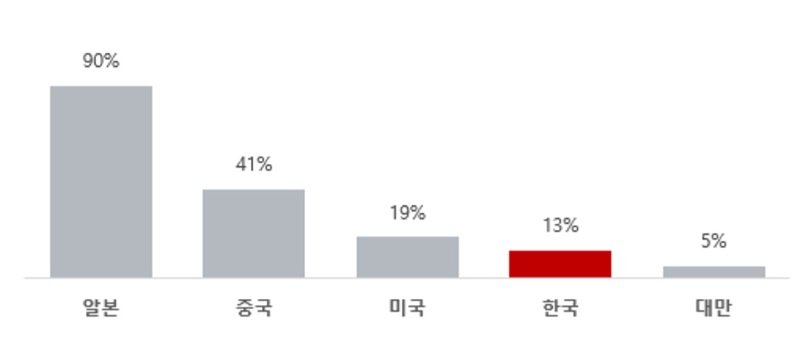
Wilson expressed optimism about South Korea's renewable energy expansion targets and policy direction. However, he noted that changes have not yet translated into improved procurement conditions for companies. "In the latest annual report, the share of renewable electricity used by member companies operating in South Korea was 13%, unchanged from the previous year," he said. "Member companies welcome the government's policy direction, but they are still facing difficulties in actual procurement."
This is why he emphasized that the 12th Basic Plan for Electricity Supply and Demand should include concrete implementation measures. He explained that companies can only determine how much renewable electricity they can secure and when if target achievement timelines, interim targets, and execution means are presented. In particular, he stated that as the Renewable Portfolio Standard (RPS) is being changed to a new system, the volume of electricity supplied to corporate Power Purchase Agreements (PPAs) must be clarified to reduce uncertainty.
He also took the position that barriers to PPAs, which companies prefer, should be lowered. This means transparently disclosing how grid usage fees are calculated and providing future fluctuation outlooks to help companies with cost planning. He also pointed out the need to digitize and simplify complex contract procedures that require filling out hundreds of pages of paper documents.
Wilson asserted that corporate use of renewable electricity has already become a globally required standard. "To attract companies to their home countries, an institutional foundation that enables the use of renewable energy is essential," he said, making it clear that "(such institutions) are ultimately a matter of competitiveness."
From the perspective of companies, he cited energy independence and price stability as reasons why securing renewable energy is important. This means that in a situation where fossil fuel prices repeatedly surge and fluctuate, renewable energy can provide cost predictability for businesses. "Companies want to know what energy prices will be like in the future," he said. "They seek to secure energy supply and prices not only at their own facilities but also across the supply chain to fix input costs."
The ability to procure renewable energy also affects the maintenance of transactions with supply chain companies. Wilson introduced a clause in a contract between a member company headquartered in South Korea and a multinational corporation that stated, "Renewable energy must be used in product production." He added, "Whether or not renewable energy can be procured determines whether transaction contracts are maintained," and advised that it is important for the government to create procurement conditions so that companies can meet trading partner requirements and maintain contracts.
He also mentioned that the conditions for securing renewable energy have become a major factor in determining the location of manufacturing facilities as well as AI (artificial intelligence) data centers. "In particular, competition among countries is emerging to attract corporate investment to their home countries, especially in Asia," he said. "Establishing a good renewable energy policy system that enables PPAs and other mechanisms is a factor in attracting companies." In this regard, he noted, "PPAs are expanding in Japan, and a significant number of contracts are being signed." He added, "Taiwan has also improved its PPA system, and Vietnam is introducing systems that allow companies to procure renewable energy through PPAs."
Finally, Wilson stated, "It is extremely important for each country to actively embrace renewable energy not only for climate reasons but also for economic reasons," adding, "(In this context) the signals sent by the South Korean government are very positive, and now is the time to turn those signals into concrete actions realized on the ground."

 in INDUSTRY

