

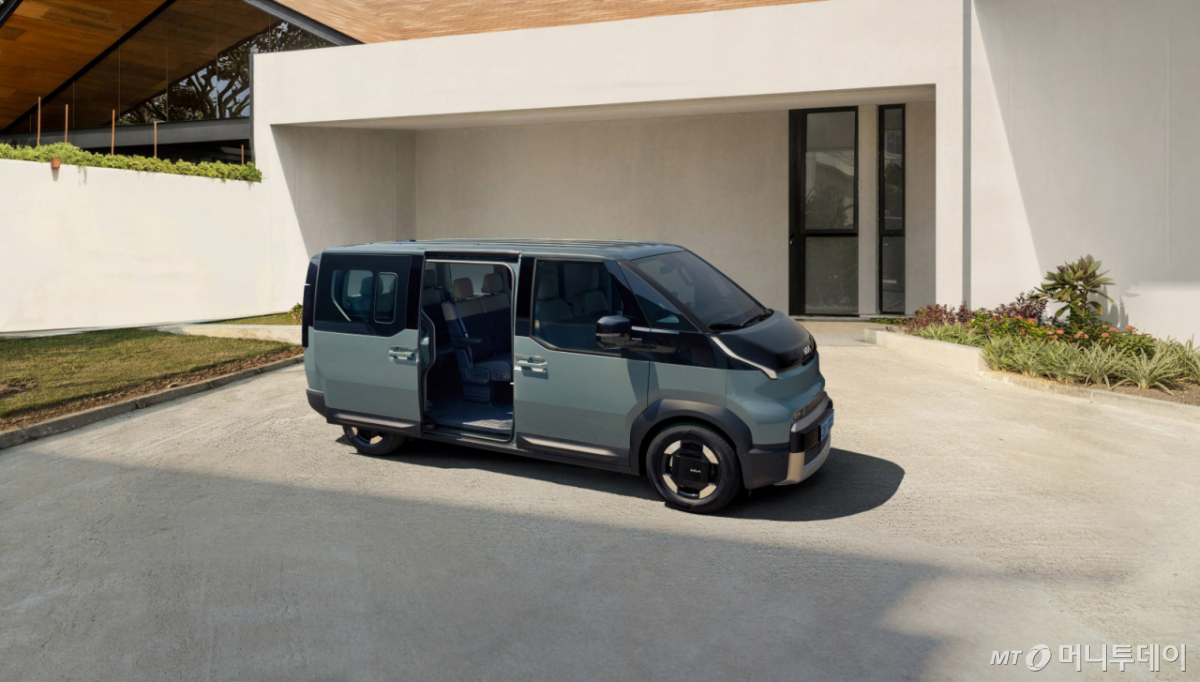
Kia is partnering with Jeonnam-Gwangju City to build a future mobility ecosystem utilizing Purpose-Built Vehicles(PBV).
On Friday, Kia signed a "Memorandum of Understanding for Building a Future Mobility Industry Ecosystem Based on PBVs" at AutoLand Gwangju. The ceremony was attended by Song Ho-sung, CEO of Kia; Min Hyeong-bae, mayor of the Integrated Special City of Jeonnam-Gwangju; Lee Geun-bae, president of Chonnam National University; and Im Ki-cheol, president of the Gwangju Institute of Science and Technology (GIST).
The goal is to lay the foundation for the growth of the regional future vehicle industry through collaboration on technology demonstration and commercialization of future mobility using PBVs.
Specifically, the parties will explore cooperation in areas such as: developing dedicated vehicles for Demand Responsive Transport (DRT) based on PBVs; demonstrating PBV shuttle services integrated with autonomous driving technology; demonstrating remote driving technology based on the PV5 WAV to improve mobility convenience for people with disabilities; and demonstrating Easy Swap technology that allows vehicle usage to be converted according to purposes such as logistics and passenger transport. Additionally, they will formulate cooperation plans to address the climate crisis and promote renewable energy.
Kia expects this agreement to strengthen the regional PBV industry foundation. Furthermore, it anticipates that the development and expansion of diverse future mobility services will provide a new growth driver for the regional future vehicle industry.
Meanwhile, Kia plans to invest approximately 3 trillion won in the transition to future vehicles centered on AutoLand Gwangju by 2029. Through this investment, the company aims to build a production system based on future innovative manufacturing technologies and expand autonomous driving technology demonstrations and the production of electrified vehicles.
Song said, "This agreement will serve as an opportunity to promote the development and commercialization of PBV-based future mobility technologies." He added, "We will contribute to the Integrated Special City of Jeonnam-Gwangju emerging as a representative center for the future mobility industry in South Korea through the establishment of a future vehicle production system and the expansion of PBV business."
Kia is increasing sales of its first dedicated PBV, the 'PV5,' and plans to launch the large model 'PV7' next year.

 in INDUSTRY
