

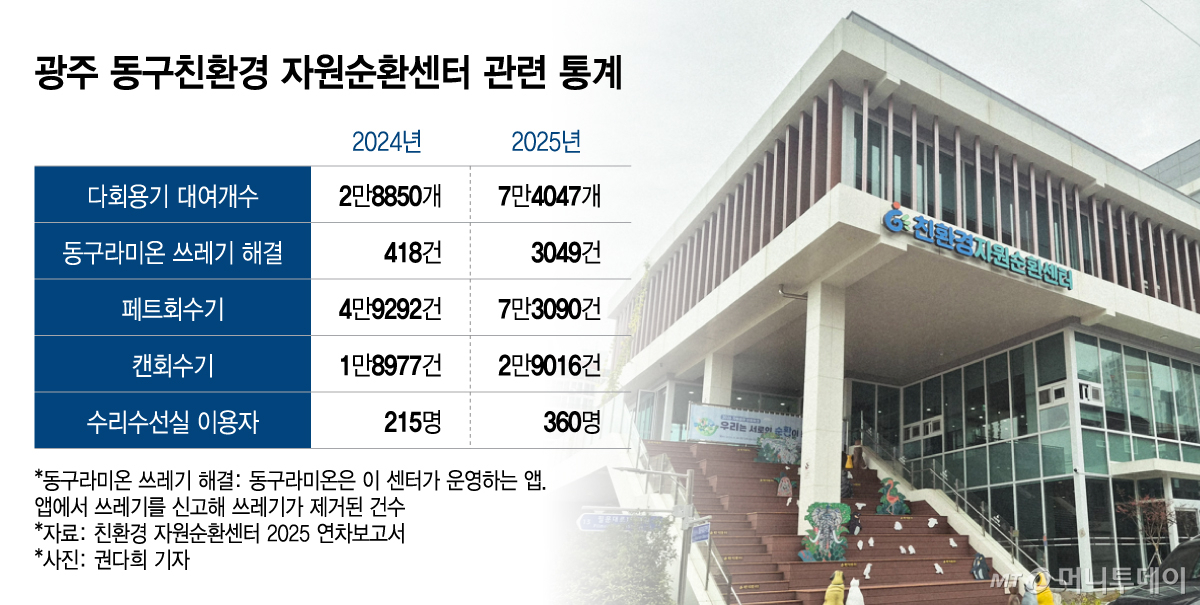
Sansu-dong, East District, Jeonnam-Gwangju Integrated Metropolitan City. Following an alley in the old city center, with low-rise single-family homes clustered against a backdrop of high-rise apartment complexes, a three-story building bearing the sign for the Eco-Friendly Resource Circulation Center (hereinafter "the Center") came into view.
When visited on the 4th, the Center housed facilities designed to help residents reduce waste in their daily lives, ranging from a repair and mending room to a space for borrowing tableware. The Center was established as part of the Ministry of Environment's "Smart Green City" project and opened in March 2024. It is operated on a commissioned basis by the private institution Gwangju Citizens' Environmental Research Institute using East District budget funds.
The primary goal of operations is to enable residents to reduce waste in their daily lives. Center Director Lee Kyung-hee stated, "I believe all citizens agree that something must be done to slow climate change, but putting this into practice in everyday life is not easy." She added, "Our basic goal is to find ways together to make waste reduction and resource reuse, which anyone can do, part of daily life."
Repairing for use, borrowing for use… A resource circulation hub within residential areas
The reason for establishing a base in an area densely populated with single-family homes in the old city center is also closely tied to this goal. The intent is to provide space and services in residential areas where it is difficult to establish common waste separation facilities and management personnel, as would be found in apartment complexes, thereby creating conditions for residents to practice resource circulation.
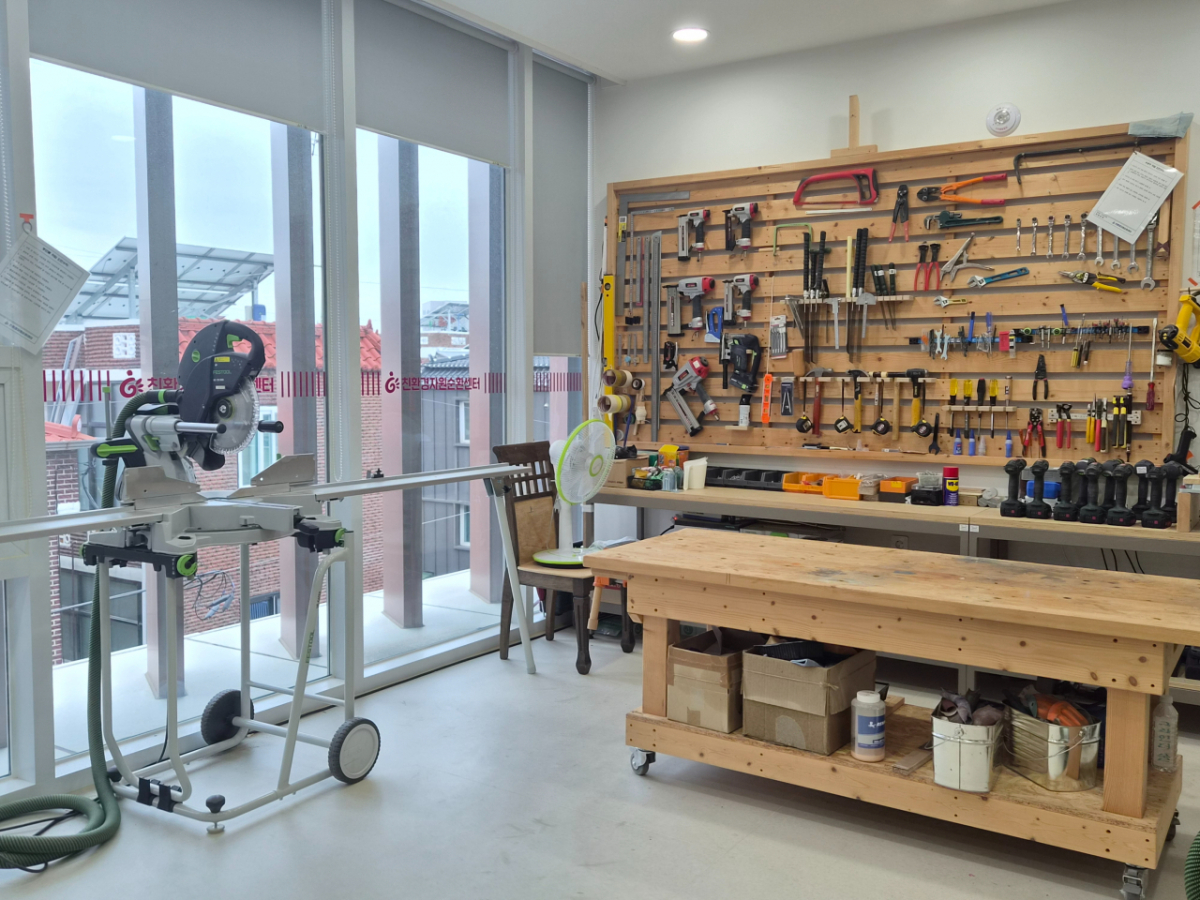
The core space of the Center is the repair and mending room on the third floor. Equipped with sewing machines and woodworking tools, it helps residents mend clothes, furniture, umbrellas, and other items. The curriculum ranges from lectures on learning how to use tools and attempting repairs oneself to home renovation education. This space was originally planned with "upcycling"—transforming waste materials into new works—as its theme, but the direction was changed based on the judgment that it was more necessary for residents to learn skills in daily life to keep items in use longer than to engage in creative activities.
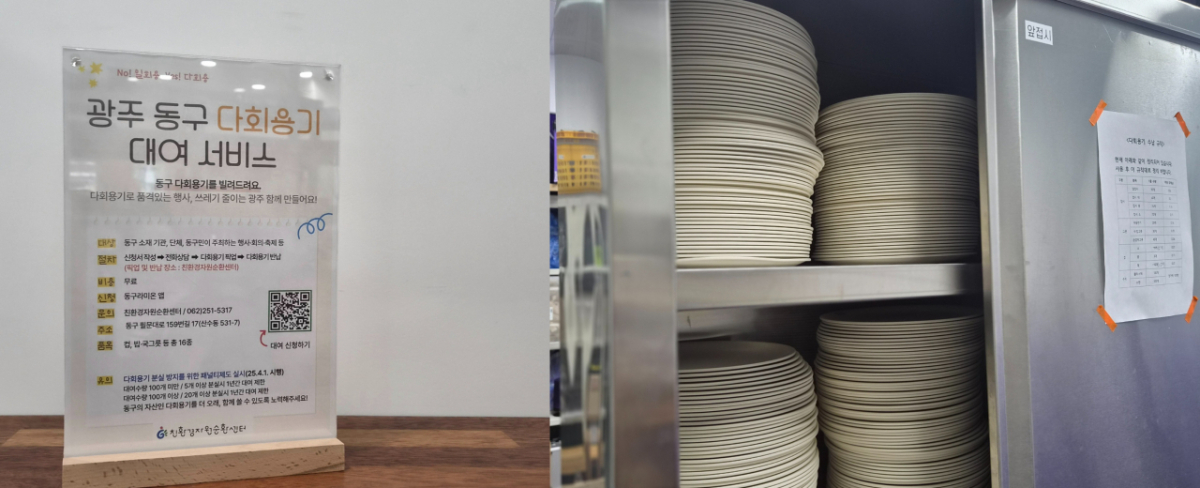
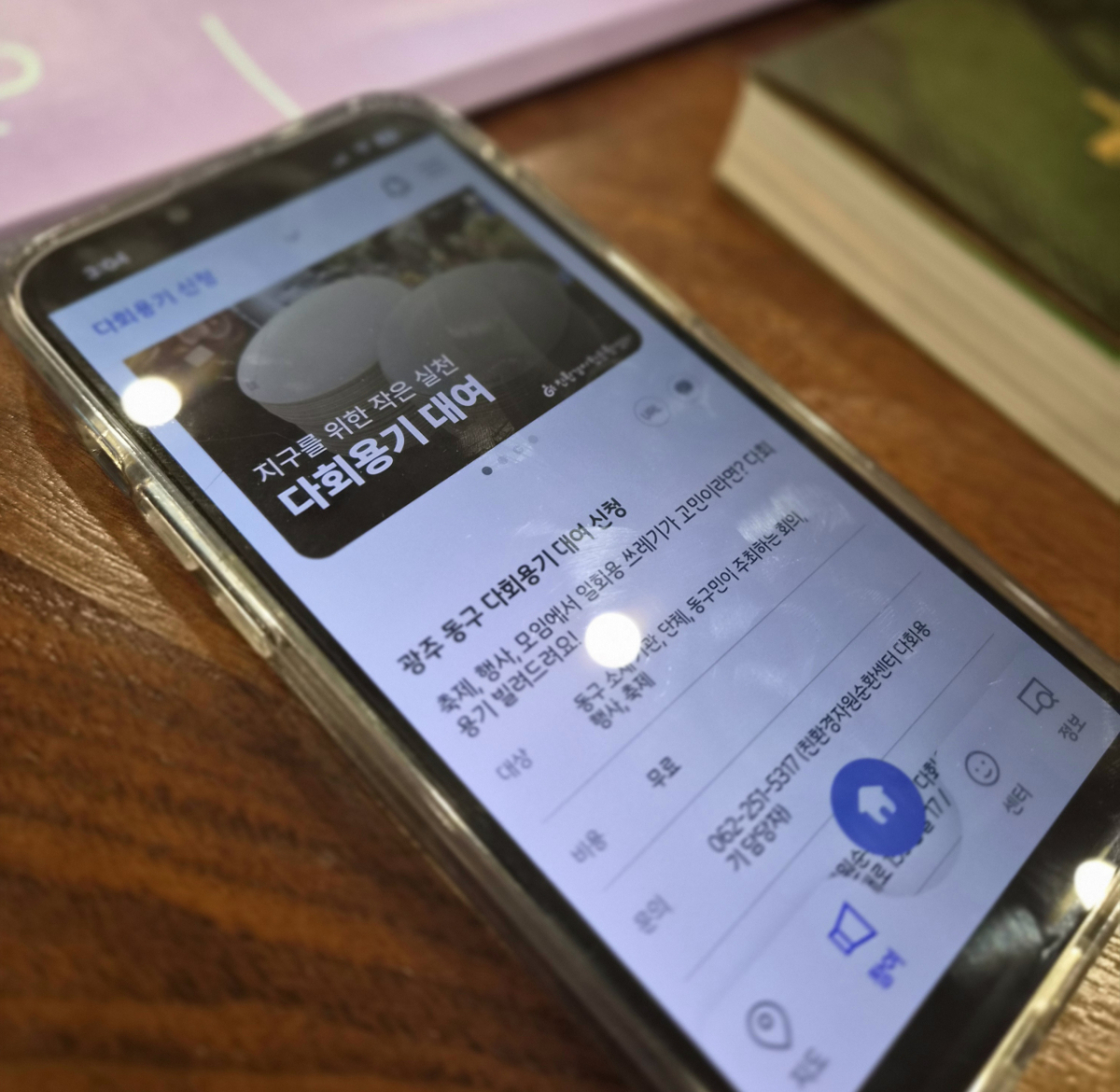
Life-oriented programs have yielded results. The rental of reusable containers, initiated to reduce the use of disposable tableware, is a prime example. Residents of East District can apply to the Center to borrow reusable containers. They borrow them for local festivals, events at religious facilities, and family gatherings. Last year, the total number of reusable containers lent out by the Center reached 70,404.
For activities that are difficult for individuals to undertake alone, a "platform" was created. A representative example is the activity where senior employment participants visit neighborhood cafes to collect milk cartons separately. Last year, 99 senior resource circulation activists, together with 183 nearby cafes, collected 7.17 tons of paper cartons. The paper cartons, collected separately from regular paper, pass through a sorting facility before being sent to recycling companies. This connects residents' employment opportunities with shops' waste separation and recycling efforts.
Residents picking up PET bottles while walking… Changed waste disposal habits
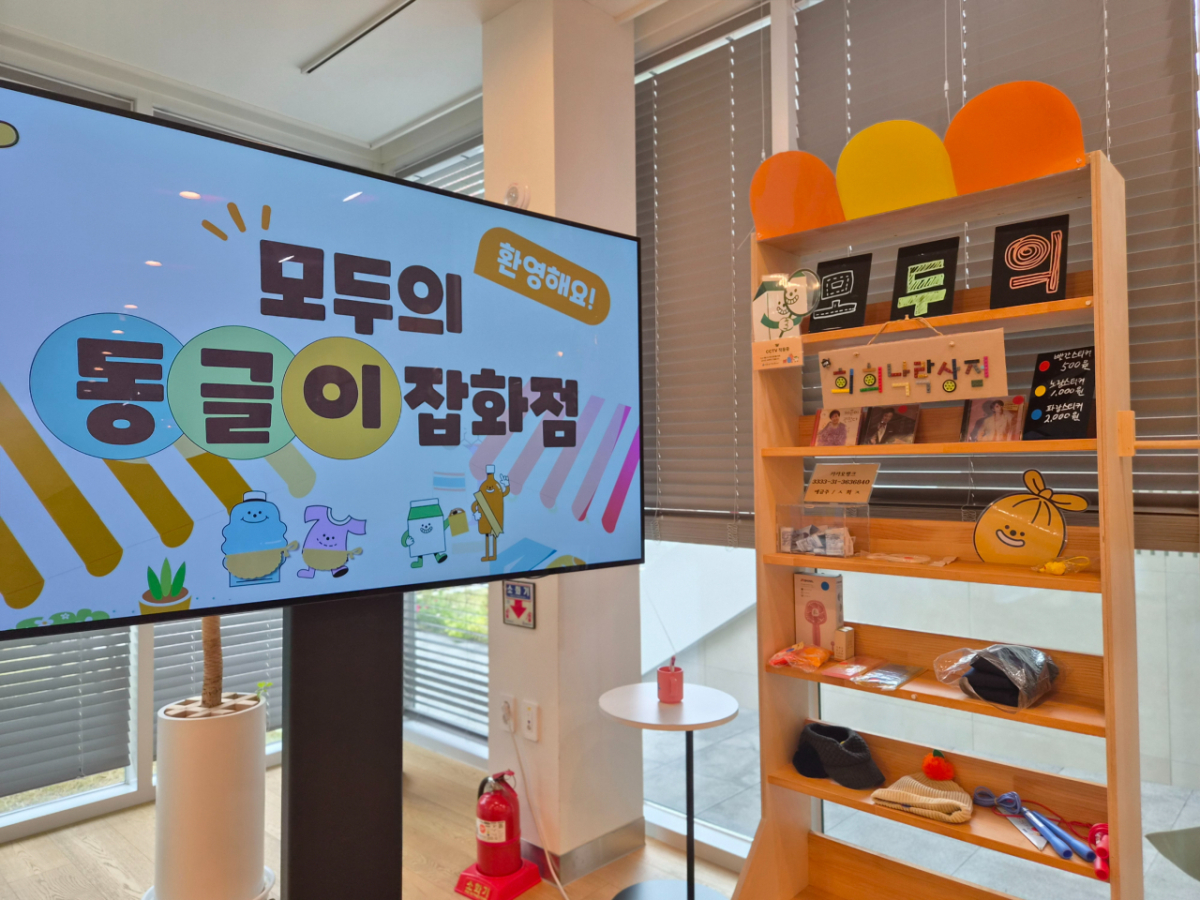
Since the establishment of the Center, changes have gradually emerged in residents' perspectives and habits. The "Donggurami Store," which awards points by item for bringing recyclables to the Center, served as a catalyst. With such a hub in place, it has become frequent for residents to pick up PET bottles and cans from the roadside while walking and bring them to the Center.
Practice has extended online as well. Through the app "Donggurami On," created by the Center, users can verify tumbler usage, report locations with accumulated waste or record after cleaning it themselves. They can also find repair and mending shops in their neighborhood. It has become a channel for recording daily-life practices and obtaining necessary information.
The East District's waste reduction policy, accelerated by the establishment and activities of the Eco-Friendly Resource Circulation Center, has shown tangible results. According to East District, last year, the total volume of pay-as-you-throw waste generated in the area decreased by 10.3% compared to 2019, with per capita generation down 17.8% and per-household generation down 23.9%. Food waste also saw a decrease, with total volume down 9.6%, per capita generation down 17.1%, and per-household generation down 23.3%. Conversely, the amount of recyclables generated increased by 110.4% in total district volume and by 78.4% on a per-household basis.
Connecting those interested or practicing… Culture also changing
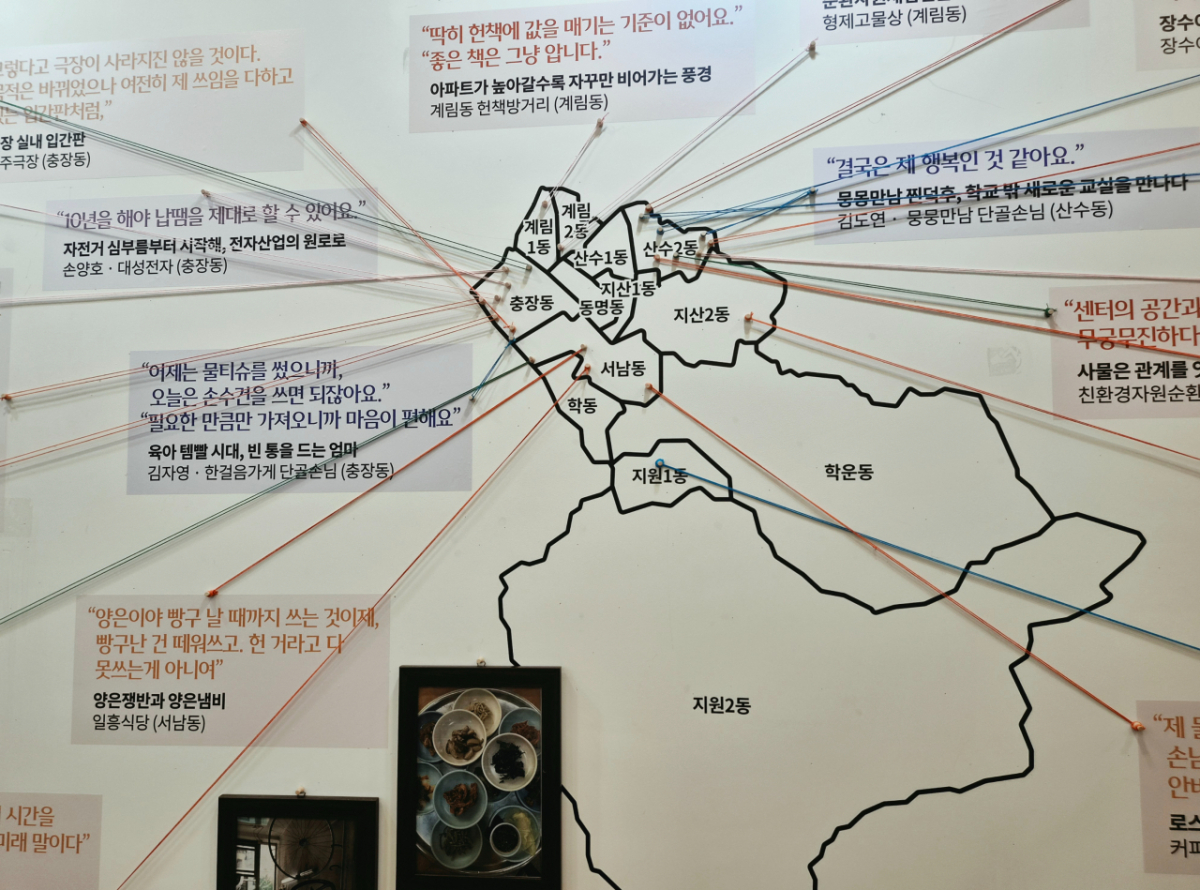
Another role the Center values highly is connecting people. This is also why they compiled stories from residents who have quietly practiced resource circulation in the region into a book. It includes stories such as that of a Chinese restaurant owner who insists on using reusable containers instead of disposables, despite the inconvenience of having to collect the dishes again after delivery.
Clubs themed around repair and mending, paper carton separation, and how to use boro (traditional Korean wrapping cloth) share the same purpose. There has also been a change where neighborhood elders who initially viewed Center events as someone else's business have started coming to watch environmental films. Director Lee stated, "There are times when I feel that my practice alone is too insignificant, even though we practice quietly without anyone acknowledging it." She added, "We aim to recognize the value of those activities and connect people to provide the strength to continue."
Systems to support practice are also being established. The "Ordinance on Support for Repair and Mending of Household Goods," which provides grounds for covering residents' repair and mending costs and supporting local repair businesses, passed the plenary session of the East District Council on the 3rd. The main points include paying all or part of residents' repair costs within budget limits and supporting businesses with equipment and facility improvements and education. This connects the culture of repairing items for continued use with sustaining neighborhood commercial districts and artisan skills.
Director Lee emphasized that to create a culture where people do not easily discard items, central government-level policies must support the efforts of citizens and local governments. She pointed out, "Citizens use shopping bags instead of plastic bags, but disposable plastic products are still readily available in their surroundings." She continued, "It is necessary to establish regulations along with incentives so that national policies can strongly support citizens' efforts." She added, "Since industrial transition is also required, supporting this is essential for overall change to occur."

 in INDUSTRY


