

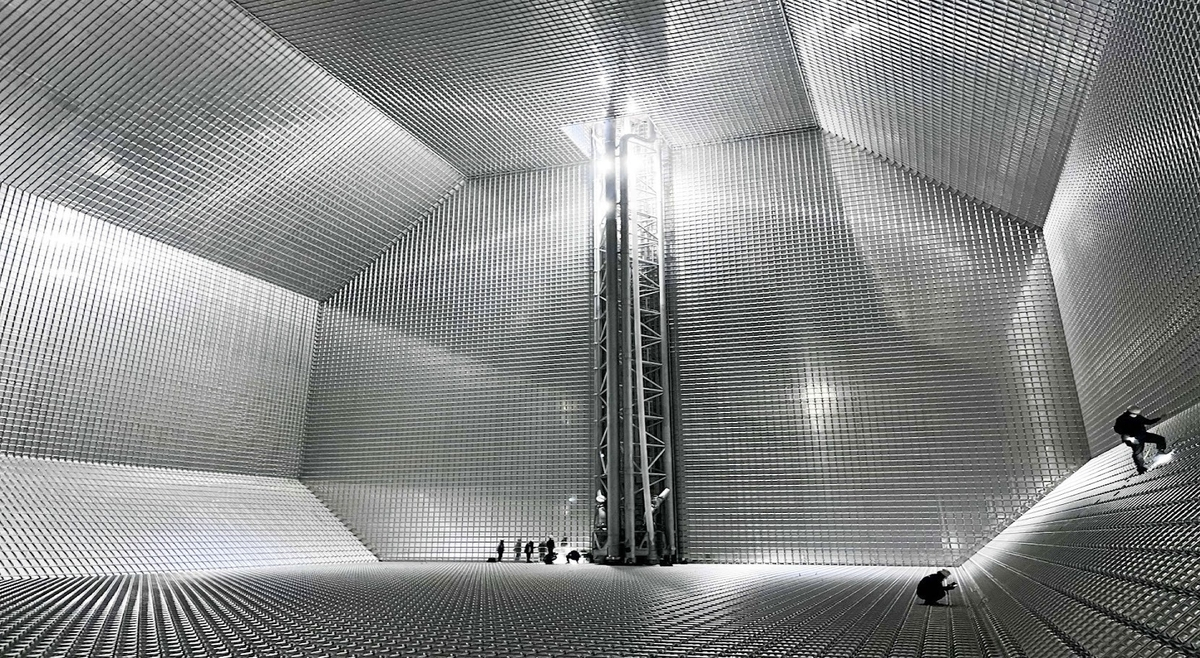
At the Ulsan shipyard of HD Hyundai Heavy Industries on the 12th. Boarding an LNG carrier under construction and entering the cargo hold, silver metal plates were seen densely lined along the high walls. The surface of the metal plates featured wrinkles at regular intervals, and steel work platforms were installed across nine levels inside. A single level of the platform reached a height of approximately 3 meters. This is the core facility of the ship designed to store LNG in an ultra-low temperature state of minus 163 degrees Celsius.
The LNG carrier unveiled by HD Hyundai Heavy Industries on that day had completed its launching in July and was undergoing final processes at the quay. The insulation work for the cargo hold was already finished, and after the internal work platforms are dismantled over several dozen days, this vast space surrounded by silver metal plates is scheduled to be delivered to the shipping company after sea trials and other procedures.
The silver metal plates lining the interior of the cargo hold are membrane sheets made of stainless steel with a thickness of 1.2 millimeters. Approximately 11,000 sheets, each measuring 3 meters in width and 1 meter in length, are welded together to create the primary barrier that LNG directly contacts. The total welding length reaches approximately 60 kilometers. The wrinkles in the metal plates are a structural feature designed to accommodate temperature changes occurring during the loading and unloading of LNG at minus 163 degrees Celsius.
The primary barrier is not the end of it. Behind the primary barrier, three layers of insulation material, including thermal panels approximately 480 millimeters thick, are installed. This constitutes a secondary barrier that prevents ultra-low temperature liquid from directly contacting the ship’s hull steel plates in the event of an LNG leak caused by a defect in the primary barrier. It is designed to withstand LNG for up to 15 days.
HD Hyundai Heavy Industries is currently conducting such cargo hold work on multiple ships simultaneously. Each LNG carrier is equipped with four cargo holds, and the company has secured personnel capable of carrying out insulation work on 12 cargo holds, equivalent to a maximum of three ships, in parallel. The workforce dedicated to the two departments responsible for insulation work alone numbers approximately 2,000 people. Constructing a single LNG carrier takes a total of 26 months, comprising 12 months of design and 14 months of production.
HD Hyundai Heavy Industries has built 22 LNG carriers so far this year, recording its highest-ever performance. The company aims to maintain this trend going forward by leveraging its technological capabilities. Jeong Kang-wook, head of the LNG Construction Department at HD Hyundai Heavy Industries, stated, "How quickly we can empty the dock and start constructing the next ship determines our annual construction volume," adding, "The method of assembling the hull in the dock and then moving it to the quay for cargo hold insulation work is directly linked to the shipyard's production capacity."

 in INDUSTRY
