

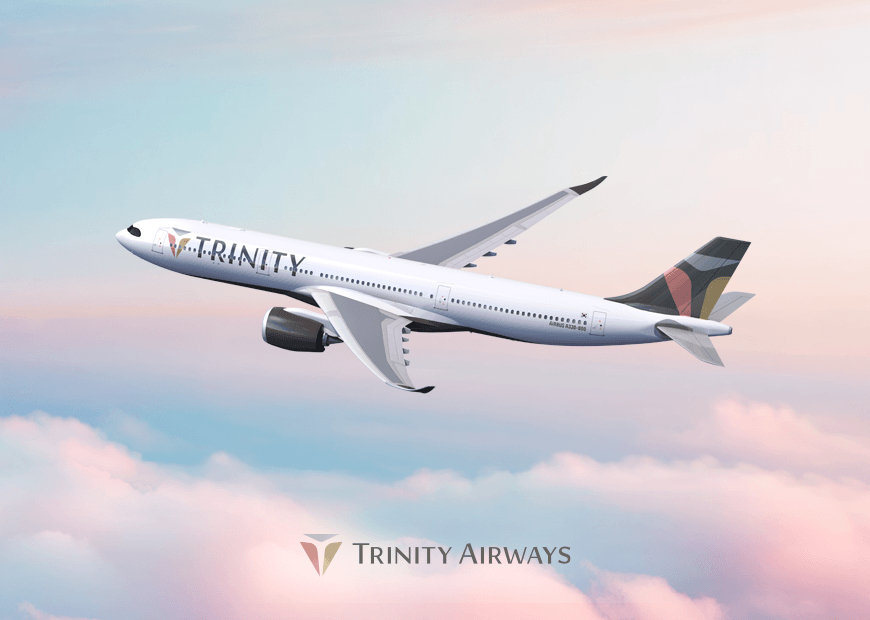
Trinity Air is continuing its performance growth in the first year of its rebranding while accelerating the expansion of long-haul routes and its fleet. The company plans to broaden its growth foundation through the expansion of medium- and long-haul routes, the introduction of next-generation aircraft, and a Strategy for Selective Service Carriers (SSC).
According to the Financial Supervisory Service's electronic disclosure system on the 20th, Trinity Air's standalone revenue from January to September this year was 1.6156 trillion won, a 27% increase compared to the same period last year. Cargo transport revenue for the same period was 68.1 billion won, up 53%.
Previously, Trinity Air began its first flight under its new name on September 10. Since then, it has completed obtaining operating approvals from aviation authorities in 21 countries and changing corporate registrations, including legal entity names, at 41 overseas branches.
The route network has also expanded. This year, the airline launched new routes for Busan-Hong Kong, Busan-Kaohsiung, Busan-Tokyo Narita, and Incheon-Jakarta. It is scheduled to begin operating the Incheon-Kobe and Incheon-Nagoya routes in December.
In long-haul markets such as Europe and the Americas, it is building its operational base. Since joining the group, it has expanded its route portfolio by operating both medium- and long-haul routes alongside short-haul routes.
Regarding the fleet, the introduction of B737-8 aircraft has been expanded. As of November, there are 12 B737-8s out of a total of 51 aircraft. The company plans to increase the proportion of next-generation models on short-haul routes and sequentially introduce large aircraft with sufficient range and seat capacity for medium- and long-haul routes.
The SSC model is at the center of its service strategy. The strategy involves providing selective services according to route characteristics and travel purposes, thereby offering both reasonable fares and differentiated services.
In safety and maintenance, the company has moved to expand its own infrastructure. It is cultivating specialized personnel through its in-house aviation training center and is promoting the construction of its own maintenance facility at the Incheon International Airport Advanced Complex Aviation Park.
Organizational culture is also showing changes since the rebranding. The company operates from the new Seoul Magok headquarters, "Sonot Trinity Commons," working alongside group affiliates, and implements work systems such as casual dress code, staggered commuting hours, and "Rest Days."
The compliance rate for core corporate governance indicators increased from 20% in 2023 to 47% in 2024, and further to 60% in 2025. The company is also increasing the recruitment of specialized personnel across all fields, including operations, cabin crew, maintenance, and general staff.
A Trinity Air official stated, "This rebranding is a turning point that achieves qualitative leaps beyond external growth," adding, "We plan to enhance competitiveness by prioritizing safe operations and combining customized services based on the SSC strategy with the synergies of the Sonot Trinity Group."

 in INDUSTRY
