

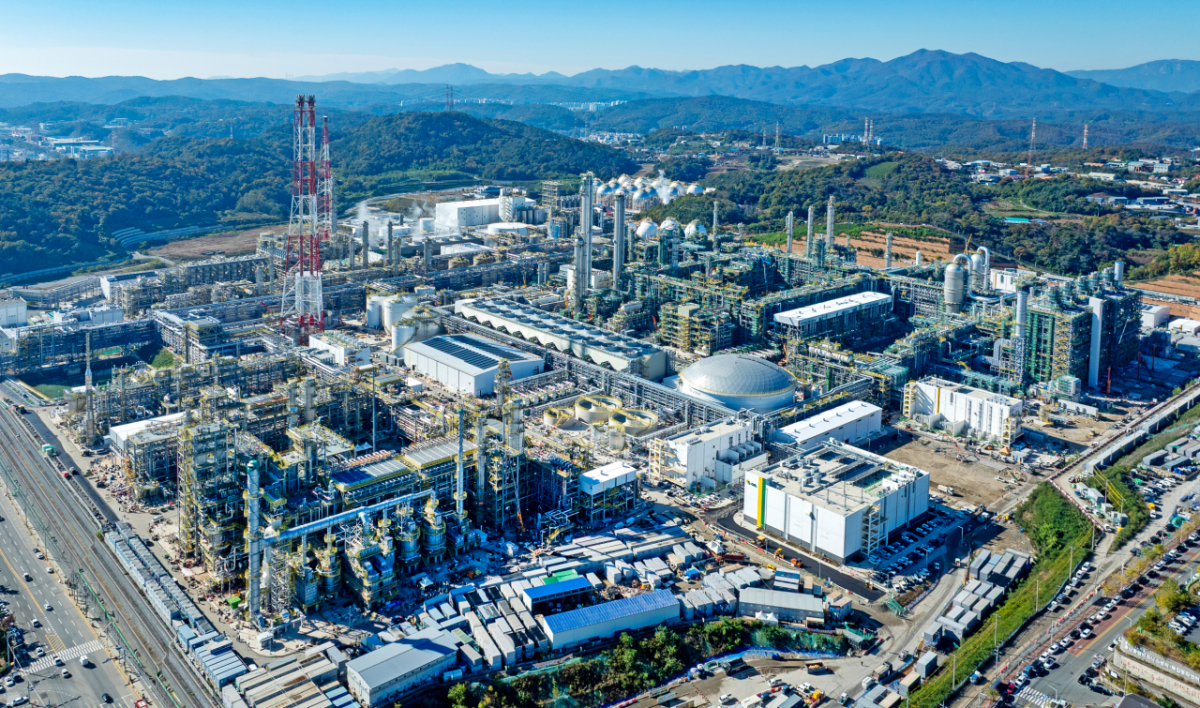
S-OIL has completed the Shaheen Project, an integrated refining and petrochemical facility in which it invested over 9 trillion won. The company's strategy is to expand its business structure, which had been focused on refining, into the petrochemical sector, thereby building an integrated value chain that produces everything from crude oil to high-value-added chemical products.
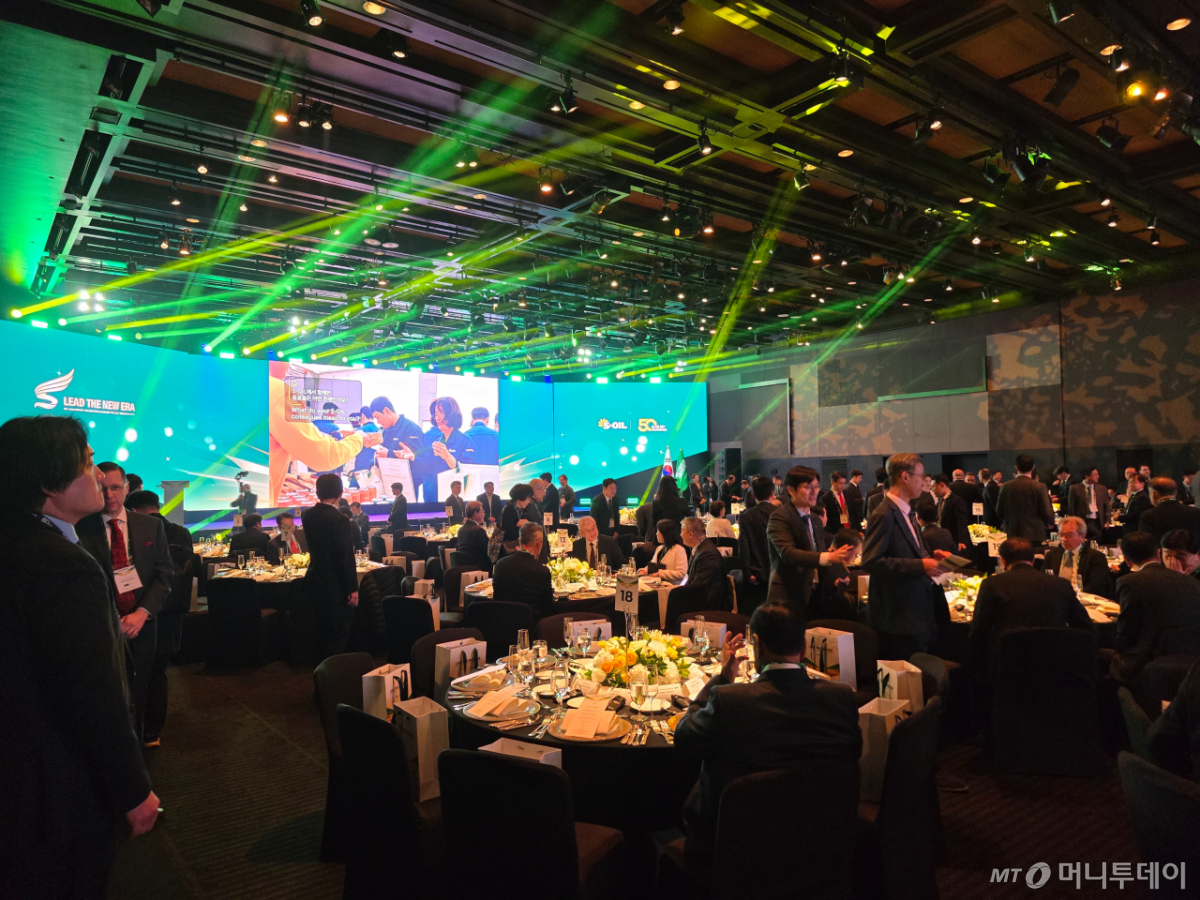
In this regard, S-OIL held a ceremony on the morning of the 25th at the Shilla Hotel in Jung-gu, Seoul, to mark the completion of the Shaheen Project and its 50th anniversary of founding.
Attendees included Kim Jung-kwan, Minister of Trade, Industry and Energy; Mohammed bin Abdulrahman Al-Ibrahim, Deputy Minister of Petroleum and Gas at Saudi Arabia's Ministry of Energy; Amin H. Nasser, President and Chief Executive Officer (CEO) of Aramco; and Mohammed Y. Al-Qahtani, President of Aramco Downstream, among other key figures from the governments and business sectors of both countries.
Over 500 people also attended, including Anwar Al-Hijazi, CEO of S-OIL, as well as domestic and international partners involved in the construction of the Shaheen Project, trading partners, and officials from the energy and chemical industries.
The importance of energy cooperation between Korea and Saudi Arabia was emphasized at the ceremony that day. In his congratulatory remarks, Minister Kim said, "Even amid the unstable energy supply chain caused by the Middle East war this year, Saudi Arabia has pledged to prioritize supplying crude oil and naphtha to Korea."
He added, "On behalf of the government of the Republic of Korea, I would like to express my deep gratitude once again for your unwavering friendship."
He continue, "The government of the Republic of Korea will support efforts to ensure that investment and cooperation between the two countries lead to greater achievements and results," encouraging attendees by saying, "I sincerely hope that the Shaheen Project will soar powerfully toward the Republic of Korea and the world."
The Saudi Arabian side also emphasized the continued expansion of energy cooperation between the two countries. Deputy Minister Al-Ibrahim explained, "The relationship between Saudi Arabia and Korea has grown on the foundation of mutual trust and economic cooperation, with energy always serving as a core pillar."
He added, "As the two countries strengthen cooperation in the automotive and construction materials industries, the role of petrochemical products is becoming increasingly significant."
Aramco, S-OIL's largest shareholder, emphasized that the Project will be a key initiative to elevate the strategic partnership between the two companies to the next level.
CEO Nasser said, "Ulsan, where the Shaheen Project is located, is the optimal place for Aramco to expand its presence in Asia, which will be the center of future energy demand growth." He added, "The Shaheen Project will support Korea's key industries, including electric vehicles, semiconductors, and digital infrastructure."
The Shaheen Project is a large-scale petrochemical venture that S-OIL has advanced with a total investment of 9.258 trillion won at the Ulsan Onsan National Industrial Complex.
Its core components include the construction of the world's largest steam cracker, TC2C (integrated refining and petrochemical facility), and polymer production facilities.
Among these, TC2C is a facility that directly converts crude oil into basic petrochemical feedstocks such as olefins and aromatics, bypassing the conventional refining processes of atmospheric and vacuum distillation towers.
It is a technology that integrates refining and petrochemical processes to increase the utilization rate of crude oil and enhance the efficiency and competitiveness of petrochemical feedstock production. S-OIL plans to begin commercial operations in the middle of next year after completing trial runs.
Once the Shaheen Project is fully operational, S-OIL will secure an additional annual production capacity of approximately 3.2 million tons of petrochemical products. Consequently, the production share of the petrochemical sector within its overall business is expected to more than double, expanding from the previous 12% to 25%.
S-OIL anticipates that by increasing the proportion of petrochemicals in its refining-centric business structure, it can diversify its revenue base and mitigate business risks associated with fluctuations in international oil prices and refining margins.
Meanwhile, the event also marked the 50th anniversary of S-OIL's founding alongside the completion of the Shaheen Project. The predecessor of S-OIL was Han-Es Oil (Korea-Iran Petroleum Co., Ltd.), established in 1976 with equal 50% investments from Ssangyong Cement, a subsidiary of the Ssangyong Group at the time, and the Iranian National Oil Company.
Subsequently, the company strengthened its growth foundation through Aramco's equity investment in Saudi Arabia in 1991, and established its current S-OIL structure after separating from the Ssangyong Group in 2000.

 in INDUSTRY

