

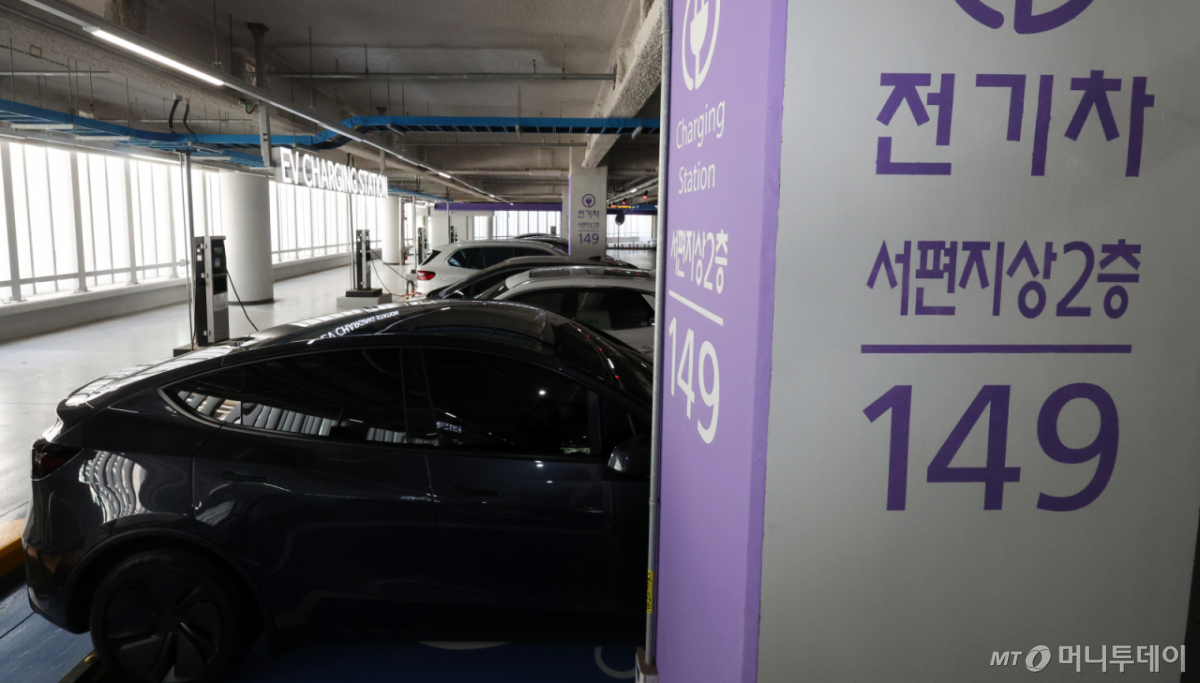
South Korea's auto industry, led by Hyundai Motor and Kia, is expected to face an even tougher year next year than this year. Uncertainty is mounting across both major export markets, including the United States and the European Union, and the domestic market.
Calls are growing for significantly stronger policy support, including tax credits, to ensure automobiles remain one of South Korea's key export industries.
According to the auto industry on Wednesday, the U.S., the largest export market for Hyundai Motor and Kia, is expected to see growth slow to the low 2% range next year, down from this year.
If investments in AI infrastructure, which drive U.S. economic growth, fall short of expectations, growth could drop to the 1% range.
Given that automobiles are cyclical consumer goods sensitive to economic changes, and that Hyundai Motor and Kia were able to preserve their pride this year despite poor conditions thanks to expanded sales in the U.S., such a situation is expected to be a major negative factor.
Concerns are also being raised that if the U.S. refuses a long-term extension of the United States-Mexico-Canada Agreement (USMCA) and decides to conduct annual reviews starting next year, cost burdens at Kia's Mexico plant could increase.
In the EU, where low growth in the low 1% range similar to this year is expected next year, 'HYBE hybrid vehicle import restrictions' are cited as the biggest risk factor.
The EU will apply national import quotas (allocation volumes) from next month until June 18 of next year. The volume of Korean-made HYBE hybrid vehicles that can be exported duty-free is limited to 67,924 units.
As exports of Korean-made vehicles to the EU decrease every year, the addition of this regulation makes a direct hit on domestic companies unavoidable.
Domestic conditions are also deteriorating. The Korean economy is expected to grow in the 3% range next year, but it is assessed that the atmosphere is by no means favorable once the 'semiconductor illusion' is removed.
In fact, private consumption decreased by 0.2% compared to the previous quarter in the third quarter. Amid this, the onslaught of Chinese electric vehicles is intensifying.
Following existing players BYD and Zeekr, Xpeng, Chery, and others are set to fully launch their offensive on the Korean market next year.
The industry also views the Korean auto industry as facing an unprecedented crisis. There is a consensus that the government must pursue more active policy support, including tax credits, if Korea is to continue cultivating automobiles as a 'star export item.'
This is the background for the attention being focused on the government's 'Plan to Strengthen Electric Vehicle Competitiveness,' to be announced on the 27th.
Professor Kim Pil-soo of the Department of Future Automotive Engineering at Daelim University said, "If tax credit support is provided for domestic electric vehicles, it will certainly help. However, since this cannot be a fundamental solution, both the government and companies need to change."

 in INDUSTRY
