

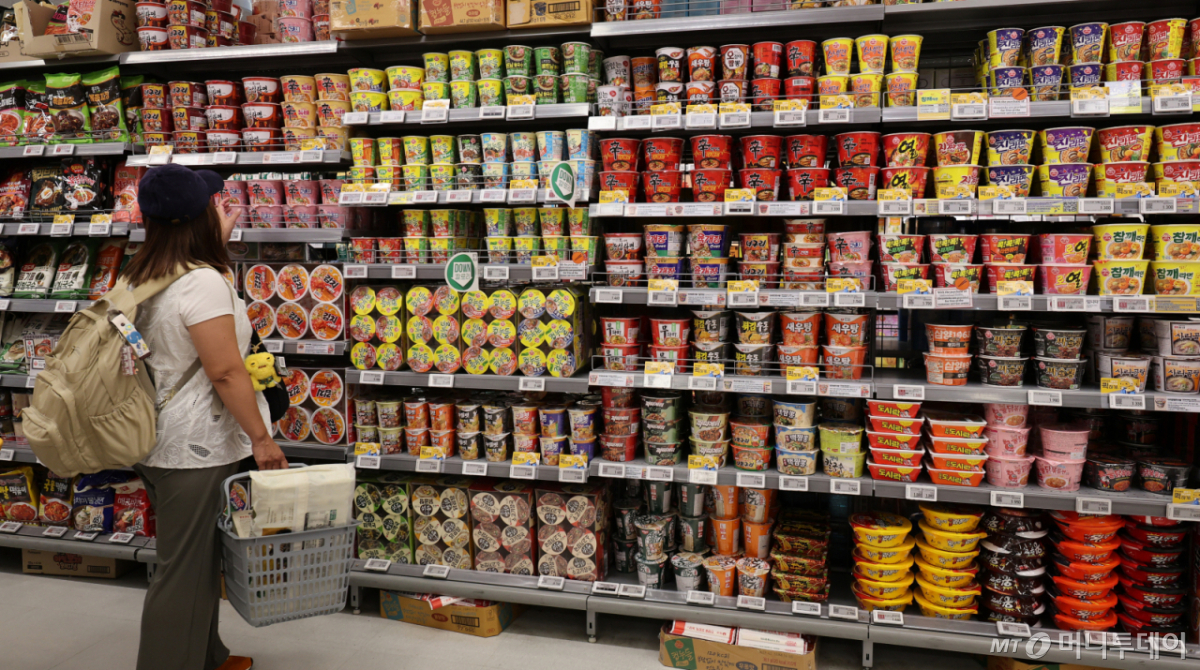
The food industry's pricing dilemma ahead of Chuseok is deepening. With cost burdens incurred to cope with various external variables such as the Middle East crisis in the first half of the year still lingering, international oil prices and raw material costs are rising again. While some product prices have been raised, pressure from rising production costs has intensified once more, and companies must also participate in holiday discount events in line with the government's price stability stance.
According to the food industry on the 10th, companies are responding that determining how much additional cost generated by recent increases in packaging materials and food raw material prices they can absorb has become a key variable in pricing decisions. Thanks to measures taken to cope with supply disruptions of raw materials triggered by the Middle East crisis, such as diversifying import sources, there is no need to worry about production itself as seen in the first half of the year; however, with external variable costs not fully offset, pressure for price hikes has intensified again.
Previously, major companies adjusted prices for some products recently due to the ripple effects of rising raw material costs. Nongshim raised the ex-factory prices of 18 cup noodle brands by an average of 6% starting from last month's first day. Ottogi increased prices for 21 rice-related items, including instant rice sold at convenience stores, by up to 29.4% starting from the first of this month. CJ CheilJedang also raised prices for 27 items, including Hanbap (instant rice), dumplings, and grilled fish, by an average of 8%. The price increases were applied at large supermarkets from July 30 and at convenience stores from August 1.
However, the current effect of price hikes is minimal. Twenty major food companies are offering discounts of up to 64% on 4,765 products in line with the government's Chuseok price stability measures. CJ CheilJedang offers discounts of 30-50% on instant rice, easy-to-cook meals, and side dishes at large supermarkets and e-commerce platforms. Ottogi sells bagged noodles and cup noodles at 10-40% lower prices and noodles such as udon and kalguksu at 30-50% lower prices at large supermarkets and other outlets. The aim is to reduce the burden on consumers during a period when holiday demand surges.
The real issue lies after Chuseok. Once discount events end, consumer purchase prices could rise even without additional price hikes; if prices are raised further to reflect accumulated cost burdens, the perceived impact of the increase on consumers will be even greater. From the industry's perspective, they must consider reducing costs while also addressing potential consumer backlash and the government's demand for price stability.
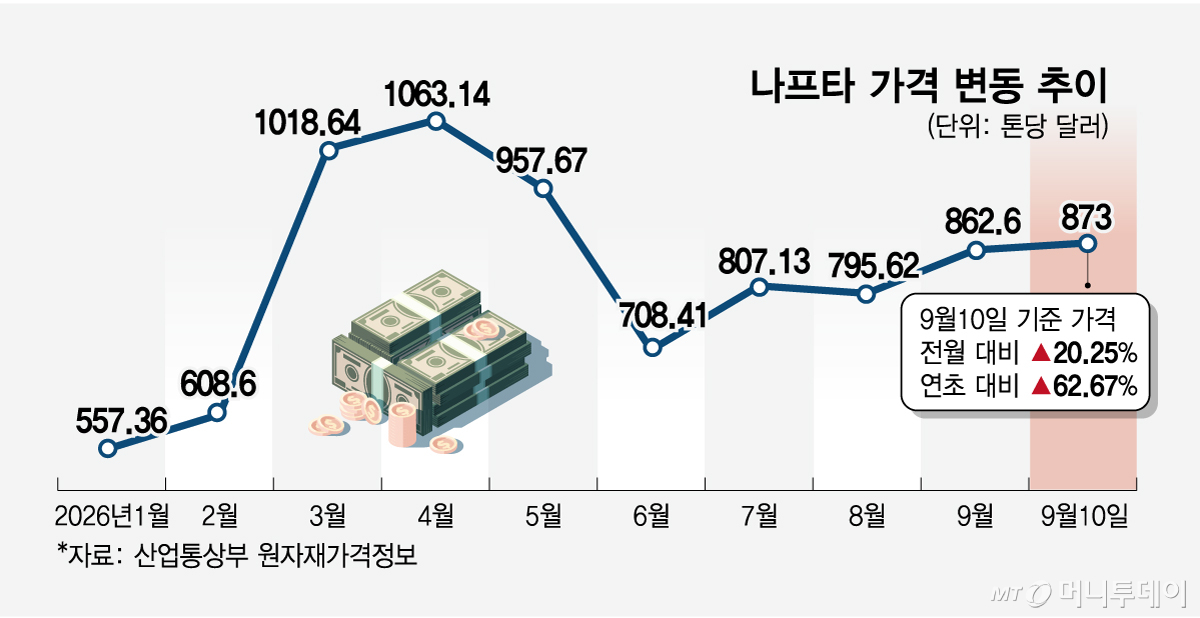
External conditions surrounding raw materials are becoming unstable again. According to the Ministry of Trade, Industry and Energy's Raw Material Price Information, as of the 10th, the spot price of naphtha reached $873 per ton, a 20.25% increase from the previous month and a 62.57% rise from the beginning of the year. Naphtha is a key raw material used to make instant noodle and snack packaging films and plastic containers. Aluminum, used for beverage cans and foils, also rose by 2.21% from the previous month to $3,352 per ton on the spot basis at the London Metal Exchange (LME) on the 9th. According to the UN Food and Agriculture Organization (FAO), international wheat prices last month rose 2.6% compared to the previous month and 15% compared to the same period last year, while the sugar price index increased by 11.9% from the previous month.
International oil prices have also surpassed $100 per barrel again. On the 9th (local time), November Brent crude futures traded at $101.21 per barrel on the London ICE Futures Exchange, closing up $3.29 (3.36%) from the previous session. Rising oil prices affect production costs such as packaging materials and finished product transportation.
A food industry official said, "Given that prices were recently adjusted, it will be difficult to immediately decide on further increases," adding, "However, the costs we have absorbed so far are significant, causing concern."

 in LIVING

