

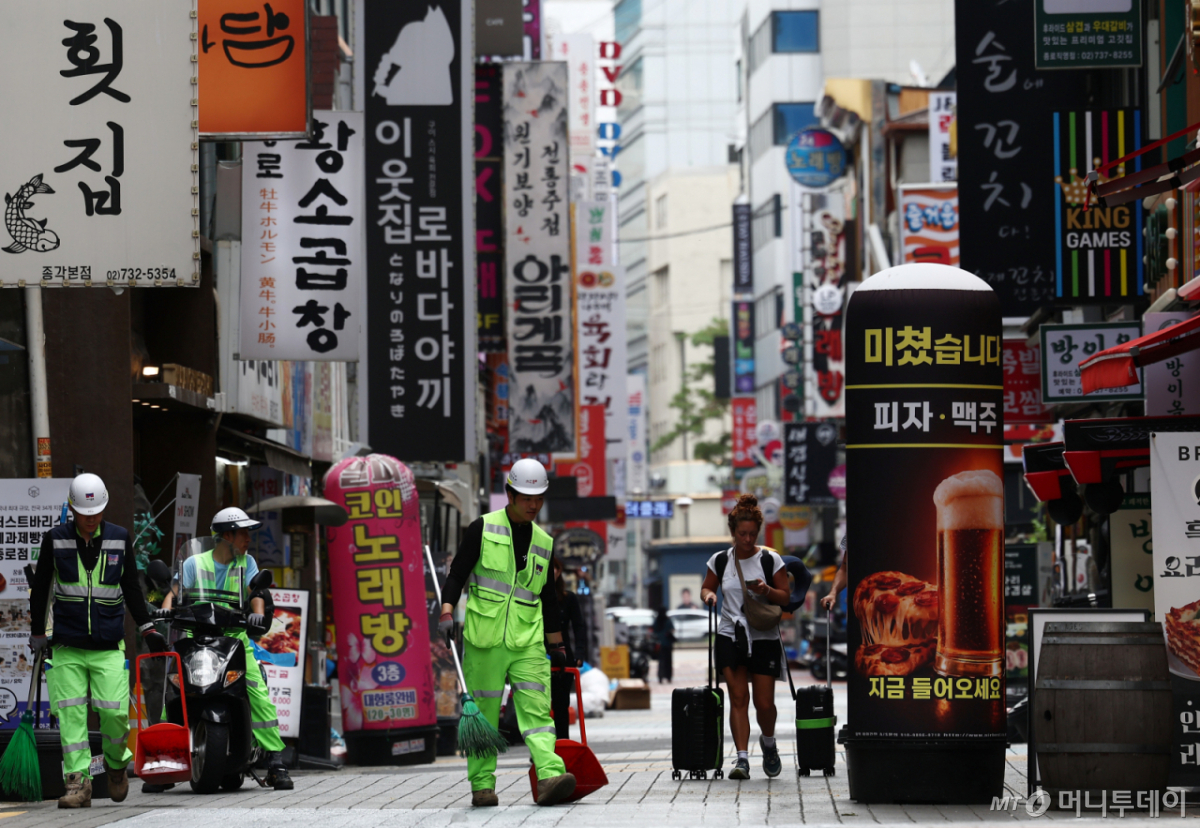
From solo drinking bars to stir-fried pork restaurants promoting low sugar content, brands targeting recent trends are newly entering the food service franchise market. They are differentiating themselves by not only featuring menus but also incorporating drinking styles and dining preferences onto their signboards.
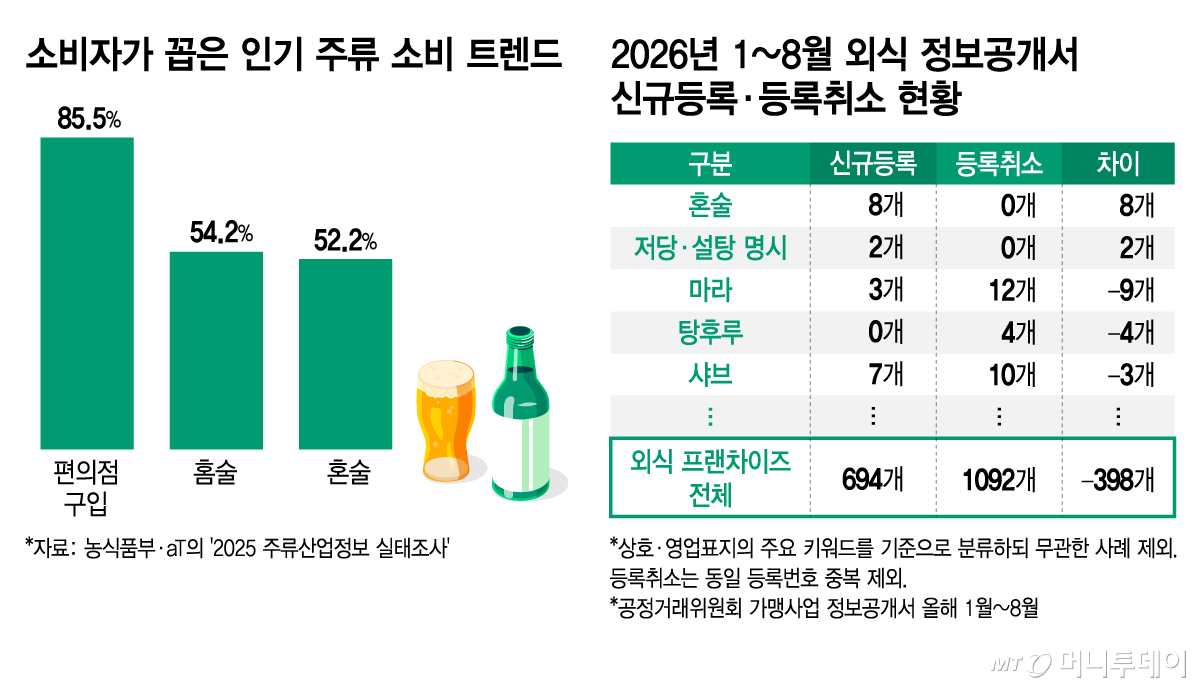
On the 14th, a comprehensive analysis by MoneyToday of the new registration list for public disclosure documents in the food service sector from January to August this year, which was made public on the Fair Trade Commission's franchise transaction website, revealed that there were 694 new registrations. This count is based on the number of franchises newly registered with the Korea Fair Trade Commission, not the number of store openings.
Among these, eight registrations included 'solo drinking' in their trade names or business signs (brand names). Brands promoting solo drinking appeared on the new registration list every month from February to August, excluding March. Following 'Free Will' and 'Solo Drinking Bar Godo' in February, 'Gyeon Solo Drinking Bar' was registered in April, 'Onae Solo Drinking' in May, and 'Today's Solo Drinking' in June. In July, 'Seoul Solo Drinking Bar Jeju Only Come' and 'Herz Solo Drinking Bar' joined, and in August, 'Doel-daero' also joined. Free Will and Doel-daero specified 'solo drinking' in their trade names instead of brand names.
Solo drinking is also a drinking method gaining attention even as domestic alcohol consumption declines recently. According to the Ministry of Agriculture, Food and Rural Affairs and Korea Agro-Fisheries & Food Trade Corporation (aT)'s '2025 Alcohol Industry Information Survey' on consumer perception of alcohol trends (multiple responses), 'purchasing at convenience stores' accounted for 85.5%, 'home drinking' (drinking at home) for 54.2%, and 'solo drinking' (drinking alone) for 52.2%.
Looking through the list, cases where 'Jeju' is also featured in trade names or brand names such as 'Free Will Jeju Solo Drinking Bar', 'Jeju Solo Drinking Bar Godo', and 'Doel-daero Rosé Alcohol Solo Drinking Bar' are noticeable. For example, 'Gyeon,' which started in Jeju, operates by combining solo drinking with a party atmosphere. It can be enjoyed both alone and with companions.
Among Korean cuisine brands registered during this period, those targeting the 'low sugar' trend are also noticeable. 'Vegetable meat stew is not guilty even if you are full,' 'Low-sugar stir-fried pork,' and 'Roshuk Jikwha Stir-fried Pork, Grilled Chicken - Sugar-free Meat Shop' made it onto the list. This reflects a tendency to consider health by featuring low-sugar ingredients in familiar menus like stir-fried pork, grilled chicken, and meat stew.
On the other hand, for brands related to mala, cancellations outnumbered new registrations. Among cases including 'mala' in business signs, excluding unrelated brands such as bakeries, there were 3 new registrations and 12 cancellations, meaning cancellations exceeded new registrations by 9. For brands featuring 'tanghulu,' there were no new registrations, only 4 cancellations. Brands including 'shabu' also had 7 new registrations and 10 cancellations, with cancellations exceeding new registrations by 3.
A franchise industry official interpreted this as "a relatively active entry of brands keeping pace with trends such as solo drinking and low sugar into the franchise market, even though cancellations outnumbered new registrations."
Meanwhile, for the same period, cancellations of food service sector public disclosure documents totaled 1,092, excluding duplicates of the same registration number, which was 398 more than new registrations. However, there are limitations in interpreting these cancellations as brand withdrawals or store closures. The data includes cases where information is modified after cancellation and re-registered, or existing registrations are consolidated due to business restructuring.

 in LIVING

