

As Indonesia's mandatory Halal certification approaches in one month, domestic food companies that have entered the Muslim market are accelerating efforts to secure certification and restructure their production systems. From product certification to local production, raw material sourcing, and logistics networks, they are busy transforming into a 'Halal-ready' structure to meet Halal standards.
According to the food industry on the 17th, Indonesia will apply mandatory Halal certification starting next month on the 18th for foods and beverages produced overseas and imported and distributed locally. Products made with non-Halal ingredients must clearly indicate this fact on the product label.
Halal certification verifies not only raw materials prohibited by Islamic law, such as pork and alcohol, but also small amounts of additives like flavorings and emulsifiers, along with production methods. It also requires a strict management system to prevent mixing with non-Halal products during production, storage, and transportation processes.
Paris Baguette has received Halal certification from Indonesia's Halal Product Assurance Organ (BPJPH) for all 23 of its local stores. From bread and cakes to beverages, the company applies Halal standards across all menus, covering raw material supply, production, and store operations. At the end of last year, it also completed construction of a Halal-certified production center in Johor, Malaysia, spanning 12,900 square meters.
Samlip Sejong Center received Halal certification for its flour production facilities in Korea. Samlip plans to increase its exports of flour and premixes from approximately 725 tons last year to 3,000 tons by 2027.
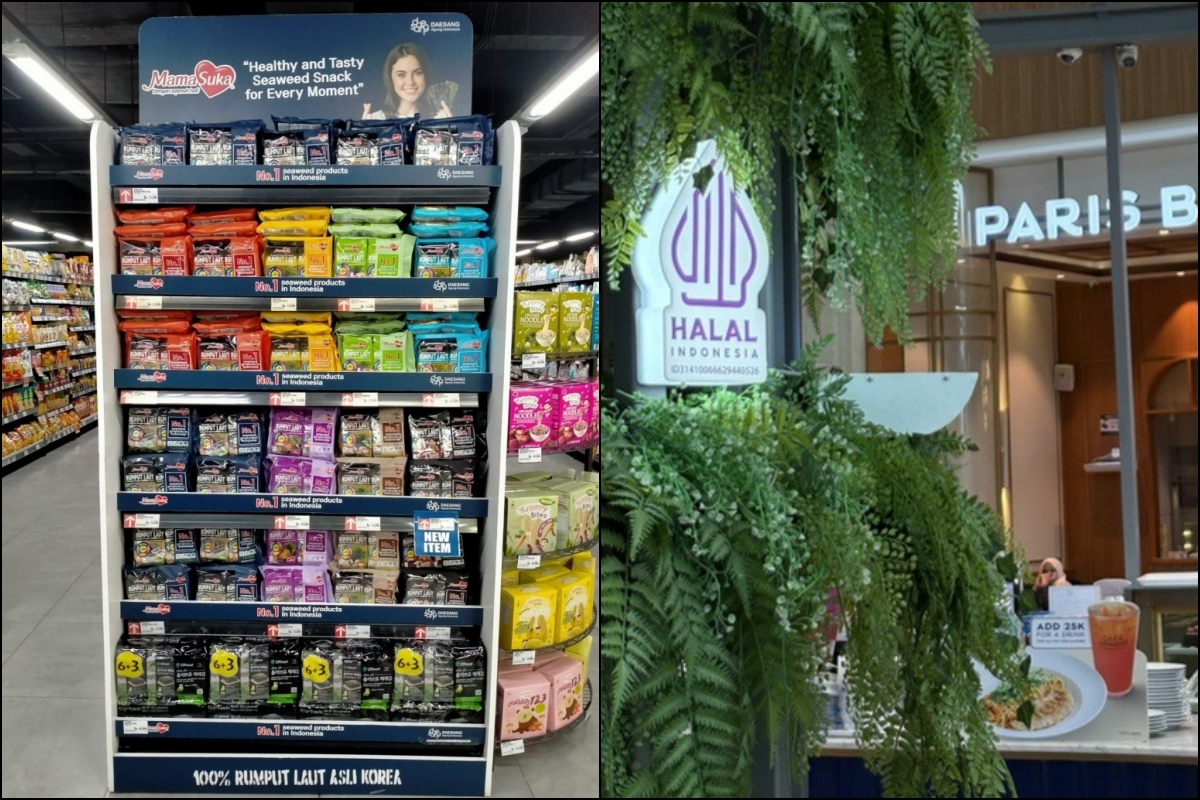
Daesung entered Indonesia in 1973 and quickly established local production and distribution networks. Through its local brand 'Mamasuka', it sells approximately 200 products including seaweed, ready-to-eat meals, sauces, dressings, and premixes, applying Halal certification to locally produced items.
Jung Kwan Jang plans to expand its Halal business experience gained in Malaysia to Indonesia. It is pursuing Halal certification for its blood sugar management brand 'Z-L Pro' and preparing dedicated products for Muslim consumers. Z-L Pro also plans to begin operations in Indonesia after obtaining Halal certification.
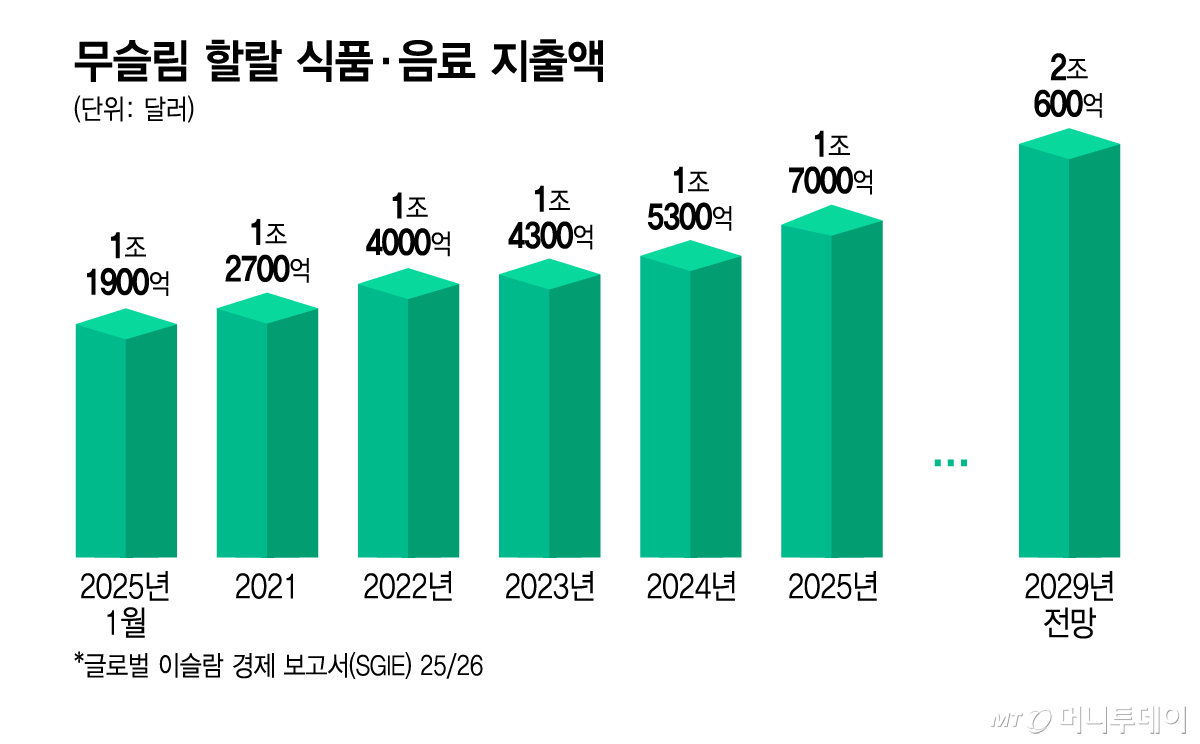
The reason domestic companies are rapidly restructuring their Halal certification systems is that Indonesia represents a massive market with a population of approximately 280 million people. It is also the world's largest Muslim food consumption market. According to DinarStandard, an Islamic economic research firm, global Muslim food and beverage expenditure reached approximately 1.7 trillion won last year and is projected to exceed 2 trillion won by 2029.
The number of Halal-certified products in Indonesia increased more than threefold from 3.49 million cases at the end of 2023 to 10.98 million cases at the end of last year, within just two years. From January to August this year, Korea's food exports to Indonesia reached $128.87 million, driven by the popularity of K-ramen, sauces, and kimchi, marking an approximately 8% increase compared to the same period last year.
However, concerns are raised that the Halal certification process could become a barrier to export for small and medium-sized food companies lacking dedicated personnel and local corporate entities. Companies must manage documentation for each raw material and additive, as well as production facilities, storage, and logistics processes. If raw materials or suppliers change, related documents must be re-verified.
The government is communicating with Indonesian authorities to reduce the burden on companies. The Ministry of Food and Drug Safety discussed improvement measures for the certification process with BPJPH and others in July. Agreements were reached to recognize domestic certified personnel who meet certain criteria as Halal managers and to exempt already-certified manufacturing plants from duplicate inspections.

 in LIVING

