

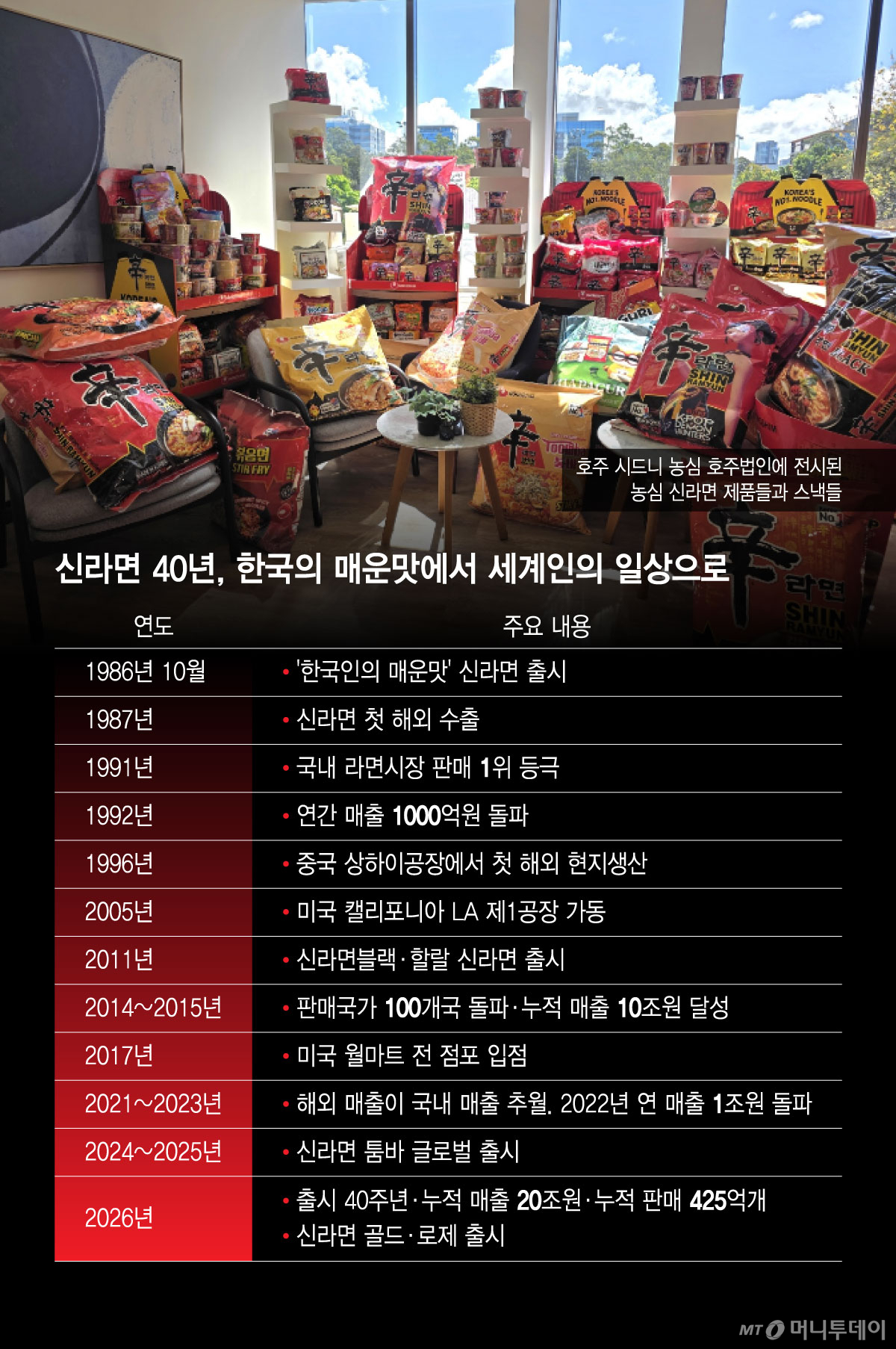
In October 1986, Shin Ramyun was launched, making even tough men cry. This year marks its 40th anniversary. Over the past four decades, cumulative sales have reached 2 trillion won, with sales volume reaching approximately 42.5 billion units. It has grown into a global ramen brand available in over 100 countries worldwide, earning about 40% of its total cumulative sales from overseas markets. Korea's spicy flavor has completely integrated into the daily lives of people around the world.
From the Asian corner to the 'main aisle'... Aiming for No. 1 in Australia
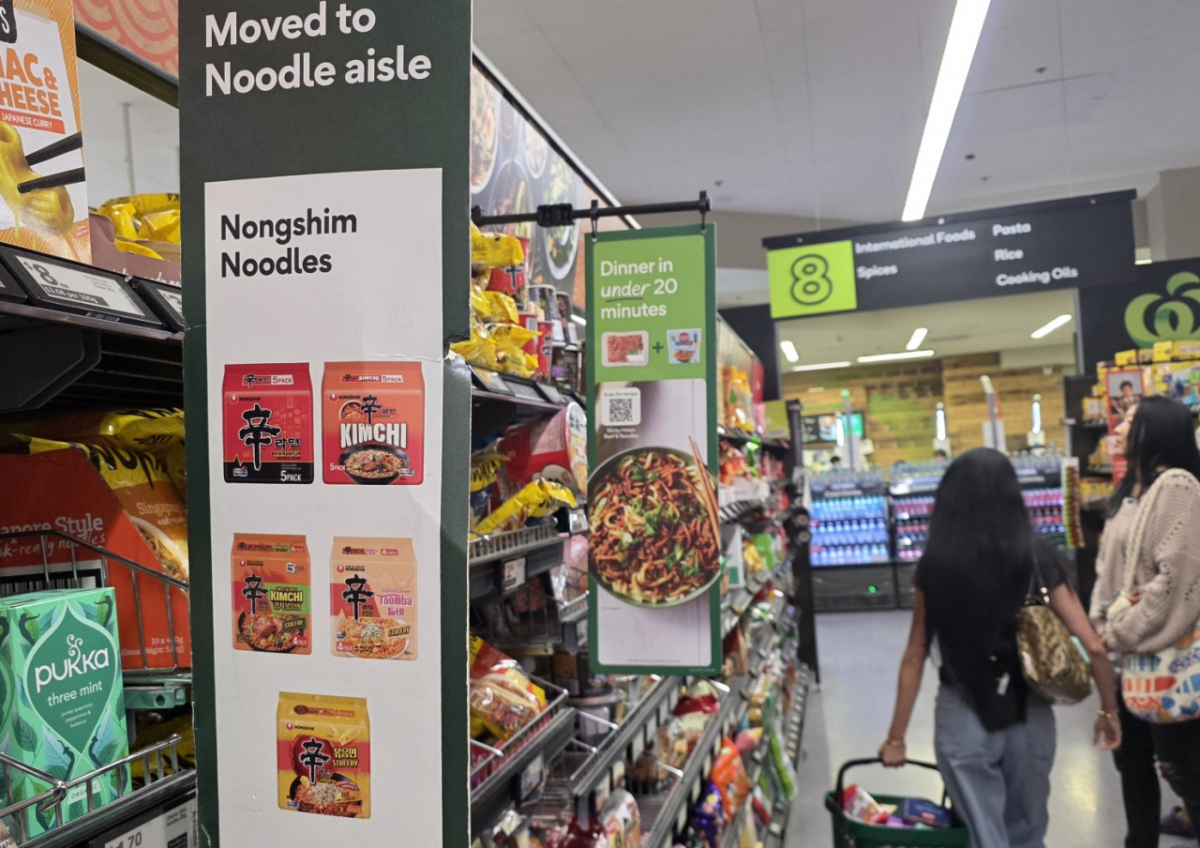
At a Woolworths store in Macquarie Centre, Sydney, Australia, on the 17th (local time), a sign reading 'Moved to Noodle aisle (We have moved to the noodle corner)' is displayed in the No. 8 International Food Corner. Along with the phrase 'Nongshim Noodles,' photos of five Nongshim ramen products, including Shin Ramyun, kimchi ramen, and Shin Ramyun Tumba, are posted. In reality, when visiting the main aisle, Nongshim ramen products occupy two shelves.
Woolworths is the No. 1 company in the Australian supermarket market. Nongshim is the first Korean ramen brand to enter the main aisle of Woolworths, moving beyond the Asian and international food corners. This signifies that its sales base has broadened enough to stand shoulder-to-shoulder with global noodle brands familiar to local consumers, rather than being a product primarily sought by expatriates and Asian consumers. Woolworths increases display space for well-selling products and removes underperforming ones from shelves based on weekly and store-specific sales data.
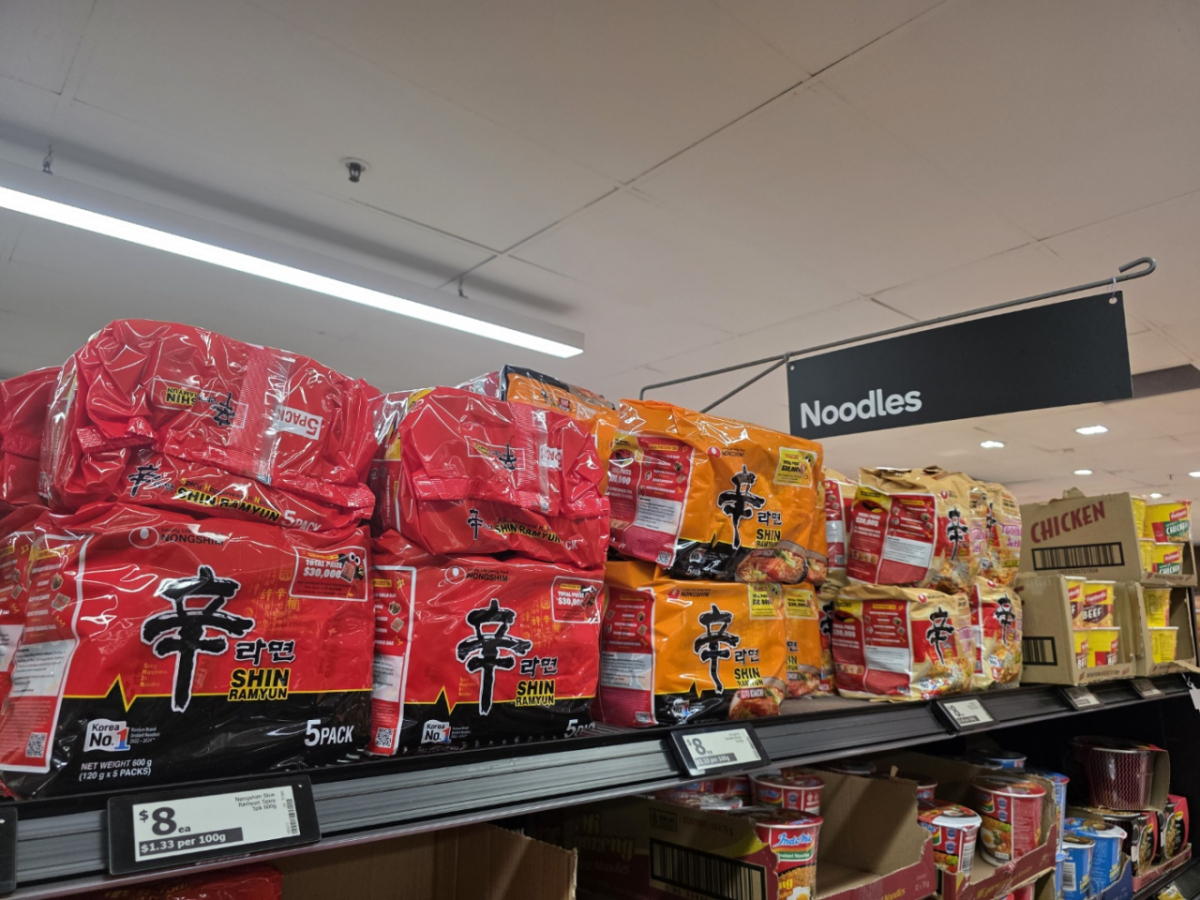
As sales performance accumulated centered on Shin Ramyun, exposure opportunities for Nongshim's other ramen and snack products also expanded. In Australia, Nongshim's SKU (number of products) increased from 19 in 2021 to 43 this year.
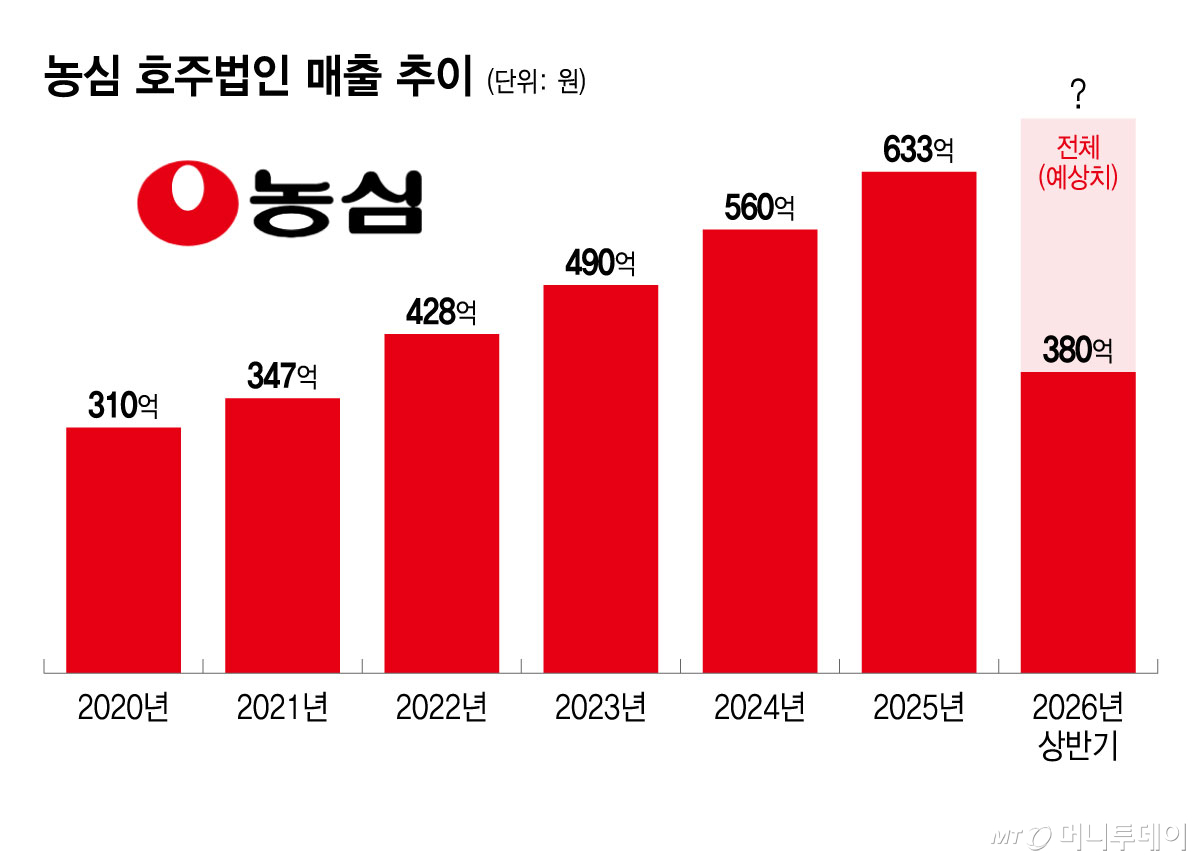
Nongshim rose to No. 2 in the Australian ramen market in 2023, overtaking IndoFood, and narrowed the gap with No. 1 Nestle to 3 percentage points (P) last year. In particular, creamy flavors such as Shin Ramyun Tumba gained popularity among non-Asian consumers, expanding the purchasing demographic to young locals aged 10 to 30. The Australian subsidiary's sales were 63.3 billion won last year, and first-half sales this year reached 38 billion won, a 25.9% increase from the same period last year.
Park Sung-jin, head of the Australian subsidiary, said, "Given the results at Woolworths, we aim to grow further in remaining distribution channels such as Coles and ALDI, with the goal of becoming No. 1 in the Australian ramen market within the next three to five years." He added, "Not only ramen, but also Nongshim snacks popular in Australia, such as shrimp chips and onion rings, will enter the top five."
500 units per minute... The U.S. Shin Ramyun factory that never stops
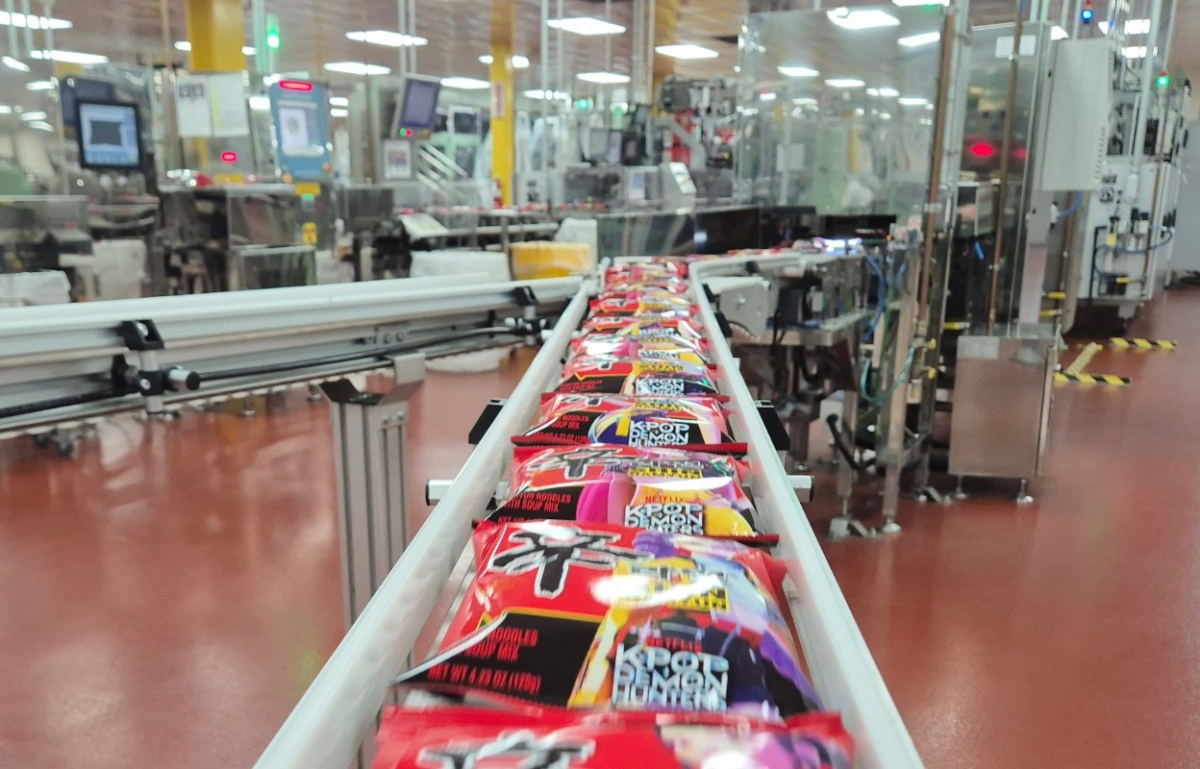
In Rancho Cucamonga, California, U.S., on the 21st (local time), Nongshim's No. 1 and No. 2 factories appeared against the backdrop of the San Antonio Mountains, east of Los Angeles. Shin Ramyun, which celebrated its 40th anniversary this year, is produced here and shipped to markets across North and Central America, including the United States, Canada, and Mexico.
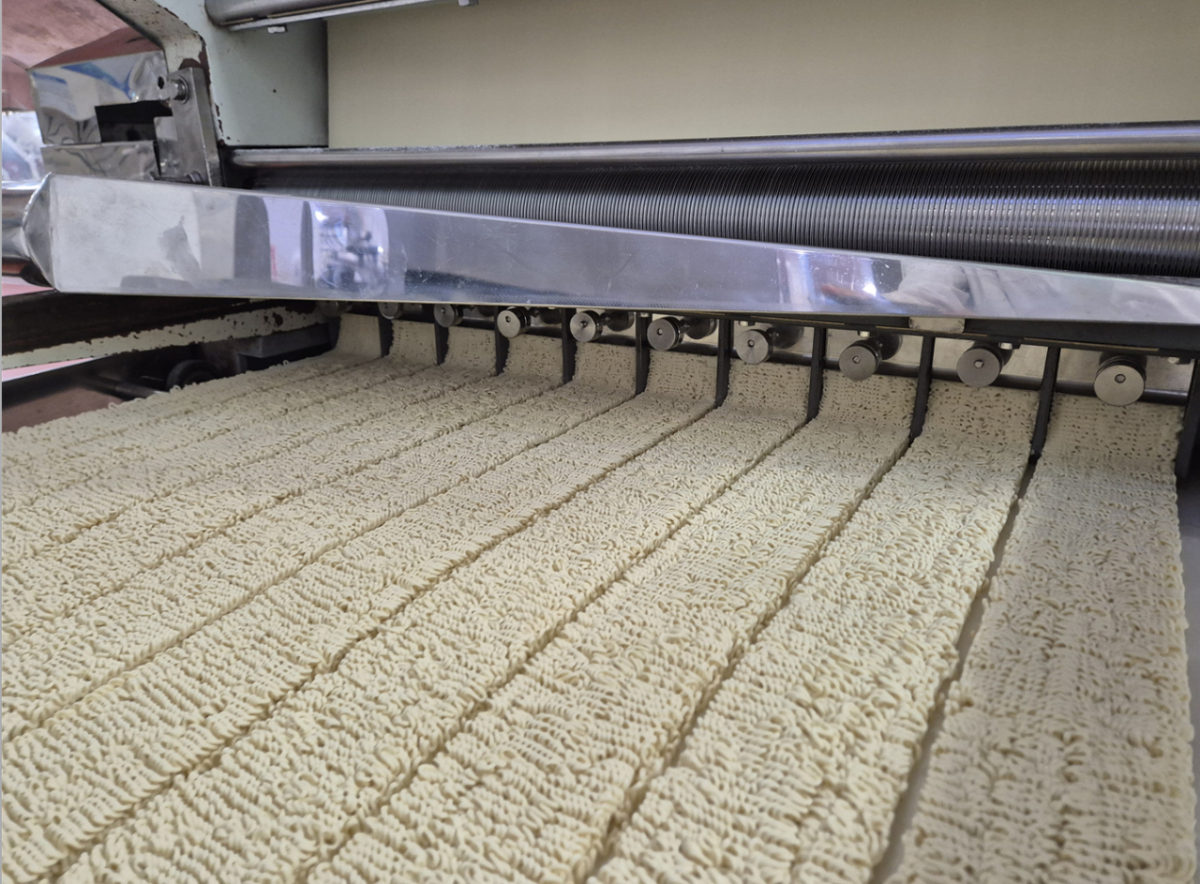
Upon entering the mixer room of the No. 2 factory, noodle production was in full swing. The key to increasing 'capacity (production capacity)' in ramen facilities is the continuous mixer that mixes flour and water to make dough. Two of the only three continuous mixers installed across Nongshim's domestic and overseas factories are located here.
The continuous mixer was overwhelming in scale alone. Standing 3 meters high, a single mixer occupies about 20 pyeong (approximately 66 square meters) of space. As flour and water were fed in, the ingredients mixed continuously without pause.
The dough moved down to the lower floor following the equipment, starting as thick as an adult man's upper body. It became thinner through a seven-stage roller process and emerged at the end of the equipment as pale yellow noodles in wavy, curly shapes, 10 strands at a time. After being fried in oil at approximately 130 degrees Celsius, the ramen noodles are completed. Shin Ramyun cup noodles are produced at a rate of 500 units per minute through this process.
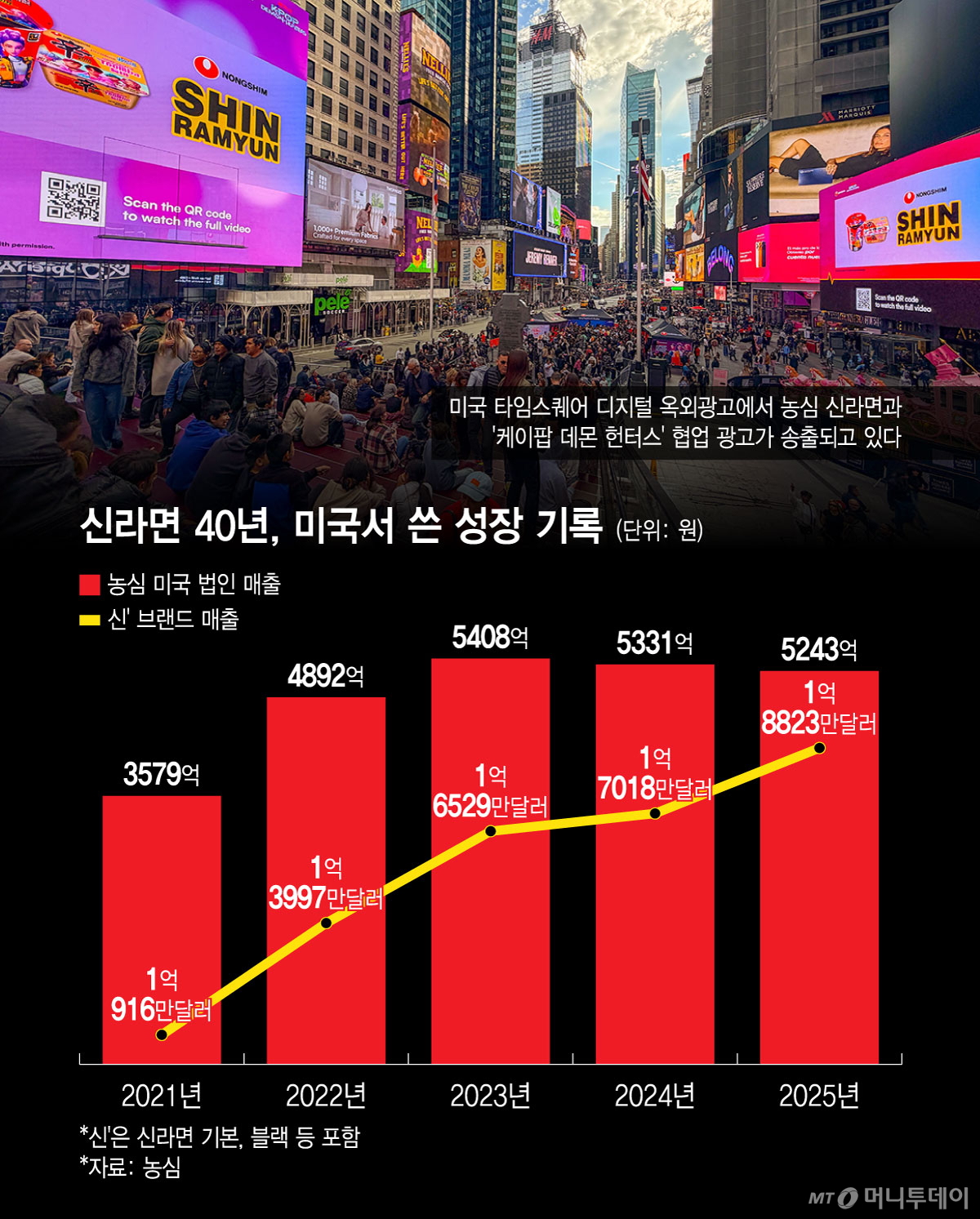
The background for Nongshim expanding its production facilities in the United States is increased local demand. As ramen popularity soared after 2020 due to the COVID-19 pandemic, Nongshim launched its No. 2 factory in May 2022 and a new high-speed cup noodle line in October 2024. The expansion of production facilities led to performance growth. The U.S. subsidiary's annual sales jumped from 357.9 billion won in 2021 to 524.3 billion won last year. Shin Ramyun brand sales increased from $101.916 million to $188.23 million over the same period.
Nongshim, which became the first domestic food company in 2017 to enter all stores of U.S. major retailer Walmart, expanded its sales base into the mainstream market the following year as sales at local distribution points such as Walmart and Costco surpassed those at Asian markets.
Ko Yun-jong, section head, said, "Even if we make good products, there are limits to expanding the market if we cannot supply quantities matching increasing demand." He added, "This factory is a space showing that Nongshim has penetrated into the daily lives of U.S. consumers through local distribution networks and facility expansion."

 in LIVING


