

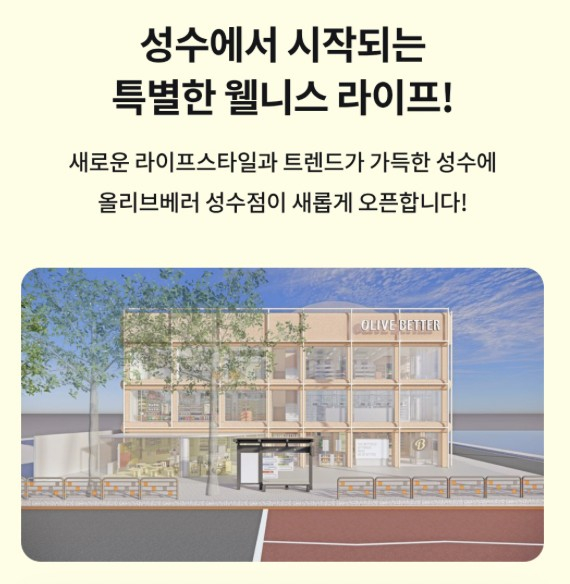
CJOlive Young is opening its fifth dedicated wellness platform store, “Olive Bara,” in Seongsu, Seoul. As Olive Young expands its business scope from cosmetics to health management, it is making a full-scale push to expand its wellness stores in the heart of the beauty district that attracts foreign tourists and members of Generation Z and Millennials (ages 20s and 30s).
According to industry sources on the 28th, Olive Young will open the Olive Bara Seongsu store at 33 Seongsu-il-ro, Seongdong-gu, Seoul, on the 30th. The location is close to Dokseom Station on Subway Line 2. This expands customer access beyond the beauty district previously concentrated around Seongsu Station and Yeonmujang-gil to the area near Dokseom Station.
Olive Bara is a wellness curation platform launched by Olive Young in January. It handles products ranging from health functional foods and nutritional supplements to inner beauty items, healthy convenience meals, and sleep-related goods. The first store opened on the 30th of that month at D-Tower in Gwanghwamun, Seoul, and the network has since expanded with locations such as Gangnam Station, bringing the total to five stores with the opening of the Seongsu branch. To meet the target of securing 10 stores by year-end, announced by Olive Young in May, it must open five more stores in the remaining two months. Store openings are expected to accelerate through the end of the year.
Seongsu is a commercial district known for its concentration of experiential spaces and pop-up events for fashion and beauty brands, with active visits from foreign tourists and members of Generation Z and Millennials. By opening a dedicated wellness store in this beauty-centric district where cosmetics stores are already established, Olive Young’s move to cultivate health management products as a second pillar following cosmetics has become concrete.
Initial performance is cited as the background for the expansion. In May, marking 100 days since the launch of Olive Bara, Olive Young announced that it had introduced over 560 domestic and international wellness brands and more than 13,000 products. At the time, more than 1.8 million members had experienced new wellness products. More than half of the top 30 best-selling products in stores were wellness shots and gummy health foods. Easy-to-enjoy edible wellness products drove store demand.
Demand from foreign customers is also prominent. The share of sales from foreign customers at the Gwanghwamun store rose from about 7% in the first week of February, shortly after opening, to nearly 50% by the end of April. Products purchased by top-ranking foreign customers included items from domestic inner beauty brands. Tourists who had been seeking K-beauty have begun purchasing health management products as well, and the Seongsu store, which attracts many foreign visitors, is expected to absorb similar demand.

 in LIVING
