

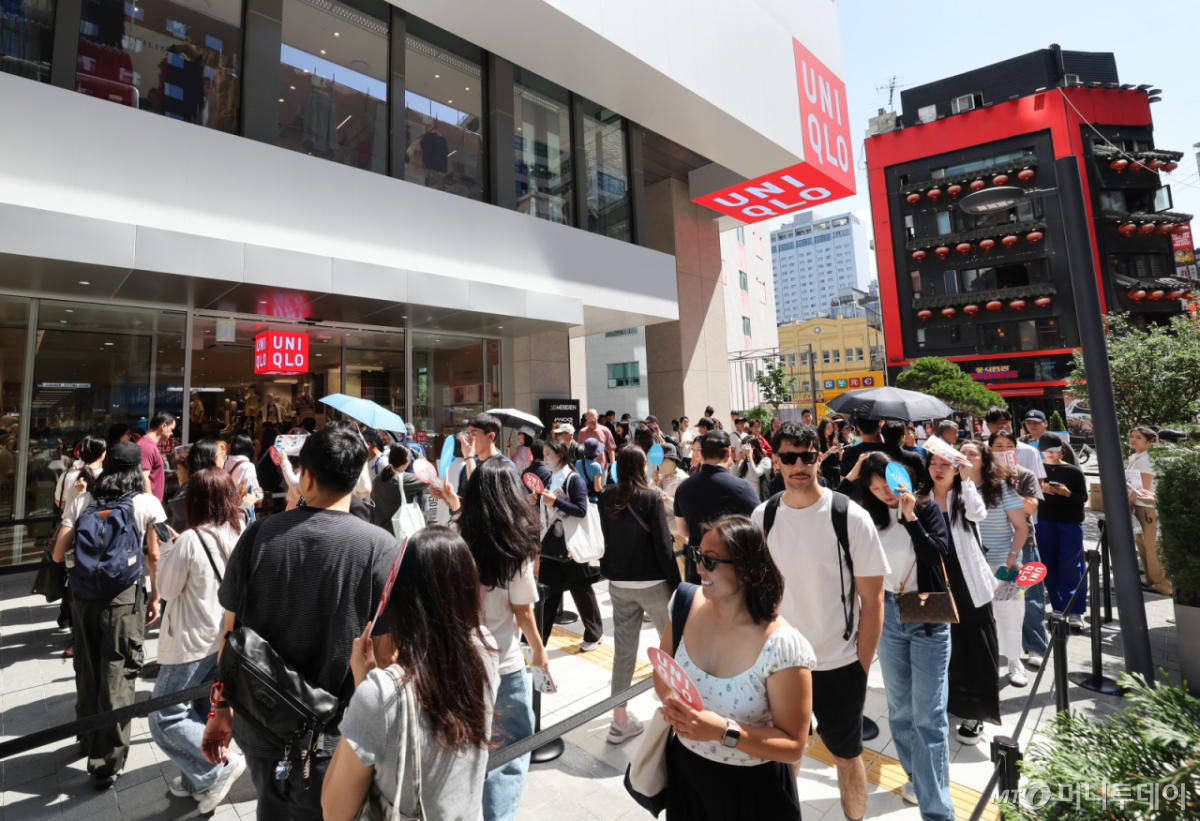
Uniqlo, the top domestic SPA (Specialty store retailer of Private label Apparel) company, was found to have quietly raised the prices of inventory items released several months ago and then either discounted them or sold them at the increased price. The method involves sticking a sticker indicating the raised price over the original launch price tag and disguising it as a discounted sale. There are allegations that consumers were deceived by this 'double price tag' practice.
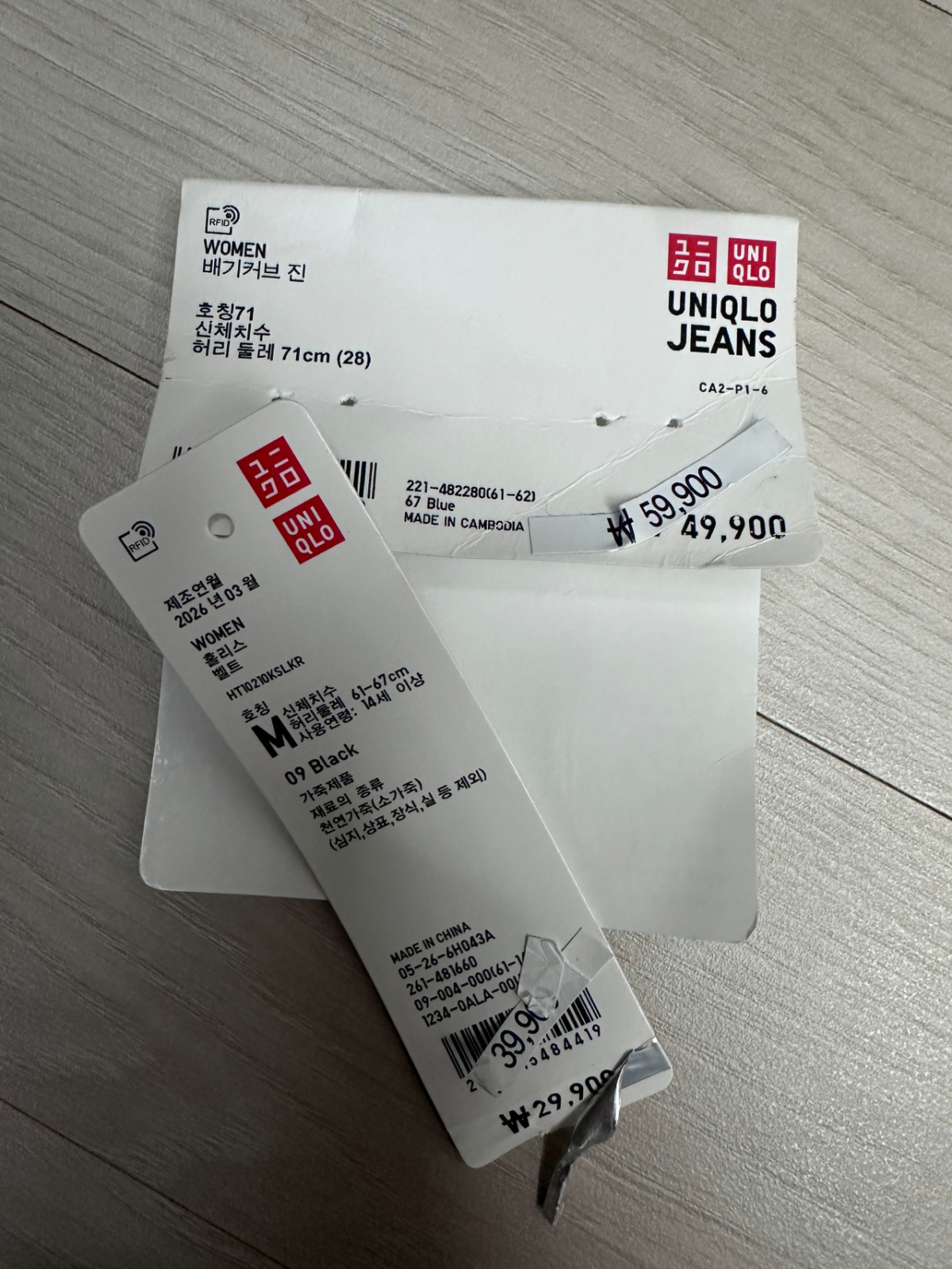
According to an investigation by this outlet on the 10th, Uniqlo is selling some products at major stores in Seoul with stickers showing prices higher than the initial launch price attached to their price tags. For instance, at a Uniqlo store inside a department store in Gwangjin-gu, a 'Baggy Curve Jean' item originally priced at 59,900 won was sold at a discounted price of 49,900 won, even though its initial launch price was 49,900 won. Essentially, the product was sold by adding a tag with a price that appeared to be a discount after raising the price of an item that had been on the market for half a year by 10,000 won.
There were also cases where items were sold at prices higher than their launch price. In the same store, a belt was sold at 39,000 won according to the modified tag price, despite its launch price being 29,000 won. Both items are estimated to be inventory that had been sitting for more than half a year. The pants are expected to have been produced in early this year, while the belt is labeled as having been produced in March of this year.
Person A, who purchased the pants and belt at this location and discovered the double pricing, said, "Compared to the product launch prices, I bought the pants at their original price rather than a discounted one, and the belt at a price 10,000 won higher." They added, "I trusted the promotion that labeled the pants as a discounted item, so I feel deceived, and I was unpleasantly surprised to realize I had overpaid for the belt."
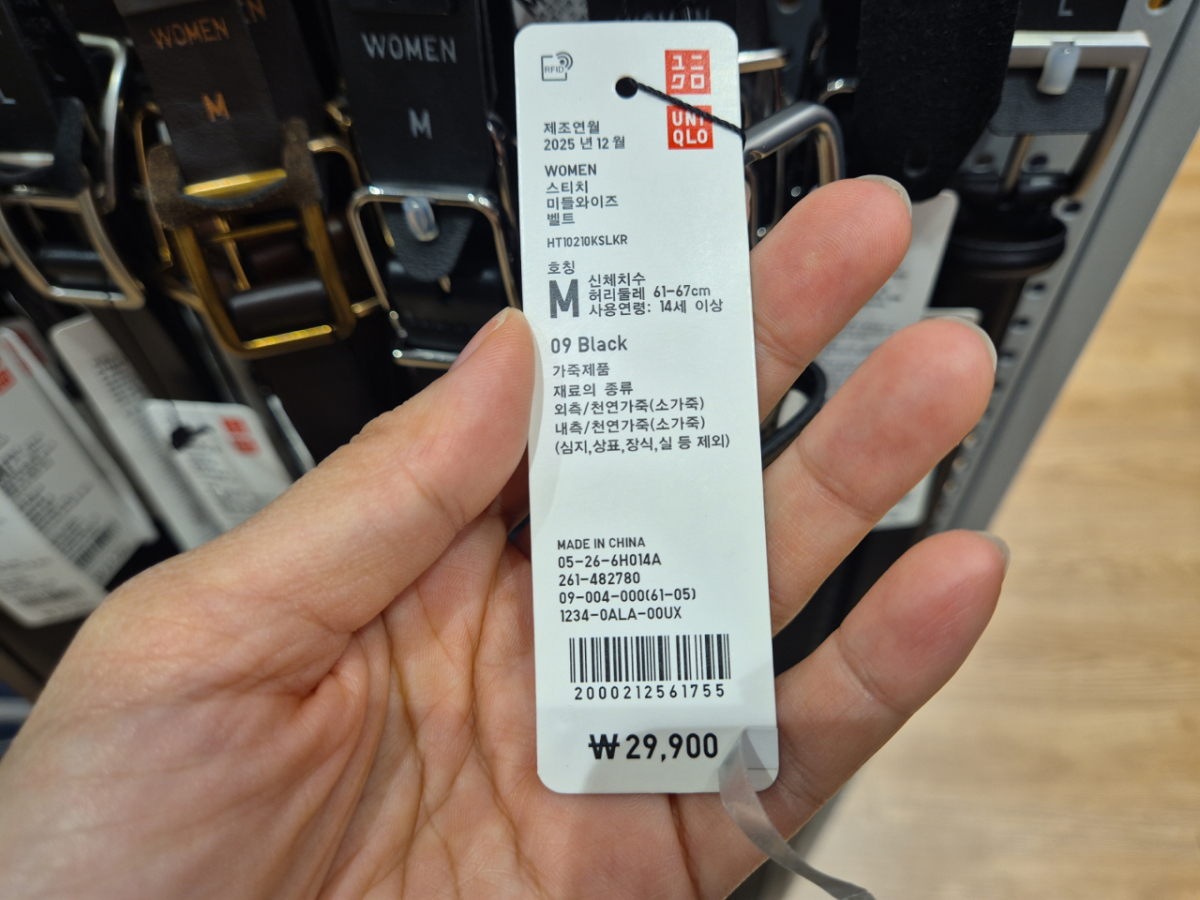
The clothing industry points out that such sales practices are abnormal. In fact, when reporters visited other SPA stores such as Top Ten and Musinsa Standard, they found no instances of product tags having stickers applied to indicate raised prices. An official from a major fashion company stated, "Applying a modified price tape to a tag is a method used only when indicating discounted prices for inventory items at outlets," adding, "It is an impossible occurrence for a department store selling at regular prices to use this method, and even to display increased prices."
Uniqlo explained that some products had their prices raised after their shipment date. The company added that it had separately notified customers of the price increases on its homepage and in-store. However, it expressed regret over the possibility of causing confusion for consumers who were unaware of this. A Uniqlo official said, "We are aware that customers who purchased items with separate sticker prices may have been confused," adding, "We apologize for any inconvenience caused to customers and will ensure that we do not promote items as discounted based on increased prices."
Uniqlo is trending toward improved business performance, driven by increasing demand for cost-effective SPA clothing. The revenue of FRL Korea, Uniqlo's domestic subsidiary, for the 2025 fiscal year (September 2024 to August 2025) was 135.23 billion won, and operating profit was 270.4 billion won, representing increases of 27.6% and 81.6%, respectively, compared to the previous year. It is forecast that this year's revenue will surpass the previous record high (137.81 billion won) from before the Japanese product boycott movement. The largest shareholder of FRL Korea is Fast Retailing, Uniqlo's Japanese headquarters, which holds a 51% stake, while the second-largest shareholder is Lotte Shopping, a domestic distribution partner holding a 49% stake.

 in LIVING


