

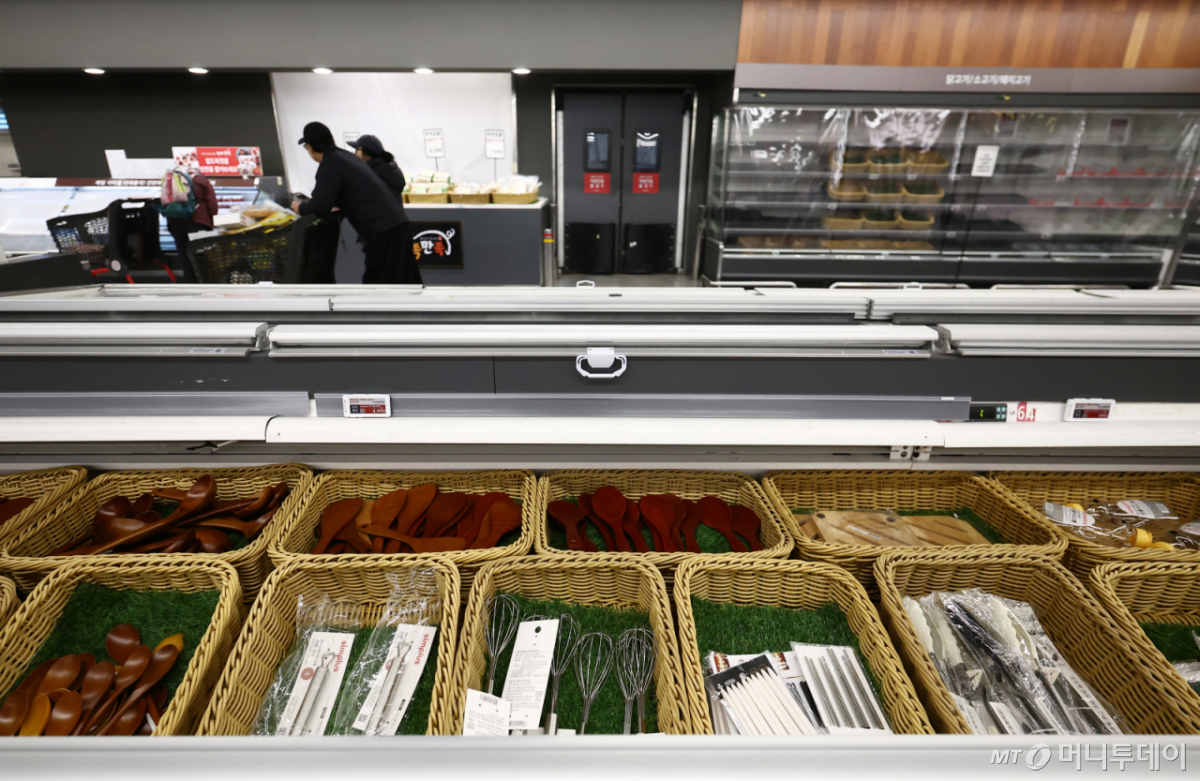
Discount store chain Homeplus, which has been pushed to the brink of bankruptcy (liquidation) due to worsening financial difficulties, is expected to temporarily suspend operations at all its stores starting on the 27th and focus on mergers and acquisitions, its final card for recovery. The company headquarters is reportedly in behind-the-scenes negotiations with potential acquirers.
However, given the four previous M&A processes, difficulties are anticipated during future due diligence. Industry observers note that even if an acquirer is found, the likelihood of Homeplus continuing its business in the retail sector is low.
According to industry sources on Thursday, Homeplus management sent a formal notice to the general labor union that day, stating, "A letter of intent has been received through Samil PwC, the lead advisor for the sale." The specific company name has not yet been disclosed, but it is known to be in the form of a consortium led by a real estate developer rather than a single enterprise.
A Homeplus official said, "To acquire the company, a buyer would need to be able to mobilize capital on the scale of trillions of won." The official added that whether and for how long a definitive due diligence process will proceed has not yet been determined, but the company is committed to moving through the relevant procedures as quickly as possible.
Since initiating corporate rehabilitation in March of last year, Homeplus has pursued mergers and acquisitions on four occasions to date. The first M&A attempt was conducted using the Stalking Horse method, which involves designating a prospective acquirer before launching a public bidding process. However, it failed as no preferred negotiation candidate was identified by October. The second M&A was carried out through an open competitive bidding process from October to November. Two companies participated in the preliminary bidding, but both were criticized for being small and medium-sized enterprises with limited financial capacity. Ultimately, no company participated in the final bidding, resulting in a failed bid.
Subsequently, Homeplus pursued the spin-off and sale of its Express convenience store business (SSM). In June this year, it signed an asset transfer agreement with NS Home Shopping, a subsidiary of Harim Group, completing the sale for 120.6 billion won.
On July 3, immediately following the separate sale, the court decided to terminate the rehabilitation proceedings on the grounds that emergency working capital (DIP) of 200 billion won had not been secured. Ten days later, on July 13, all 67 stores nationwide that were in operation went into an emergency closure. MBK Partners, which was the largest shareholder of Homeplus, urgently raised the 200 billion won DIP through a joint guarantee provided by MBK Chairman Kim Byung-ju after consultations with the creditor group, thereby reversing the court's decision to terminate the rehabilitation plan. Subsequently, on August 13, operations resumed at the 67 stores, and on September 2, approval was obtained for the second rehabilitation plan.
Since then, the Homeplus headquarters has been pursuing a fourth round of mergers and acquisitions targeting 67 stores, its headquarters, and its online business. The company initially accepted letters of intent until the end of October, but as no interested parties emerged, it switched to a continuous acceptance system. According to the company, a new letter of intent was received in early this month.
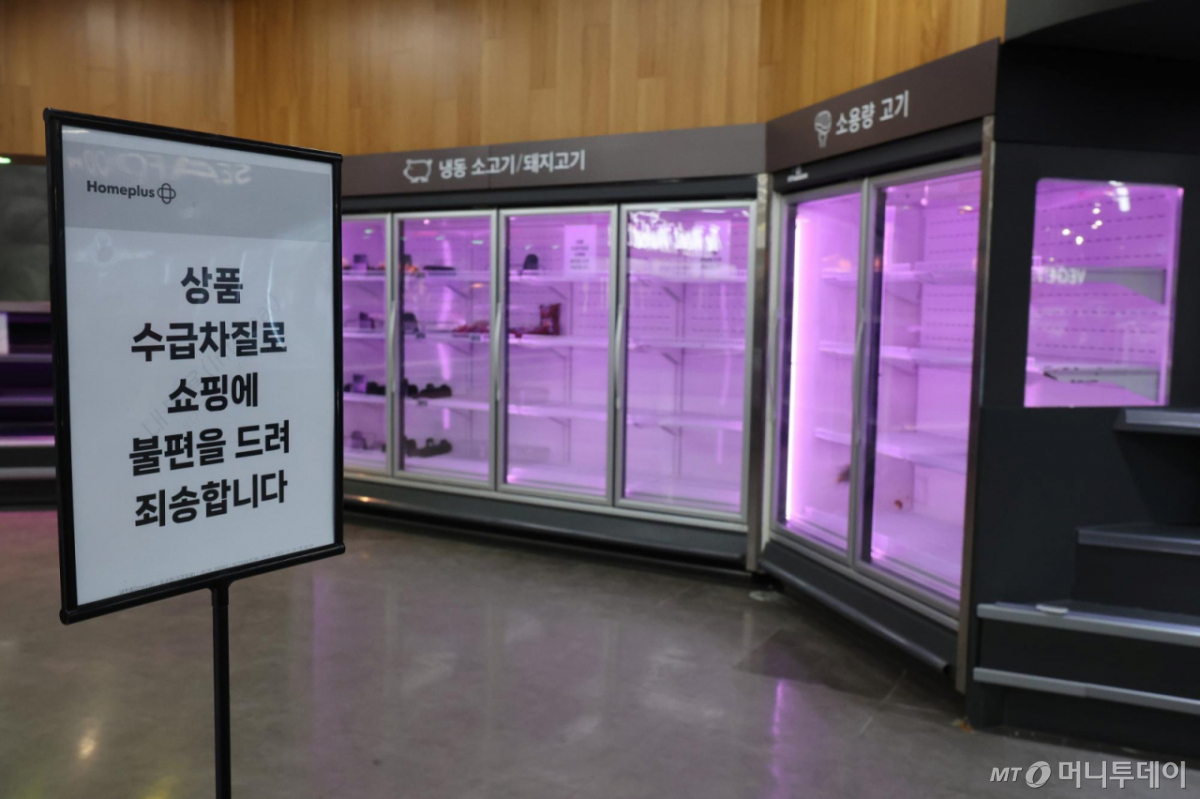
Homeplus, which has continued to struggle with sluggish sales since its reopening, will begin temporary closures of its headquarters and the mart divisions at 67 stores nationwide starting on the 27th. The move aims to reduce operating expenses until a merger or acquisition is finalized and to prevent an increase in public interest claims resulting from accumulated wage arrears.
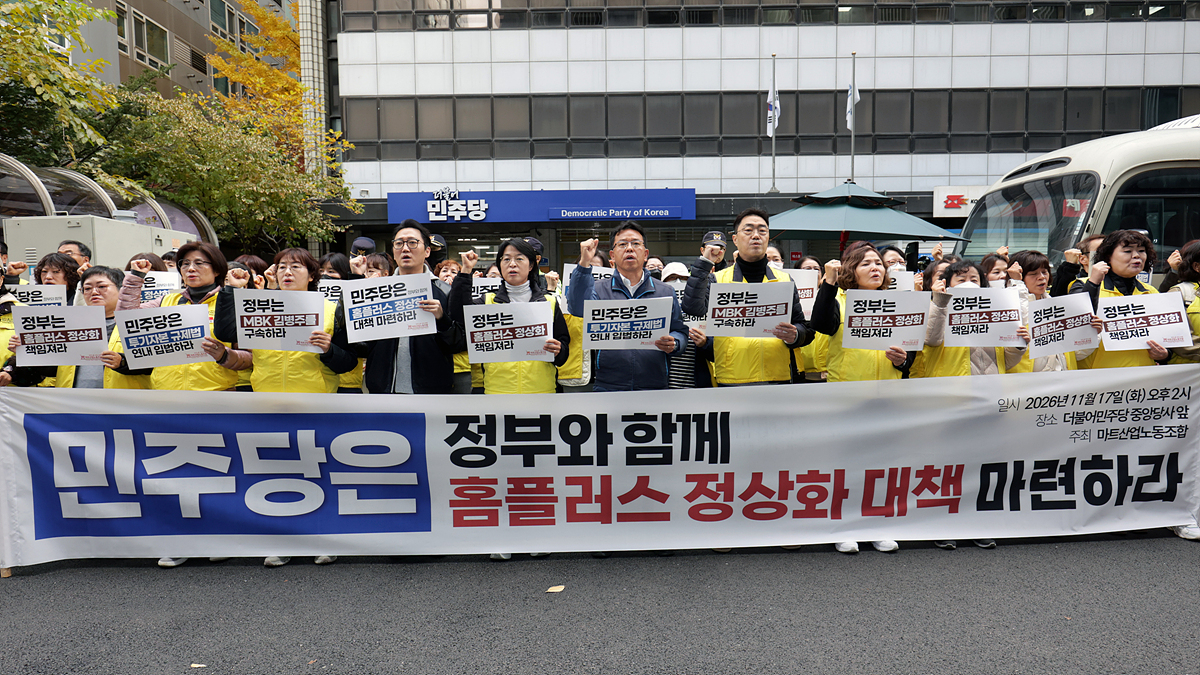
Industry observers predict that this merger and acquisition (M&A) will not be easy either. The key issue is whether the acquirer will accept the "employment succession" condition for employees, which is a requirement of the court's rehabilitation approval, rather than the sale price. An industry official stated, "The militant labor union, which is pressuring both the government and the political establishment by demanding the injection of public funds worth several hundred billion won, will be the biggest obstacle to the Homeplus M&A."
With the domestic economy in a slump and offline retail struggling under pressure from e-commerce, it is widely expected that the sale price will fall short of initial expectations. A potential landmine in the merger and acquisition due diligence process is the possibility of uncovering large-scale contingent liabilities that have not been previously disclosed.
Even if a new acquirer is found in a dramatic turn of events, controversy is likely to persist. The Homeplus headquarters and the labor union have long expressed their hope for an acquisition candidate that possesses the expertise to continue the retail business. However, the prevailing view is that it has become difficult to sustain operations in the retail sector, given that the 200 billion won in debt financing available for purchase (DIP) urgently injected within 100 days of the reopening in August has been exhausted. Interpretations also suggest that the recent inquiry from a real estate development company regarding acquisition is a strategic move aimed at the redevelopment of existing store sites, rather than the continuation of retail operations.
If the creditors' committee accepts the terms of the letter of intent for acquisition, the court may decide to proceed with a full due diligence investigation. However, if the M&A deal falls through because the acquisition price or terms are not acceptable, the court is expected to convene a meeting of stakeholders to discuss follow-up measures, including the termination of rehabilitation proceedings. During this process, the headquarters may declare bankruptcy on its own. In that case, the largest creditor holding real estate collateral for Homeplus is expected to move to recover funds by selling stores through partial asset sales.
Even if this merger and acquisition (M&A) negotiation fails, some argue that the court will likely adopt a wait-and-see approach for now. An industry official predicted, "Because it would be a significant burden for the court to revoke a rehabilitation plan that was difficult to approve after only three months, it appears they will observe the M&A negotiation process a bit longer." Meanwhile, cautious speculation is emerging that if this M&A falls through, Chinese distribution companies with strong financial resources may probe for a "bargain acquisition" by keeping the sale price as low as possible in order to secure domestic logistics networks.

 in LIVING


