

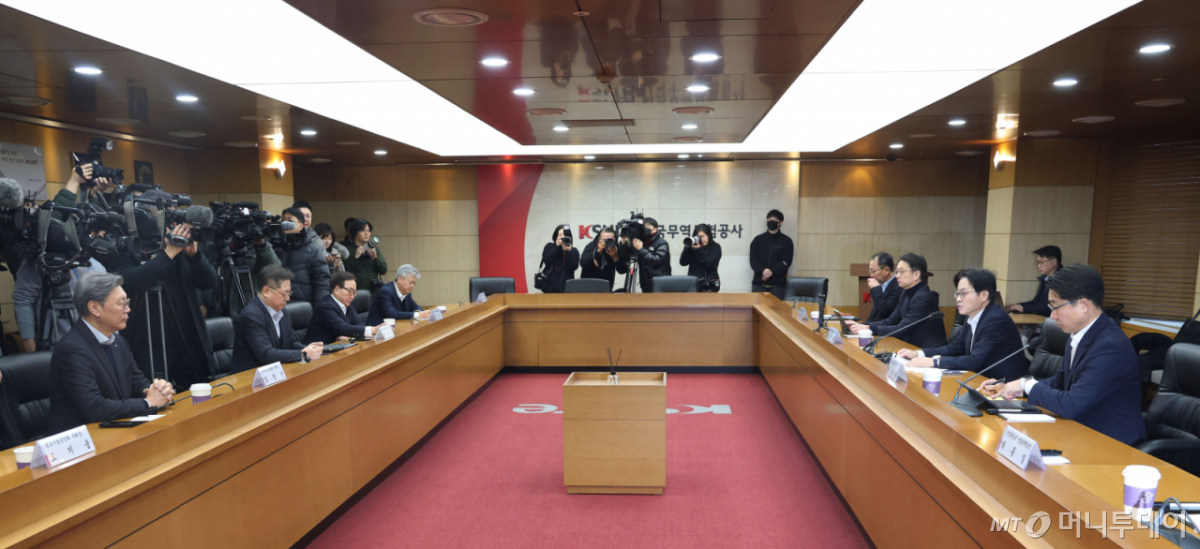
Economic groups are issuing position statements uniformly welcoming government policies. A clear example is that the six major economic organizations welcomed the introduction of domestic production tax credits on the 7th but made no mention whatsoever of excluding electric vehicles. The same attitude was observed regarding the three mega-projects, while they remained silent on allowing exceptions to the 52nd-hour workweek rule.
The very reason for the existence of economic groups is to ensure that corporate opinions are reflected in policies. Regardless of whether a conservative or progressive administration is in power, these organizations have consistently raised concerns about policies that could stifle business activities while also proposing continuous improvements to systems that promote investment, employment, and growth in new industries. At times, they have formed tense relationships with the government to bring corporate difficulties and systemic reform issues into public discourse.
However, such traces are now hard to find in recent messages from economic groups. The business community cites last February's controversy over a press release by the Federation of Korean Industries as the turning point. If there were errors in the basis of the data, they should have been corrected immediately. Yet after the president mentioned "strict accountability," government audits of the Federation and dismissals of its executives followed. This is said to be when economic groups began to tread carefully.
Because the cost of criticism has increased, even urgent issues such as allowing exceptions to the 52nd-hour workweek rule are no longer properly addressed in public forums. In highly competitive industries like semiconductors, AI, and defense, institutional flexibility that allows R&D personnel to work intensively according to need is not a choice but a matter of survival.
The same applies to domestic production tax credits. If the intention is to protect the domestic production base for strategic industries, then in a situation where Chinese electric vehicles are launching aggressive price attacks, the government should have considered including electric vehicles among the support targets. Yet why did economic groups not ask the government why electric vehicles were excluded or how this could be supplemented?
The silence of economic groups signifies a weakening of their functions to gather on-the-ground opinions and adjust policies. If criticism and concerns disappear from the policy decision-making process, giving way to political considerations or bureaucratic convenience, it will inevitably have negative effects not only on corporate competitiveness but also on investment, employment, and overall growth. Economic groups must not forget that their fundamental duty is to convey corporate difficulties exactly as they are. The government, too, must listen to diverse opinions if it seeks to reduce errors and risks in decision-making and enhance the quality of policies.

 in OPINION
